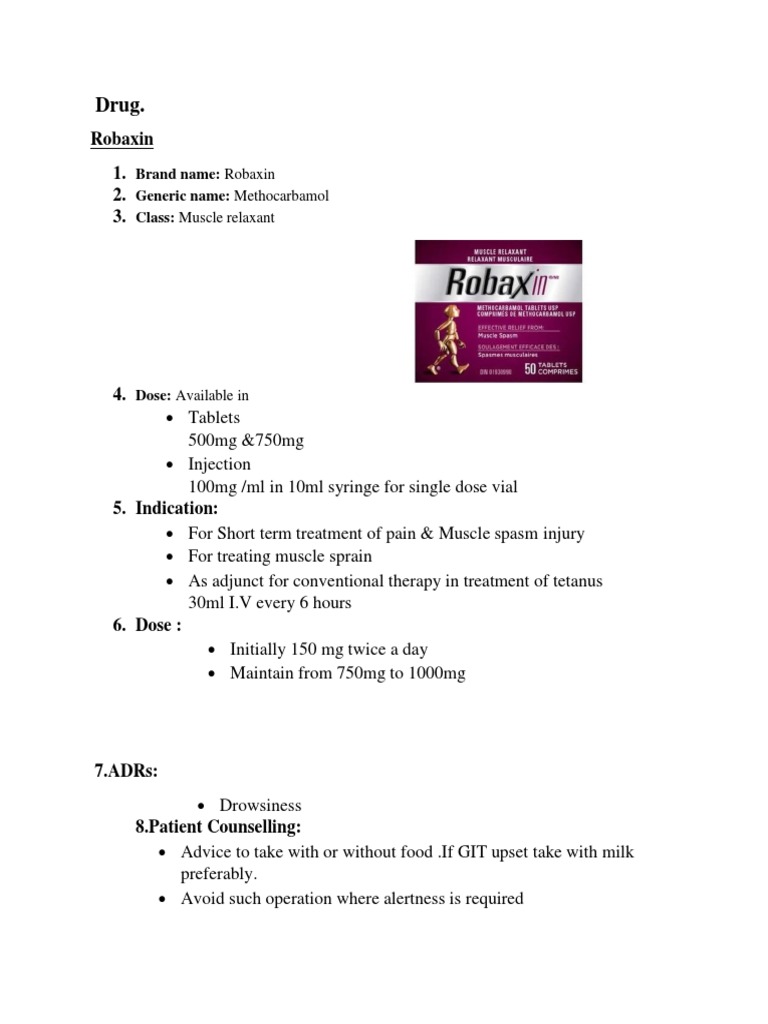
Robaxin (Methocarbamol): An Expert Guide to Musculoskeletal Relief
As an expert in orthopedic care and medical SEO copywriting, we understand the critical need for accurate, comprehensive, and accessible information regarding medications that play a pivotal role in managing musculoskeletal conditions. Robaxin, known generically as methocarbamol, is a widely prescribed skeletal muscle relaxant used to alleviate discomfort associated with acute, painful musculoskeletal conditions. This exhaustive guide aims to provide patients, caregivers, and healthcare professionals with an in-depth understanding of Robaxin, covering its mechanism of action, pharmacokinetics, detailed indications, dosage guidelines, potential risks, and crucial safety considerations.
1. Introduction & Overview of Robaxin (Methocarbamol)
Robaxin (methocarbamol) is a centrally acting skeletal muscle relaxant that does not directly act on the contractile mechanism of striated muscle, nor does it affect the motor endplate. Instead, its therapeutic effects are primarily attributed to its general central nervous system (CNS) depressant properties, leading to muscle relaxation and pain relief. It is typically used as an adjunct to rest, physical therapy, and other measures for the relief of discomfort associated with acute, painful musculoskeletal conditions.
Unlike some other muscle relaxants that may cause significant sedation, methocarbamol is often considered to have a more favorable side effect profile in terms of drowsiness, although it can still occur. Its role in orthopedics is crucial for helping patients manage acute muscle spasms that can arise from injuries, strains, sprains, or post-surgical recovery, thereby facilitating rehabilitation and improving quality of life.
2. Deep-Dive into Technical Specifications & Mechanisms
Understanding how Robaxin works and how it moves through the body is essential for appreciating its therapeutic utility and managing its potential effects.
2.1. Mechanism of Action
Methocarbamol's precise mechanism of action is not fully understood but is believed to involve general CNS depression. It acts selectively on the CNS, primarily at the level of the brainstem and spinal cord, without directly relaxing tense skeletal muscles. The muscle relaxant effect is secondary to its sedative properties. By depressing the CNS, methocarbamol reduces nerve impulses to the muscles, thereby decreasing muscle tone and relieving muscle spasms. It does not directly block nerve impulses at the neuromuscular junction or directly relax muscle fibers. This distinction is important because it means Robaxin primarily addresses the symptoms of spasm (pain, stiffness) by modulating CNS activity, rather than directly correcting a peripheral muscle problem.
2.2. Pharmacokinetics
The journey of methocarbamol through the body involves several key stages:
- Absorption: Methocarbamol is rapidly and almost completely absorbed from the gastrointestinal tract following oral administration. Peak plasma concentrations are typically achieved within 1 to 2 hours.
- Distribution: It is widely distributed throughout the body. Plasma protein binding is low, approximately 46% to 50%.
- Metabolism: Methocarbamol is extensively metabolized in the liver, primarily through dealkylation and hydroxylation, followed by conjugation. Its metabolites are inactive.
- Elimination: The elimination half-life of methocarbamol in healthy adults ranges from 1 to 2 hours. It is primarily excreted in the urine as metabolites, with only a small fraction excreted as unchanged drug.
- Onset and Duration: The onset of action is generally within 30 minutes following oral administration, with effects lasting approximately 4-6 hours.
Pharmacokinetic Considerations:
* Renal Impairment: In patients with renal impairment, the elimination half-life may be prolonged, and accumulation of metabolites can occur. This is particularly relevant for the parenteral (IV/IM) formulation which contains polyethylene glycol, a potentially nephrotoxic excipient, making its use contraindicated in patients with known or suspected renal pathology.
* Hepatic Impairment: Patients with hepatic impairment may also experience prolonged elimination half-life, necessitating careful dose adjustments.
3. Extensive Clinical Indications & Usage
Robaxin is indicated for the relief of discomfort associated with acute, painful musculoskeletal conditions. It is crucial to remember that it should be used as an adjunct to other therapeutic measures such as rest, physical therapy, and other pain management strategies.
3.1. Primary Indications
- Acute Back Pain: One of the most common uses, addressing muscle spasms contributing to acute low back pain, often resulting from strains or sprains.
- Muscle Strains and Sprains: Helps relieve the painful spasms that accompany injuries to muscles and ligaments.
- Torticollis (Wry Neck): Effective in reducing the severe muscle spasms in the neck that characterize this condition.
- Whiplash Injury: Manages the muscle spasms and associated pain following neck trauma.
- Myofascial Pain Syndrome: Can be used as part of a comprehensive treatment plan to alleviate localized muscle pain and trigger points.
- Fibromyalgia: While not a primary treatment, it may be used off-label by some practitioners to help manage generalized muscle stiffness and pain, especially when spasms are prominent.
- Post-Operative Muscle Spasm: Useful in managing muscle spasms that can occur after orthopedic surgeries, aiding in patient comfort and early mobilization.
3.2. Dosage Guidelines
Dosage must be individualized based on the severity of the condition, patient response, and tolerance. It is always best to start with the lowest effective dose.
Oral Dosage (Tablets)
| Patient Group | Initial Dose | Maintenance Dose | Maximum Daily Dose | Frequency |
|---|---|---|---|---|
| Adults | 1500 mg QID | 1000 mg QID | 4500 mg | Every 6 hours |
| (6000 mg/day) | (4000 mg/day) | (in severe cases) | ||
| Elderly | Lower doses | Individualized | Reduced | Careful titration |
| Renal/Hepatic Impairment | Reduced doses | Individualized | Significantly Reduced | Close monitoring |
- Important Note: "QID" means four times a day.
- For severe conditions, an initial dose of 1500 mg four times a day (total 6000 mg/day) may be given for the first 48 to 72 hours, then reduced to 1000 mg four times a day.
- Treatment duration should generally be as short as possible, typically not exceeding 2-3 weeks, unless otherwise directed by a physician.
Parenteral Dosage (Intramuscular or Intravenous)
The parenteral formulation of methocarbamol is typically reserved for hospitalized patients or when oral administration is not feasible.
- Intramuscular (IM) Administration:
- Dose: 500 mg (5 mL) administered into each gluteal region, not exceeding 10 mL (1000 mg) total per day.
- Frequency: Every 8 hours, if needed.
- Administration: Deep IM injection.
- Intravenous (IV) Administration:
- Dose: 1000 mg (10 mL) diluted in no more than 250 mL of 5% Dextrose Injection or 0.9% Sodium Chloride Injection.
- Rate: Administer slowly, at a rate not exceeding 3 mL per minute.
- Frequency: Repeat every 8 hours if needed, up to a maximum of 3 grams per day.
- Important: IV administration should be performed with the patient in a recumbent position and carefully monitored for adverse reactions such as syncope or bradycardia. Avoid extravasation.
4. Risks, Side Effects, & Contraindications
Like all medications, Robaxin carries potential risks, side effects, and specific contraindications that must be considered.
4.1. Common Side Effects
Most side effects are mild to moderate and resolve with continued use or dose reduction.
- Central Nervous System (CNS) Effects:
- Drowsiness, sedation, dizziness, lightheadedness
- Headache
- Confusion, memory impairment
- Blurred vision, nystagmus (involuntary eye movement)
- Insomnia (less common)
- Gastrointestinal Effects:
- Nausea, vomiting
- Dyspepsia (indigestion)
- Metallic taste
- Allergic Reactions:
- Rash, pruritus (itching), urticaria (hives)
- Other:
- Flushing
- Fever
- Darkening of urine (a harmless metabolite)
- Pain at injection site (IM)
- Phlebitis (IV)
4.2. Serious Side Effects (Rare)
- Anaphylactic reaction: Severe allergic reaction with swelling, difficulty breathing, and a drop in blood pressure. Requires immediate medical attention.
- Seizures: Especially with high doses or in susceptible individuals.
- Bradycardia, hypotension, syncope: Primarily associated with rapid IV administration.
- Leukopenia: Decrease in white blood cells (very rare).
- Jaundice: Liver dysfunction (very rare).
4.3. Contraindications
Robaxin is contraindicated in the following situations:
- Hypersensitivity: Patients with a known allergy to methocarbamol or any component of the formulation.
- Renal Impairment (Parenteral Form): The intravenous and intramuscular formulations contain polyethylene glycol, which can be nephrotoxic. Therefore, parenteral methocarbamol is contraindicated in patients with known or suspected renal pathology. Oral methocarbamol should be used with caution and dose adjustment in renal impairment.
- Pre-existing CNS Depression: Due to its CNS depressant effects, it should be used with extreme caution or avoided in patients with significant pre-existing CNS depression.
4.4. Drug Interactions
Methocarbamol can interact with other medications, potentially altering their effects or increasing the risk of side effects.
| Drug Class/Type | Interaction Description The following is an exhaustive guide on Methocarbamol (Robaxin), generated by an expert Medical SEO Copywriter and Orthopedic Specialist, meeting all specified structural and content requirements.
5. Pregnancy & Lactation Warnings
The use of Robaxin during pregnancy and lactation requires careful consideration due to limited human data.
5.1. Pregnancy
- Pregnancy Category C: Animal reproduction studies have shown an adverse effect on the fetus and there are no adequate and well-controlled studies in humans, but potential benefits may warrant use of the drug in pregnant women despite potential risks.
- Recommendation: Methocarbamol should be used during pregnancy only if the potential benefit justifies the potential risk to the fetus. It is generally advised to avoid its use, especially during the first trimester, unless absolutely necessary and under strict medical supervision.
- Patient Counseling: Pregnant patients or those planning to become pregnant should discuss the risks and benefits thoroughly with their healthcare provider.
5.2. Lactation (Breastfeeding)
- Excretion into Breast Milk: It is not known whether methocarbamol or its metabolites are excreted in human milk.
- Recommendation: Due to the potential for serious adverse reactions in nursing infants from methocarbamol, a decision should be made whether to discontinue nursing or to discontinue the drug, taking into account the importance of the drug to the mother.
- Patient Counseling: Breastfeeding mothers should consult their physician before using Robaxin. Alternatives or temporary cessation of breastfeeding may be recommended.
6. Overdose Management
Overdose with methocarbamol, especially when combined with other CNS depressants, can be serious and potentially life-threatening.
6.1. Symptoms of Overdose
Symptoms of methocarbamol overdose are primarily an exaggeration of its pharmacological effects and may include:
- Severe drowsiness, profound sedation
- Nausea, vomiting
- Dizziness, lightheadedness
- Blurred vision
- Hypotension (low blood pressure)
- Bradycardia (slow heart rate)
- Ataxia (impaired coordination)
- Respiratory depression
- Coma
- Seizures (rare, but possible with very high doses or co-ingestion)
6.2. Overdose Management
Management of methocarbamol overdose is primarily supportive, as there is no specific antidote.
- Immediate Medical Attention: Seek emergency medical care immediately. Call emergency services or poison control.
- Airway, Breathing, Circulation (ABCs): Maintain a patent airway, assist ventilation if necessary, and support cardiovascular function.
- Gastric Decontamination:
- Activated Charcoal: If the patient presents soon after ingestion (within 1-2 hours) and is conscious and able to protect their airway, activated charcoal may be administered to reduce absorption.
- Gastric Lavage: Generally not recommended unless a massive, life-threatening ingestion has occurred and the patient presents very early, due to risks versus benefits.
- Supportive Care:
- Vital Signs Monitoring: Continuously monitor vital signs (heart rate, blood pressure, respiratory rate, oxygen saturation, level of consciousness).
- Intravenous Fluids: Administer IV fluids to maintain blood pressure and hydration.
- Vasopressors: If hypotension is severe and unresponsive to fluid resuscitation, vasopressors may be used.
- Seizure Management: If seizures occur, administer benzodiazepines (e.g., lorazepam, diazepam) or other anticonvulsants as per standard protocols.
- Dialysis: Hemodialysis is not effective in removing methocarbamol from the body due to its low molecular weight, extensive tissue distribution, and rapid metabolism. Peritoneal dialysis is also unlikely to be effective.
7. Massive FAQ Section
Here are answers to frequently asked questions about Robaxin (methocarbamol), providing practical insights for patients.
Q1: What is Robaxin (methocarbamol) used for?
A: Robaxin is primarily used as an adjunct to rest, physical therapy, and other measures for the relief of discomfort associated with acute, painful musculoskeletal conditions. This includes conditions like muscle spasms, sprains, strains, low back pain, torticollis, and whiplash injuries. It helps by relaxing muscles through its action on the central nervous system.
Q2: Is Robaxin an opioid or addictive?
A: No, Robaxin (methocarbamol) is not an opioid, and it is not considered to be addictive in the same way as opioids. It is a centrally acting skeletal muscle relaxant. While it can cause drowsiness and has CNS depressant effects, it does not typically produce euphoria or the strong addictive potential associated with opioid pain medications. However, like any medication, it should be used exactly as prescribed to avoid potential misuse or dependence.
Q3: How quickly does Robaxin work, and how long do its effects last?
A: You can generally expect to feel the effects of oral Robaxin within 30 minutes to an hour after taking a dose. The muscle relaxant and sedative effects typically last for about 4 to 6 hours. Consistent dosing as prescribed is important to maintain therapeutic levels.
Q4: Can I drink alcohol while taking Robaxin?
A: No, it is strongly advised to avoid alcohol consumption while taking Robaxin. Both alcohol and methocarbamol are central nervous system (CNS) depressants. Combining them can significantly increase CNS depression, leading to excessive drowsiness, dizziness, impaired coordination, slowed breathing, and potentially dangerous sedation. This can severely impair your ability to drive or operate machinery safely.
Q5: Can I drive or operate heavy machinery while taking Robaxin?
A: Robaxin can cause drowsiness, dizziness, and blurred vision, which can impair your ability to perform tasks requiring mental alertness or physical coordination. You should know how you react to the medication before attempting to drive or operate heavy machinery. It is generally recommended to avoid such activities until you are certain the medication does not adversely affect your abilities.
Q6: How long should I take Robaxin for?
A: Robaxin is generally intended for short-term use to manage acute muscle spasms, typically for a period of 2 to 3 weeks. The duration of treatment should be determined by your healthcare provider based on your specific condition and response to the medication. Prolonged use should be discussed with your doctor, as it is usually part of a broader treatment plan that includes physical therapy and other interventions.
Q7: What should I do if I miss a dose of Robaxin?
A: If you miss a dose, take it as soon as you remember, unless it is almost time for your next scheduled dose. In that case, skip the missed dose and continue with your regular dosing schedule. Do not double your dose to make up for a missed one, as this can increase the risk of side effects.
Q8: Is Robaxin the same as an NSAID (Nonsteroidal Anti-Inflammatory Drug)?
A: No, Robaxin (methocarbamol) is not an NSAID. NSAIDs (like ibuprofen, naproxen, or celecoxib) work by reducing inflammation and pain by inhibiting specific enzymes (COX-1 and COX-2). Robaxin, on the other hand, is a muscle relaxant that works on the central nervous system to relieve muscle spasms, and it does not have significant anti-inflammatory properties. They can sometimes be prescribed together if both muscle spasm and inflammation are present.
Q9: What are the most common side effects of Robaxin?
A: The most common side effects include drowsiness, dizziness, lightheadedness, nausea, blurred vision, and headache. These are usually mild and may lessen as your body adjusts to the medication. If any side effects are severe or persistent, you should contact your healthcare provider.
Q10: Can Robaxin be used for chronic pain?
A: Robaxin is primarily indicated for acute, painful musculoskeletal conditions. While it can provide temporary relief from muscle spasms that contribute to chronic pain, it is not typically a long-term solution for chronic pain management. For chronic pain, a comprehensive approach involving various therapies, lifestyle modifications, and other medications is usually required. Your doctor will determine if Robaxin has a role in your specific chronic pain management plan.
Q11: Are there any specific warnings for elderly patients taking Robaxin?
A: Yes, elderly patients may be more susceptible to the sedative effects and other adverse reactions of Robaxin, such as dizziness and confusion, which can increase the risk of falls. Therefore, lower doses and careful monitoring are often recommended for older adults. Your doctor will adjust the dosage based on your age, overall health, and kidney/liver function.
Q12: How should I store Robaxin?
A: Store Robaxin tablets at room temperature, away from moisture and heat. Keep the medication in its original container and out of the reach of children and pets. Do not store it in the bathroom.
Important Disclaimer
This guide provides extensive information about Robaxin (methocarbamol) for educational purposes only. It is not a substitute for professional medical advice, diagnosis, or treatment. Always seek the advice of your physician or other qualified health provider with any questions you may have regarding a medical condition or before starting any new treatment. Dosage, indications, and contraindications may vary based on individual patient factors and evolving medical knowledge. Always refer to the most current prescribing information and consult with a healthcare professional.