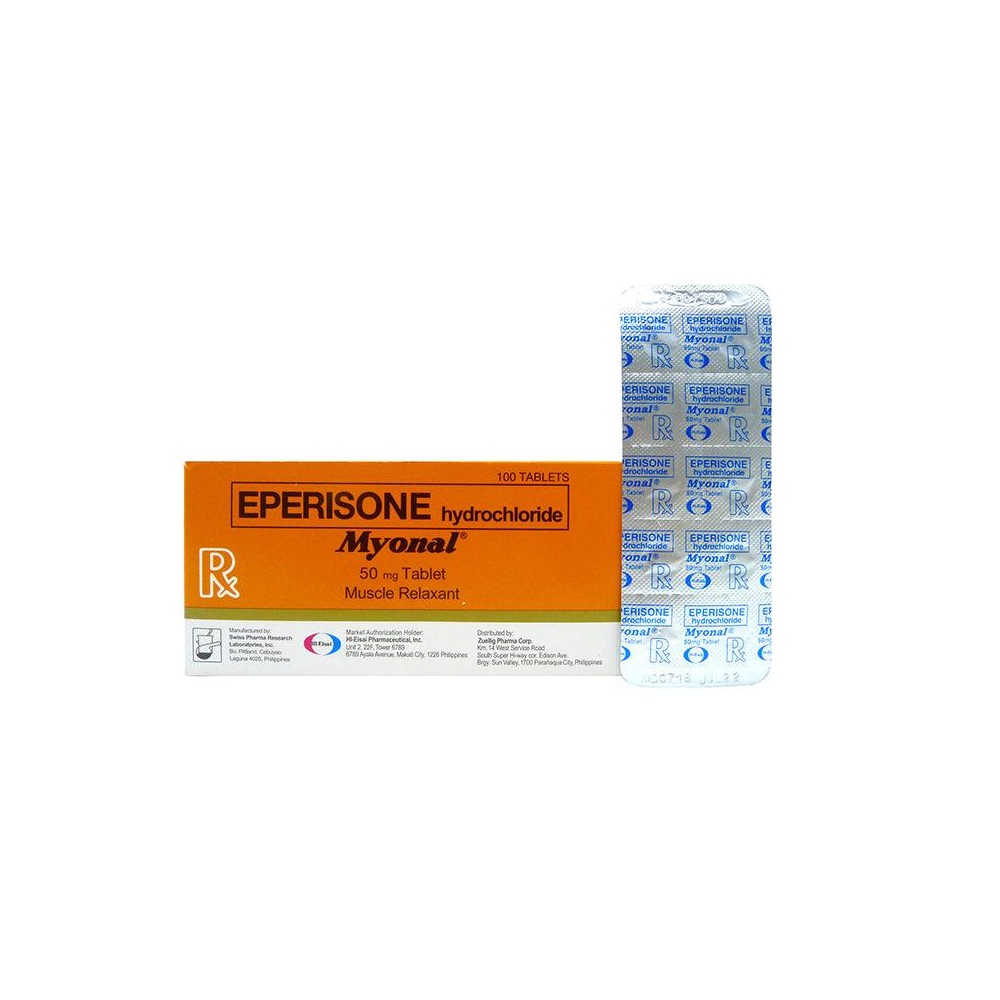
Eperisone (Myonal): A Comprehensive Medical SEO Guide to Muscle Spasm Management
1. Introduction & Overview of Eperisone (Myonal)
Eperisone, commonly known by its brand name Myonal, is a prominent centrally acting skeletal muscle relaxant widely used in the management of various musculoskeletal conditions characterized by muscle hypertonia, spasticity, and associated pain. Originating from Japan, Eperisone Hydrochloride has gained recognition globally for its unique mechanism of action that not only alleviates muscle stiffness but also possesses mild vasodilatory and analgesic properties.
As an expert Medical SEO Copywriter and Orthopedic Specialist, we understand the critical need for clear, authoritative, and comprehensive information regarding medications like Myonal. This guide aims to provide an exhaustive overview of Eperisone, delving into its intricate mechanisms, clinical applications, safety profile, and practical considerations for both patients and healthcare professionals. Unlike many traditional muscle relaxants that primarily exert their effects at the neuromuscular junction, Eperisone acts on the central nervous system, offering a distinct therapeutic approach to restoring muscle function and reducing discomfort.
What is Eperisone (Myonal)?
Eperisone is a benzothiazole derivative designed to reduce muscle tone and improve blood circulation, thereby relieving symptoms such as muscle stiffness, pain, and limited range of motion. It is particularly effective in conditions involving involuntary muscle contractions and spasticity, which can arise from various neurological and orthopedic disorders.
Key Benefits of Eperisone:
- Muscle Relaxation: Effectively reduces muscle hypertonia and spasticity.
- Pain Relief: Possesses mild analgesic properties, complementing its muscle relaxant effects.
- Improved Blood Flow: Its vasodilatory action helps to enhance circulation in affected areas.
- Reduced Stiffness: Contributes to increased flexibility and mobility.
- Central Action: Works on the spinal cord and supraspinal levels, differentiating it from peripheral muscle relaxants.
2. Deep-Dive into Technical Specifications & Mechanisms
Understanding the science behind Eperisone is crucial for appreciating its therapeutic efficacy. Its action is multifaceted, involving both central nervous system modulation and peripheral effects.
2.1 Mechanism of Action
Eperisone's primary mechanism involves its action on the central nervous system, specifically modulating the gamma loop system in the spinal cord. This leads to a reduction in muscle spindle excitability and, consequently, decreased muscle tone.
- Inhibition of Gamma Motor Neurons: Eperisone selectively inhibits the spontaneous discharge of gamma motor neurons. Gamma motor neurons innervate muscle spindles, which are sensory receptors responsible for detecting changes in muscle length and rate of change. By reducing the activity of these neurons, Eperisone decreases the excitability of muscle spindles, leading to a relaxation of skeletal muscles.
- Suppression of Spinal Reflexes: It also suppresses the polysynaptic and monosynaptic reflexes in the spinal cord, which are often exaggerated in spastic conditions. This contributes to its overall muscle relaxant effect.
- Vasodilatory Action: Eperisone exhibits alpha-1 adrenergic receptor antagonism. By blocking these receptors, it causes vasodilation, particularly in skeletal muscle arteries. This improved blood flow can help alleviate ischemic pain and reduce the accumulation of metabolic waste products in cramped or spastic muscles, further contributing to pain relief and muscle recovery.
- Analgesic Properties: While not a primary analgesic, Eperisone has been shown to possess mild analgesic effects. This is likely due to a combination of its muscle relaxant and vasodilatory actions, which reduce the mechanical and ischemic components of pain. It may also have direct effects on pain perception pathways within the central nervous system.
- Membrane Stabilizing Effect: Some studies suggest Eperisone may have a membrane-stabilizing effect on nerve cells, further contributing to its ability to modulate neuronal excitability and reduce spasticity.
2.2 Pharmacokinetics
The pharmacokinetic profile of Eperisone dictates how the body handles the drug, from absorption to elimination, influencing its onset, duration of action, and dosing frequency.
| Pharmacokinetic Parameter | Description