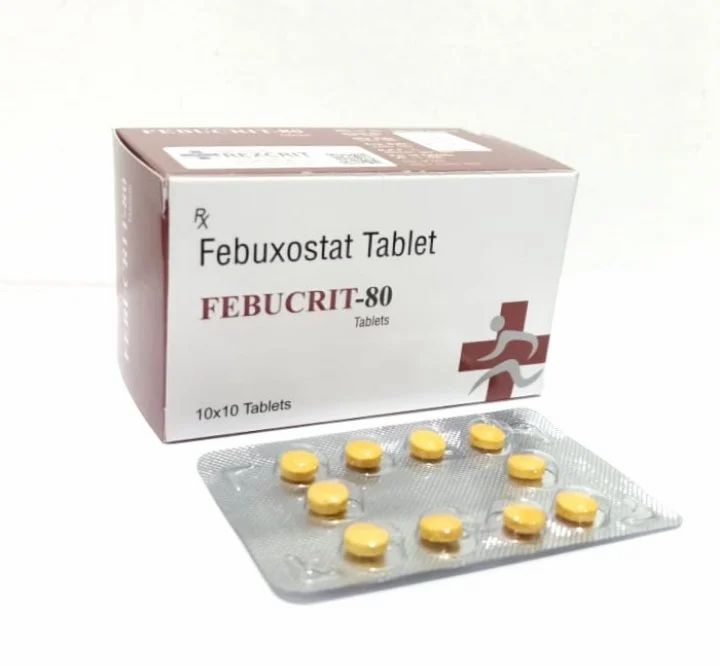
Febuxostat 80 mg: An Expert's Comprehensive Guide to Hyperuricemia and Gout Management
Gout is a painful and debilitating form of inflammatory arthritis caused by the deposition of uric acid crystals in the joints and surrounding tissues. The underlying cause is hyperuricemia, an elevated level of uric acid in the blood. Effective management of gout hinges on reducing and maintaining serum uric acid levels below the saturation point for crystallization. Febuxostat 80 mg stands as a crucial therapeutic option in this battle against hyperuricemia and its clinical manifestation, gout.
This exhaustive guide provides an authoritative deep-dive into Febuxostat 80 mg, covering its intricate mechanisms, clinical applications, safety profile, and essential considerations for both patients and healthcare professionals.
Comprehensive Introduction & Overview
Febuxostat is a potent, non-purine selective inhibitor of xanthine oxidase (XO), an enzyme critical in the purine catabolism pathway responsible for uric acid production. Marketed under brand names such as Uloric, Febuxostat 80 mg is specifically indicated for the chronic management of hyperuricemia in adult patients with gout. Its introduction offered a significant alternative to traditional therapies like allopurinol, particularly for patients who may be intolerant or inadequately treated by existing options.
The 80 mg dosage is typically used as a maintenance dose after an initial period or in patients requiring more aggressive uric acid lowering to achieve target serum uric acid (sUA) levels, usually below 6 mg/dL (360 µmol/L). This medication does not treat acute gout attacks but rather prevents future flares by lowering the body's uric acid burden over time.
Deep-Dive into Technical Specifications / Mechanisms
Mechanism of Action
Febuxostat exerts its therapeutic effect by selectively inhibiting xanthine oxidase (XO). XO is an enzyme that catalyzes two key steps in the purine degradation pathway:
1. The oxidation of hypoxanthine to xanthine.
2. The oxidation of xanthine to uric acid.
Unlike allopurinol, which is a purine analog and a competitive inhibitor, Febuxostat is a non-purine selective inhibitor. This means it binds to both the molybdenum-pterin active site and a channel leading to this site, causing a conformational change that prevents the enzyme from functioning. Its non-purine structure also means its metabolism and excretion profile differ from allopurinol, potentially offering advantages in certain patient populations, such as those with impaired renal function who may experience allopurinol hypersensitivity.
By blocking XO, Febuxostat effectively reduces the production of uric acid, leading to a decrease in serum uric acid concentrations. This reduction in sUA is crucial for dissolving existing urate crystals and preventing the formation of new ones, thereby reducing the frequency and severity of gout flares and the progression of gout-related joint damage.
Pharmacokinetics
Understanding Febuxostat's pharmacokinetics provides insight into its dosing and potential interactions:
- Absorption: Febuxostat is rapidly and extensively absorbed after oral administration. Peak plasma concentrations (Cmax) occur within approximately 1-1.5 hours. Absorption is not significantly affected by food, allowing for flexible administration.
- Distribution: Febuxostat is highly bound to plasma proteins (approximately 99.2%), primarily albumin. This high protein binding is important when considering potential drug interactions with other highly protein-bound medications.
- Metabolism: Febuxostat is extensively metabolized in the liver, primarily via oxidation by cytochrome P450 (CYP) enzymes (CYP1A2, 2C8, 2C9, 2C19) and conjugation by uridine diphosphate glucuronosyltransferase (UGT) enzymes. Multiple active hydroxylated metabolites are formed, though the parent compound is the predominant active moiety.
- Elimination: Febuxostat is eliminated through both hepatic and renal pathways. Approximately 49% of the dose is excreted via the kidney (12% as unchanged drug, 37% as metabolites), and 45% is excreted via the feces (12% as unchanged drug, 33% as metabolites).
- Half-life: The elimination half-life of Febuxostat is approximately 5-8 hours, supporting once-daily dosing.
Pharmacokinetic Considerations for Special Populations:
- Renal Impairment: No dose adjustment is required for patients with mild to moderate renal impairment (creatinine clearance 30-89 mL/min). However, caution is advised in severe renal impairment (CrCl <30 mL/min) due to limited data.
- Hepatic Impairment: No dose adjustment is required for patients with mild to moderate hepatic impairment (Child-Pugh Class A or B). Use in severe hepatic impairment (Child-Pugh Class C) has not been studied.
- Elderly: No dose adjustment based on age is required.
Extensive Clinical Indications & Usage
Febuxostat 80 mg is specifically indicated for:
- Chronic management of hyperuricemia in adult patients with gout.
It is important to note the following:
- Not for asymptomatic hyperuricemia: Febuxostat is not recommended for the treatment of asymptomatic hyperuricemia, meaning elevated uric acid levels without the clinical manifestations of gout (e.g., acute flares, tophi, gouty arthritis). Treatment is reserved for those with established gout.
- Not for acute gout attacks: Febuxostat does not provide immediate relief for acute gout flares. In fact, initiating urate-lowering therapy (ULT) can sometimes precipitate a flare due to the mobilization of uric acid crystals. Therefore, patients should receive concurrent anti-inflammatory prophylaxis (e.g., colchicine, NSAIDs) for the first few months of Febuxostat treatment to prevent flares.
- Target sUA level: The goal of Febuxostat therapy is to lower and maintain serum uric acid levels below 6 mg/dL (360 µmol/L) to prevent crystal formation and promote dissolution of existing crystals. In some cases, for patients with severe gout (e.g., extensive tophi), a lower target of <5 mg/dL may be considered.
Dosage Guidelines & Administration
The recommended dosage regimen for Febuxostat is as follows:
- Initial Dose: Febuxostat therapy should be initiated at 40 mg once daily.
- Titration: After at least two weeks, if the serum uric acid level is still above 6 mg/dL (360 µmol/L), the dose may be increased to Febuxostat 80 mg once daily. The maximum recommended dose is 80 mg once daily.
- Monitoring: Serum uric acid levels should be re-evaluated after two weeks of initiation and again after two weeks of dose escalation to assess the response and ensure the target sUA level is reached. Regular monitoring (e.g., every 6-12 months) is recommended once the target sUA is achieved.
- Administration: Febuxostat 80 mg can be taken orally, with or without food.
- Gout Flare Prophylaxis: As mentioned, patients initiating Febuxostat should receive concurrent prophylactic therapy for gout flares for at least the first 3-6 months, or until the sUA target has been maintained for several months, to prevent treatment-induced flares. Common prophylactic agents include colchicine or non-steroidal anti-inflammatory drugs (NSAIDs).
Risks, Side Effects, and Contraindications
Common Side Effects
While generally well-tolerated, Febuxostat can cause side effects. The most common ones (occurring in ≥1% of patients) include:
- Liver function abnormalities (e.g., elevated transaminases)
- Nausea
- Gout flares (especially during initiation)
- Rash
- Arthralgia (joint pain)
- Headache
- Diarrhea
- Dizziness
Serious Side Effects and Warnings
Several serious side effects and warnings are associated with Febuxostat:
- Cardiovascular Thromboembolic Events (CVTEs) and Mortality: This is a critical warning for Febuxostat. A large post-marketing safety study (CARES study) found an increased risk of cardiovascular death with Febuxostat compared to allopurinol in patients with established cardiovascular disease. While the overall risk of major adverse cardiovascular events (MACE) was similar, the specific risk of cardiovascular death was higher. Consequently, Febuxostat carries a Boxed Warning regarding this increased risk. Healthcare providers should consider the patient's cardiovascular risk profile when deciding between Febuxostat and other urate-lowering therapies. Febuxostat should be used with caution in patients with a history of cardiovascular disease.
- Gout Flares: As discussed, initiation of Febuxostat can cause a transient increase in gout flares due to changes in serum uric acid levels. Prophylaxis is essential.
- Liver Enzyme Elevations: Persistent elevations in liver transaminases (ALT, AST) have been observed. Liver function tests (LFTs) should be monitored periodically, especially at baseline and during the initial phase of treatment.
- Severe Cutaneous Adverse Reactions (SCARs): Rare but potentially life-threatening skin reactions, including Stevens-Johnson syndrome (SJS), toxic epidermal necrolysis (TEN), and drug reaction with eosinophilia and systemic symptoms (DRESS), have been reported. Patients should be advised to discontinue Febuxostat and seek immediate medical attention if they develop a rash, blistering, or other signs of hypersensitivity.
- Hypersensitivity Reactions: Anaphylaxis and other serious allergic reactions can occur.
- Xanthine Oxidase Inhibitor (XOI) Associated Reactions: Febuxostat is an XOI, and as such, it can potentially lead to increased levels of xanthine, although this is rare in clinical practice.
Contraindications
Febuxostat 80 mg is contraindicated in patients with:
- Hypersensitivity to Febuxostat or any component of the formulation.
- Concomitant treatment with azathioprine or mercaptopurine: This is a crucial contraindication due to the severe drug interaction risk (see Drug Interactions section).
Pregnancy and Lactation Warnings
- Pregnancy: Febuxostat is classified as Pregnancy Category C. There are no adequate and well-controlled studies of Febuxostat in pregnant women. Animal studies have shown developmental toxicity at doses higher than the human therapeutic dose. Febuxostat should be used during pregnancy only if the potential benefit justifies the potential risk to the fetus. It is generally not recommended unless clearly necessary.
- Lactation: It is unknown whether Febuxostat is excreted in human milk. Because many drugs are excreted in human milk and because of the potential for serious adverse reactions in nursing infants, a decision should be made whether to discontinue nursing or to discontinue the drug, taking into account the importance of the drug to the mother. Caution should be exercised when Febuxostat is administered to a nursing woman.
Drug Interactions
Febuxostat is metabolized by various CYP and UGT enzymes and is a potent inhibitor of xanthine oxidase, leading to several clinically significant drug interactions:
- Azathioprine and Mercaptopurine: This is the most critical interaction and a contraindication. Febuxostat significantly inhibits xanthine oxidase, which is responsible for the metabolism of these cytotoxic purine analogs. Concomitant administration can lead to severely increased plasma concentrations of azathioprine and mercaptopurine, resulting in profound myelosuppression (bone marrow suppression), including leukopenia, thrombocytopenia, and anemia. Febuxostat must not be used concurrently with azathioprine or mercaptopurine.
- Theophylline: Theophylline is primarily metabolized by CYP1A2. Febuxostat has been shown to be a weak inhibitor of CYP1A2 in vitro. Although a clinical study found no significant interaction with theophylline, caution is advised, and theophylline levels should be monitored if co-administered.
- Rosiglitazone (and other CYP2C8 substrates): Febuxostat is a weak inhibitor of CYP2C8 in vitro. While clinical studies showed no significant interaction with rosiglitazone, monitoring for potential effects of CYP2C8 substrates may be prudent.
- Antacids: Co-administration with antacids containing magnesium hydroxide and aluminum hydroxide has been shown to delay the absorption of febuxostat but does not affect the extent of absorption. No dose adjustment is necessary.
- Colchicine/NSAIDs: These are often co-administered for gout flare prophylaxis during initiation of Febuxostat. No clinically significant pharmacokinetic interactions have been reported.
- Warfarin and other anticoagulants: While no significant interaction with warfarin was observed in clinical studies, it is always prudent to monitor INR (International Normalized Ratio) in patients receiving concomitant anticoagulants, especially during initiation or dose changes of Febuxostat.
- Didanosine: Didanosine is metabolized by xanthine oxidase. Co-administration with Febuxostat could potentially increase didanosine levels, although clinical data are limited.
Overdose Management
There is limited clinical experience with Febuxostat overdose. In clinical studies, subjects received single doses up to 300 mg and multiple doses up to 240 mg daily for 7 days without dose-limiting toxicities.
- Symptoms: In the event of an overdose, symptoms are generally expected to be an exacerbation of known side effects, such as gastrointestinal disturbances, rash, or liver enzyme elevations.
- Management: There is no specific antidote for Febuxostat overdose. Management should be supportive and symptomatic.
- Dialysis: Hemodialysis is unlikely to be effective in removing Febuxostat from the body due to its high plasma protein binding.
Massive FAQ Section
Q1: What is Febuxostat 80 mg used for?
A1: Febuxostat 80 mg is primarily used for the chronic management of hyperuricemia (high uric acid levels in the blood) in adult patients who have gout. It helps to lower and maintain uric acid levels to prevent gout attacks and related complications.
Q2: How does Febuxostat work?
A2: Febuxostat works by inhibiting an enzyme called xanthine oxidase (XO). XO is responsible for producing uric acid in the body. By blocking this enzyme, Febuxostat reduces the amount of uric acid produced, thereby lowering serum uric acid levels.
Q3: What is the difference between Febuxostat and Allopurinol?
A3: Both Febuxostat and Allopurinol are xanthine oxidase inhibitors used to treat gout. The main differences are their chemical structure (Febuxostat is a non-purine selective inhibitor, Allopurinol is a purine analog) and their metabolism/excretion profiles. Febuxostat may be an option for patients who cannot tolerate allopurinol or who have insufficient uric acid lowering with allopurinol. However, Febuxostat carries a Boxed Warning regarding an increased risk of cardiovascular death compared to allopurinol in some patients.
Q4: How long does it take for Febuxostat to work?
A4: Febuxostat starts lowering uric acid levels relatively quickly, often within a few weeks. However, it takes several months of consistent treatment to dissolve existing uric acid crystals and significantly reduce the frequency of gout flares. The full therapeutic effect for preventing flares may take 6 months or longer.
Q5: Will Febuxostat stop my gout attacks immediately?
A5: No, Febuxostat does not treat acute gout attacks. In fact, when you first start taking it, you might experience an increase in gout flares as uric acid levels change and crystals begin to dissolve. Your doctor will likely prescribe an anti-inflammatory medication (like colchicine or an NSAID) to take concurrently during the initial months of Febuxostat therapy to prevent these flares.
Q6: What are the most common side effects of Febuxostat 80 mg?
A6: Common side effects include liver function abnormalities, nausea, rash, joint pain (arthralgia), and an initial increase in gout flares. Less common but serious side effects include severe allergic reactions and a potential increased risk of cardiovascular death in certain patients.
Q7: Can I drink alcohol while taking Febuxostat?
A7: While there's no direct interaction between Febuxostat and alcohol, alcohol (especially beer and spirits) can increase uric acid levels and trigger gout attacks. It's generally recommended to limit or avoid alcohol consumption to help manage your gout effectively. Discuss this with your doctor.
Q8: Is Febuxostat safe for long-term use?
A8: Febuxostat is intended for chronic, long-term management of hyperuricemia in gout patients. However, its long-term safety, particularly concerning cardiovascular risks, should be discussed with your doctor. Regular monitoring of uric acid levels, liver function, and cardiovascular health is important.
Q9: What should I do if I miss a dose of Febuxostat?
A9: If you miss a dose, take it as soon as you remember. If it's almost time for your next dose, skip the missed dose and resume your regular dosing schedule. Do not take two doses at once to make up for a missed dose.
Q10: Are there any dietary restrictions while taking Febuxostat?
A10: While Febuxostat helps lower uric acid, dietary modifications remain an important part of gout management. It's advisable to limit purine-rich foods (e.g., organ meats, red meat, some seafood), high-fructose corn syrup, and alcohol. Your doctor or a dietitian can provide personalized dietary advice.
Q11: Why is cardiovascular risk a concern with Febuxostat?
A11: A large clinical study (CARES study) indicated an increased risk of cardiovascular-related death in patients treated with Febuxostat compared to those treated with allopurinol, particularly in patients with pre-existing cardiovascular disease. This is why Febuxostat carries a Boxed Warning, and your doctor will consider your cardiovascular health when prescribing it.
Q12: Can I take Febuxostat if I have kidney disease?
A12: Febuxostat can be used in patients with mild to moderate kidney impairment without dose adjustment. However, caution is advised in severe kidney impairment due to limited data. Your doctor will assess your kidney function and determine the appropriate treatment.
Q13: How often will I need blood tests while on Febuxostat?
A13: Initially, your doctor will likely monitor your serum uric acid levels every few weeks after starting Febuxostat or changing the dose, to ensure you reach the target level (typically below 6 mg/dL). Once your uric acid is stable, monitoring may be less frequent, perhaps every 6-12 months. Liver function tests may also be monitored periodically.