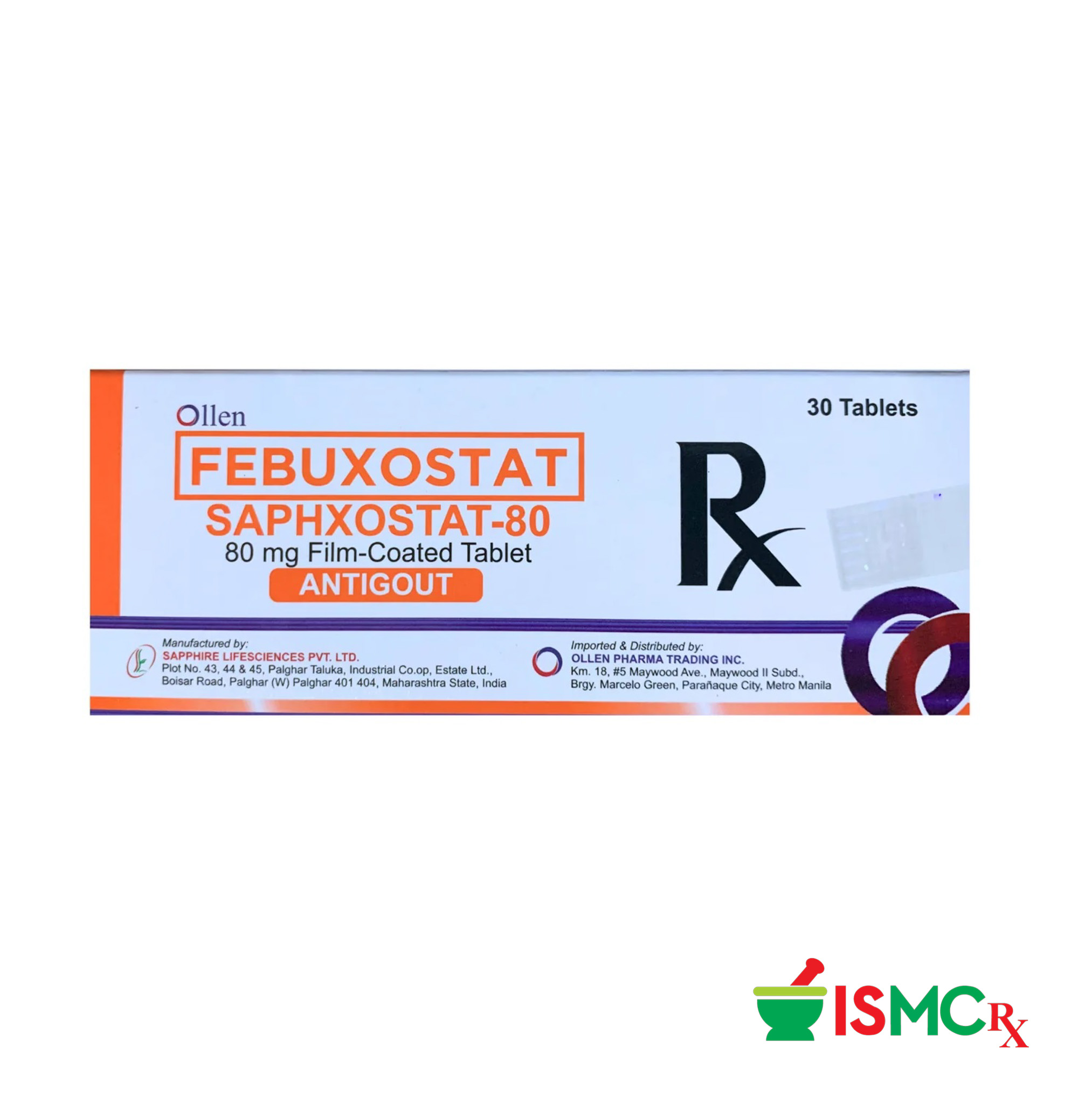
Febuxostat: A Comprehensive Medical SEO Guide for Hyperuricemia and Gout Management
Introduction & Overview of Febuxostat
Febuxostat is a potent, non-purine selective inhibitor of xanthine oxidase (XO), a crucial enzyme in the purine catabolism pathway responsible for uric acid production. Developed as an alternative to allopurinol, particularly for patients with chronic hyperuricemia who have gout, or who are intolerant to allopurinol, Febuxostat offers a targeted approach to lowering serum uric acid levels. Its efficacy in reducing and maintaining serum uric acid below the crystallization threshold (typically < 6 mg/dL) makes it a cornerstone in long-term gout management, aiming to prevent gout flares, dissolve existing urate crystals, and inhibit the formation of new tophi.
Gout is a painful inflammatory arthritis caused by the deposition of monosodium urate crystals in joints and tissues, a direct consequence of prolonged hyperuricemia. While lifestyle modifications play a role, pharmacological intervention is often necessary to effectively manage serum uric acid levels and prevent the debilitating effects of recurrent gout flares and chronic gouty arthritis. Febuxostat represents a significant advancement in this therapeutic landscape, providing a robust solution for many patients.
Deep-Dive into Technical Specifications & Mechanisms
Mechanism of Action (MOA)
Febuxostat's therapeutic effect stems from its ability to potently and selectively inhibit xanthine oxidase (XO). XO exists in two forms: oxidized (aldehyde oxidase) and reduced (xanthine dehydrogenase). Both forms are involved in the sequential oxidation of hypoxanthine to xanthine, and then xanthine to uric acid.
Unlike purine-analog XO inhibitors (e.g., allopurinol), Febuxostat is a non-purine selective inhibitor. This means it binds to the molybdenum-pterin active site of xanthine oxidase in a non-competitive manner, effectively blocking the enzyme's catalytic activity without being metabolized by it. By preventing the conversion of xanthine and hypoxanthine into uric acid, Febuxostat significantly reduces the overall production of uric acid in the body. This reduction leads to lower serum uric acid concentrations, which is critical for preventing the formation and promoting the dissolution of urate crystals responsible for gout.
The selective nature of Febuxostat means it has minimal to no effect on other enzymes involved in purine or pyrimidine metabolism, contributing to a potentially favorable safety profile compared to less selective agents.
Pharmacokinetics
The pharmacokinetic profile of Febuxostat supports its once-daily dosing regimen and effective systemic exposure.
- Absorption: Febuxostat is well absorbed after oral administration, with peak plasma concentrations (Cmax) occurring approximately 1-1.5 hours post-dose. The absolute bioavailability is estimated to be around 84%. Food has a negligible effect on the extent of absorption (AUC) but may delay Cmax slightly.
- Distribution: Febuxostat is extensively bound to plasma proteins (approximately 99.2%), primarily albumin. This high protein binding suggests a limited volume of distribution and potential for drug interactions involving protein binding displacement, though clinically significant interactions of this type are rare with Febuxostat.
- Metabolism: Febuxostat is extensively metabolized in the liver by both oxidation and conjugation via the uridine diphosphate glucuronosyltransferase (UGT) enzyme system.
- Oxidation: Primarily involves cytochrome P450 (CYP) enzymes, including CYP1A2, CYP2C8, and CYP2C9, leading to the formation of several active hydroxylated metabolites. These metabolites are less potent than Febuxostat but contribute to its overall uric acid-lowering effect.
- Glucuronidation: Involves UGT1A1, UGT1A3, UGT1A8, and UGT1A9, forming inactive acyl glucuronide conjugates.
- Elimination: Both renal and hepatic routes contribute to the elimination of Febuxostat and its metabolites.
- Approximately 49% of the administered dose is excreted in the urine, with about 3% as unchanged Febuxostat.
- Approximately 45% of the dose is excreted in the feces, with about 12% as unchanged Febuxostat.
- Half-life: The elimination half-life of Febuxostat is approximately 5-8 hours. This relatively short half-life, combined with the sustained inhibition of xanthine oxidase, supports once-daily dosing.
Special Populations:
* Renal Impairment: No dose adjustment is required for mild to moderate renal impairment (CrCl 30-89 mL/min). Caution is advised in severe renal impairment (CrCl < 30 mL/min) due to limited data, though no dose adjustment is routinely recommended.
* Hepatic Impairment: No dose adjustment is required for mild to moderate hepatic impairment (Child-Pugh Class A or B). Use in severe hepatic impairment (Child-Pugh Class C) is not recommended due to lack of data.
Extensive Clinical Indications & Usage
Febuxostat is indicated for the chronic management of hyperuricemia in adult patients with gout. Its primary goal is to lower serum uric acid (sUA) levels to a target typically below 6 mg/dL (360 micromol/L), which is crucial for preventing gout flares, resolving tophi, and improving long-term outcomes.
Detailed Indications
- Chronic Hyperuricemia with Gout: This is the primary indication. Febuxostat is used for long-term treatment to decrease sUA levels. It is often considered in patients who are intolerant to allopurinol or for whom allopurinol treatment has been unsuccessful in achieving target sUA levels.
- Allopurinol Intolerance/Contraindication: Febuxostat is a valuable alternative for patients who experience adverse reactions to allopurinol (e.g., rash, gastrointestinal upset) or have contraindications to its use.
- Renal Impairment: While allopurinol requires significant dose adjustments in patients with renal impairment, Febuxostat generally does not require dose adjustment in mild to moderate renal impairment, making it a more convenient option for some of these patients. However, caution and close monitoring are still advised.
- Off-label/Emerging Indications (Consult Guidelines):
- Tumor Lysis Syndrome (TLS): While not a primary approved indication in many regions (rasburicase and allopurinol are often first-line), some guidelines and studies explore its use for preventing hyperuricemia associated with TLS, particularly in patients at high risk or those unable to take allopurinol. It's crucial to refer to specific institutional protocols and national guidelines for TLS management.
Dosage Guidelines
Febuxostat is available in oral tablet form. The recommended starting and maintenance doses are tailored to achieve the target serum uric acid level.
| Parameter | Recommendation | Notes |
|---|---|---|
| Starting Dose | 40 mg orally once daily. | Initiate with 40 mg to reduce the risk of gout flares, which can occur during the initial phase of uric acid lowering due to crystal mobilization. |
| Titration | If sUA < 6 mg/dL is not achieved after 2 weeks, increase to 80 mg orally once daily. | Serum uric acid levels should be re-evaluated after 2 weeks. The goal is to reach and maintain sUA below 6 mg/dL. |
| Maximum Dose | 80 mg orally once daily. | Higher doses (e.g., 120 mg) have been studied but are generally not recommended for routine use due to increased cardiovascular risk observed in some studies and lack of significant additional benefit over 80 mg in most patients. |
| Flare Prophylaxis | Concomitant anti-inflammatory prophylaxis (e.g., NSAIDs, colchicine) is recommended for at least the first 6 months of Febuxostat treatment. | This is crucial because initiating urate-lowering therapy can precipitate acute gout flares due to the mobilization of urate from tissue deposits. Prophylaxis should continue until sUA target is consistently met and gout symptoms have resolved for several months. |
| Renal Impairment | No dose adjustment for mild to moderate impairment (CrCl 30-89 mL/min). Use with caution in severe impairment (CrCl < 30 mL/min). | Limited data exist for severe renal impairment. Close monitoring of sUA and adverse effects is warranted. |
| Hepatic Impairment | No dose adjustment for mild to moderate impairment (Child-Pugh Class A or B). Not recommended for severe impairment (Child-Pugh Class C). | No dose adjustment for mild to moderate hepatic impairment. Limited data for severe impairment, thus use is not recommended. |
Risks, Side Effects, and Contraindications
While generally well-tolerated, Febuxostat carries specific risks and side effects that patients and prescribers must be aware of.
Common Side Effects
These are generally mild to moderate and may resolve with continued treatment or dose adjustment.
* Nausea
* Arthralgia (joint pain)
* Rash
* Increased liver enzymes (transaminases, often transient)
* Diarrhea
* Headache
* Gout flares (especially during initial treatment – managed with prophylaxis)
Serious Side Effects & Warnings
- Cardiovascular Events: A post-marketing study (CARES trial) comparing Febuxostat to allopurinol in patients with gout and established cardiovascular disease found a higher rate of cardiovascular death and all-cause mortality with Febuxostat. While the mechanism is unclear, this led to a Boxed Warning in the US, advising that Febuxostat should be reserved for patients who have an inadequate response to allopurinol or who are intolerant to allopurinol. Careful consideration of cardiovascular risk factors is essential.
- Liver Injury: Cases of severe liver injury, including hepatic failure, have been reported. Liver function tests (LFTs) should be monitored periodically, especially at baseline and during the initial months of therapy.
- Hypersensitivity Reactions: Rare but serious hypersensitivity reactions, including Stevens-Johnson Syndrome (SJS), toxic epidermal necrolysis (TEN), and drug reaction with eosinophilia and systemic symptoms (DRESS) have been reported. Patients should be advised to seek immediate medical attention if they develop rash, fever, or other signs of hypersensitivity.
- Acute Gout Flares: As noted, initiation of Febuxostat can cause an increase in gout flares due to changes in serum uric acid levels. This is a common and expected occurrence, necessitating concomitant prophylactic therapy.
Contraindications
- Hypersensitivity: Known hypersensitivity to Febuxostat or any of its excipients.
- Concomitant Therapy with Azathioprine or Mercaptopurine: Febuxostat is a xanthine oxidase inhibitor, and azathioprine and mercaptopurine are metabolized by xanthine oxidase. Co-administration can lead to dangerously high plasma concentrations of these drugs, causing severe myelosuppression (bone marrow suppression) and other serious adverse effects. This interaction is absolutely contraindicated.
Drug Interactions
Due to its mechanism of action and metabolic pathways, Febuxostat can interact with several other medications.
| Interacting Drug/Class | Interaction Mechanism |
| Azathioprine or Mercaptopurine | Febuxostat significantly increases the concentration of these drugs by inhibiting xanthine oxidase, which is essential for their metabolism. This leads to profound levels of these drugs, resulting in serious adverse effects, including myelosuppression. | Contraindicated. Concomitant use is absolutely forbidden. |
| Theophylline | Febuxostat may