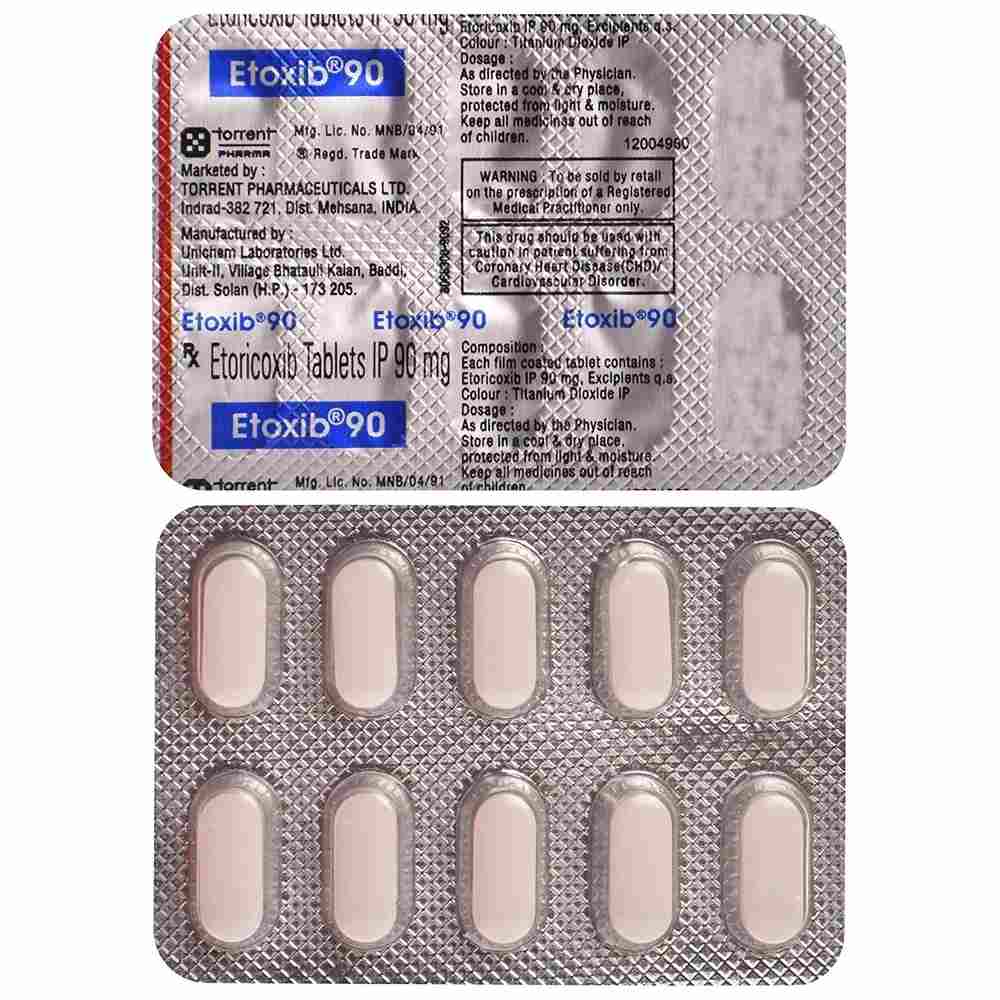
Etoxib: A Comprehensive Medical SEO Guide for Pain and Inflammation Management
Introduction & Overview of Etoxib
Welcome to this in-depth medical guide on Etoxib, a prominent medication in the management of pain and inflammation. As an expert medical SEO copywriter and orthopedic specialist, we aim to provide a highly authoritative and exhaustive resource for both healthcare professionals and patients seeking to understand this important drug.
Etoxib belongs to a class of medications known as Non-Steroidal Anti-Inflammatory Drugs (NSAIDs), specifically categorized as a selective Cyclooxygenase-2 (COX-2) inhibitor. Unlike traditional, non-selective NSAIDs that inhibit both COX-1 and COX-2 enzymes, Etoxib is designed to primarily target COX-2. This selectivity is crucial as it aims to provide effective pain and inflammation relief while potentially mitigating some of the gastrointestinal side effects commonly associated with non-selective NSAIDs.
Etoxib is primarily prescribed for the symptomatic relief of various inflammatory and painful conditions, ranging from chronic arthritic diseases like osteoarthritis and rheumatoid arthritis to acute pain episodes such as those experienced after dental surgery or during gout attacks. Its efficacy stems from its ability to reduce the production of prostaglandins, key mediators of pain, inflammation, and fever, at the site of injury or disease.
This guide will delve into the intricate details of Etoxib, covering its mechanism of action, pharmacokinetic profile, comprehensive indications, precise dosage guidelines, critical contraindications, potential drug interactions, warnings for special populations like pregnant and lactating women, and management strategies for overdose. Our goal is to empower you with a complete understanding of Etoxib, ensuring safe and effective utilization.
Deep-Dive into Technical Specifications and Mechanisms
Understanding how Etoxib functions at a molecular level is fundamental to appreciating its therapeutic benefits and potential risks.
Mechanism of Action (MoA)
Etoxib exerts its therapeutic effects through the selective inhibition of the cyclooxygenase-2 (COX-2) enzyme. To fully grasp this, it's essential to differentiate between the two main isoforms of the cyclooxygenase enzyme:
- Cyclooxygenase-1 (COX-1): This is a constitutively expressed enzyme, meaning it's always present in most tissues. COX-1 is involved in crucial physiological functions, including:
- Maintaining the integrity of the gastrointestinal (GI) mucosa (producing protective prostaglandins).
- Regulating renal blood flow.
- Mediating platelet aggregation (producing thromboxane A2).
- Cyclooxygenase-2 (COX-2): This enzyme is largely inducible, meaning its expression is significantly upregulated in response to inflammatory stimuli, cytokines, and growth factors. COX-2 is primarily responsible for the production of prostaglandins that mediate:
- Pain
- Inflammation
- Fever
- Tissue damage in pathological conditions.
Traditional, non-selective NSAIDs inhibit both COX-1 and COX-2. While effective in reducing pain and inflammation, their inhibition of COX-1 can lead to undesirable side effects, particularly gastrointestinal irritation, ulcers, and bleeding, as well as interference with platelet function.
Etoxib, as a selective COX-2 inhibitor, primarily targets the COX-2 enzyme at inflammatory sites. By doing so, it reduces the synthesis of pro-inflammatory prostaglandins without significantly interfering with the protective prostaglandins produced by COX-1 in the GI tract and kidneys. This selective action results in:
- Analgesic effect: Reduction in pain perception.
- Anti-inflammatory effect: Decrease in swelling, redness, and heat associated with inflammation.
- Antipyretic effect: Lowering of fever.
The theoretical advantage of COX-2 selectivity is a reduced risk of serious gastrointestinal adverse events compared to non-selective NSAIDs, while maintaining comparable efficacy in managing inflammatory pain.
Pharmacokinetics
The pharmacokinetic profile of Etoxib describes how the body absorbs, distributes, metabolizes, and eliminates the drug. This information is vital for determining appropriate dosing regimens and understanding its duration of action.
- Absorption:
- Etoxib is well absorbed orally.
- Bioavailability: High oral bioavailability, typically around 100%.
- Time to Peak Plasma Concentration (Tmax): Generally achieved within 1 hour after administration.
- Effect of Food: While food may slightly decrease the rate of absorption, it does not significantly affect the extent of absorption. Therefore, Etoxib can be taken with or without food.
- Distribution:
- Protein Binding: Etoxib is highly bound to plasma proteins, typically greater than 90%.
- Volume of Distribution (Vd): Indicates extensive distribution into tissues.
- Metabolism:
- Etoxib is extensively metabolized in the liver, primarily via the cytochrome P450 (CYP) enzyme system, specifically CYP3A4, with contributions from other CYP isoenzymes.
- Metabolism leads to the formation of inactive metabolites.
- Elimination:
- Half-life (t½): The elimination half-life is approximately 20-26 hours, allowing for once-daily dosing.
- Excretion: Primarily excreted via the kidneys (approximately 70%) and feces (approximately 30%), mainly as metabolites. Less than 1% is excreted as unchanged drug.
- Special Populations:
- Hepatic Impairment: Patients with mild to moderate hepatic impairment may require dose adjustments due to reduced metabolism and increased plasma concentrations. Etoxib is contraindicated in severe hepatic dysfunction.
- Renal Impairment: While renal excretion is a primary route, significant dose adjustments are typically not required for mild to moderate renal impairment. However, caution is advised, and Etoxib is contraindicated in severe renal dysfunction.
Extensive Clinical Indications & Usage
Etoxib is indicated for the symptomatic relief of various painful and inflammatory conditions. The choice of Etoxib should be based on an individual patient's overall risk profile, particularly regarding cardiovascular and gastrointestinal risks.
Detailed Indications
Etoxib is approved for the treatment of:
- Osteoarthritis (OA): For the symptomatic relief of pain and inflammation associated with osteoarthritis, a degenerative joint disease.
- Rheumatoid Arthritis (RA): For the symptomatic relief of pain and inflammation associated with rheumatoid arthritis, a chronic autoimmune inflammatory disorder affecting joints.
- Ankylosing Spondylitis (AS): For the symptomatic relief of pain and inflammation in patients with ankylosing spondylitis, a chronic inflammatory disease primarily affecting the spine.
- Acute Gouty Arthritis: For the treatment of acute pain and inflammation associated with gout, a type of inflammatory arthritis caused by uric acid crystal deposition.
- Acute Pain: Including post-surgical pain (e.g., dental surgery) and other forms of acute musculoskeletal pain.
- Chronic Musculoskeletal Pain: For conditions requiring sustained pain and inflammation management.
Dosage Guidelines
The dosage of Etoxib varies depending on the specific indication and the individual patient's response and tolerance. It is crucial to use the lowest effective dose for the shortest possible duration to minimize the risk of adverse effects.
| Indication | Recommended Daily Dose | Maximum Daily Dose | Notes |
|---|---|---|---|
| Osteoarthritis (OA) | 30 mg or 60 mg once daily | 60 mg | Start with 30 mg once daily; increase to 60 mg if needed. |
| Rheumatoid Arthritis (RA) | 60 mg or 90 mg once daily | 90 mg | Start with 60 mg once daily; increase to 90 mg if needed. |
| Ankylosing Spondylitis (AS) | 60 mg or 90 mg once daily | 90 mg | Start with 60 mg once daily; increase to 90 mg if needed. |
| Acute Gouty Arthritis | 120 mg once daily | 120 mg | Should be used only for the acute symptomatic period, typically for a maximum of 8 days. |
| Acute Pain (e.g., Post-Dental Surgery) | 90 mg once daily | 90 mg | For a maximum of 3 days. |
| Chronic Musculoskeletal Pain | 60 mg once daily | 60 mg | When the anti-inflammatory effect is desired for chronic conditions. |
General Administration Guidelines:
- Etoxib tablets can be taken with or without food.
- The tablets should be swallowed whole with water.
- Do not exceed the recommended daily dose.
- For acute conditions, treatment duration should be as short as possible.
- For chronic conditions, patients should be regularly re-evaluated for the need for continued treatment.
Special Population Dosage Adjustments:
- Elderly Patients: No specific dose adjustment is generally required, but caution is advised due to increased risk of adverse effects.
- Hepatic Impairment:
- Mild (Child-Pugh score 5-6): Do not exceed 60 mg once daily.
- Moderate (Child-Pugh score 7-9): Do not exceed 30 mg once daily.
- Severe (Child-Pugh score ≥10): Etoxib is contraindicated.
- Renal Impairment:
- Mild to Moderate (Creatinine Clearance 30-80 mL/min): No dose adjustment is usually needed, but careful monitoring is recommended.
- Severe (Creatinine Clearance <30 mL/min): Etoxib is contraindicated.
Risks, Side Effects, and Contraindications
While Etoxib offers effective relief, like all medications, it carries potential risks and side effects. A thorough understanding of these, along with contraindications, is vital for safe prescribing and use.
Contraindications
Etoxib is contraindicated in patients with:
- Hypersensitivity: Known hypersensitivity to Etoxib or any of its excipients.
- NSAID Allergy: History of asthma, urticaria, or allergic-type reactions after taking aspirin or other NSAIDs.
- Active Peptic Ulceration or Gastrointestinal (GI) Bleeding: Due to the risk of exacerbation.
- Severe Hepatic Dysfunction: (Child-Pugh score ≥10).
- Severe Renal Dysfunction: (Creatinine Clearance <30 mL/min).
- Congestive Heart Failure (CHF): New York Heart Association (NYHA) Class II-IV.
- Established Ischemic Heart Disease, Peripheral Arterial Disease, and/or Cerebrovascular Disease: Due to increased cardiovascular thrombotic risk.
- Uncontrolled Hypertension: Blood pressure persistently elevated above 140/90 mmHg that has not been adequately controlled.
- Pregnancy: Especially during the third trimester.
- Lactation: Breastfeeding women.
- Children and Adolescents: Under 16 years of age.
Side Effects
The incidence and severity of side effects can vary. Patients should report any unusual or persistent symptoms to their healthcare provider.
Common Side Effects (≥1%):
- Gastrointestinal: Abdominal pain, dyspepsia, nausea, diarrhea, heartburn, flatulence.
- Cardiovascular: Hypertension, peripheral edema (swelling).
- Nervous System: Dizziness, headache.
- Hepatic: Elevated liver enzymes (transaminases).
- Other: Flu-like symptoms, weakness, fatigue.
Less Common to Serious Side Effects (<1%):
- Gastrointestinal: Gastric ulcers, GI bleeding, perforation (can be fatal), vomiting, dysphagia, irritable bowel syndrome.
- Cardiovascular: Myocardial infarction (heart attack), stroke, congestive heart failure, angina, palpitations, tachycardia.
- Renal: Renal impairment, acute renal failure, interstitial nephritis.
- Hepatic: Hepatitis, jaundice, severe hepatic failure.
- Hematologic: Anemia, leukopenia, thrombocytopenia.
- Nervous System: Insomnia, anxiety, depression, confusion, paraesthesia, somnolence.
- Dermatologic/Hypersensitivity: Rash, pruritus, urticaria, angioedema, Stevens-Johnson Syndrome (SJS), Toxic Epidermal Necrolysis (TEN), anaphylactic/anaphylactoid reactions.
- Respiratory: Bronchospasm (especially in aspirin-sensitive asthmatics).
- Ocular: Blurred vision.
- Other: Weight gain, taste disturbance.
Warnings and Precautions
- Cardiovascular Thrombotic Events: Etoxib, like other COX-2 selective inhibitors, may increase the risk of serious cardiovascular thrombotic events, myocardial infarction, and stroke, which can be fatal. This risk may increase with duration of use and in patients with pre-existing cardiovascular disease or risk factors. Etoxib should be used with caution in these patients, and the lowest effective dose for the shortest duration should be employed.
- Gastrointestinal Risk: Although designed to reduce GI side effects, Etoxib is not entirely risk-free. Serious GI events like bleeding, ulceration, and perforation can occur, particularly in elderly patients or those with a history of GI disease. Concomitant use with aspirin, even low-dose, increases this risk.
- Hypertension: Etoxib can lead to new onset hypertension or worsening of pre-existing hypertension, which may contribute to an increased risk of cardiovascular events. Blood pressure should be monitored closely during Etoxib treatment.
- Fluid Retention and Edema: Fluid retention and edema have been observed. Caution is advised in patients with a history of heart failure or hypertension.
- Renal Effects: NSAIDs, including Etoxib, can cause dose-dependent renal toxicity, including acute renal failure. This risk is higher in patients with pre-existing renal disease, heart failure, liver dysfunction, and in the elderly.
- Hepatic Effects: Serious hepatic reactions, including hepatitis and liver failure, have been reported rarely. Patients should be monitored for signs of liver dysfunction.
- Asthma Exacerbation: Patients with asthma may experience bronchospasm.
- Skin Reactions: Severe skin reactions, including SJS and TEN, can occur, although rarely. Discontinue Etoxib at the first appearance of rash or any other sign of hypersensitivity.
Drug Interactions
Concomitant use of Etoxib with certain medications can alter drug levels or increase the risk of adverse effects.
| Interacting Drug/Class | Potential Effect | Management / Recommendation