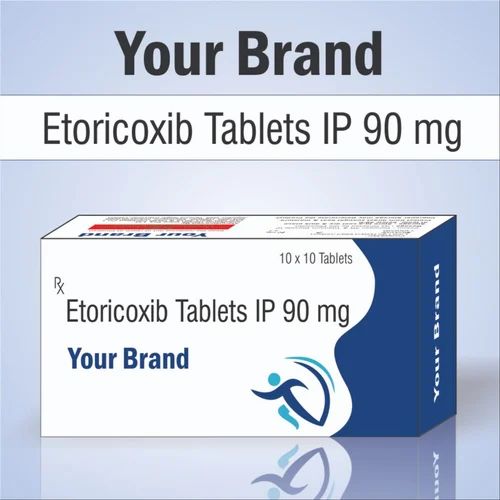
Etoricoxib: An In-Depth Medical SEO Guide for Pain and Inflammation Management
Introduction & Overview
Etoricoxib is a highly selective cyclooxygenase-2 (COX-2) inhibitor, belonging to the class of non-steroidal anti-inflammatory drugs (NSAIDs). It is widely prescribed for the symptomatic relief of pain and inflammation associated with various musculoskeletal and rheumatic conditions. As an expert medical SEO copywriter and orthopedic specialist, this comprehensive guide aims to provide an exhaustive overview of Etoricoxib, detailing its mechanism of action, pharmacokinetics, clinical indications, dosage guidelines, contraindications, potential side effects, drug interactions, and crucial warnings for special populations.
The primary advantage of selective COX-2 inhibitors like Etoricoxib lies in their ability to target the COX-2 enzyme, which is primarily responsible for mediating inflammation and pain, while largely sparing the COX-1 enzyme. COX-1 is crucial for maintaining the integrity of the gastrointestinal (GI) mucosa and regulating platelet function. This selectivity theoretically translates to a reduced risk of GI side effects (such as ulcers, bleeding, and perforation) compared to conventional non-selective NSAIDs, which inhibit both COX-1 and COX-2. However, it's vital to understand that while the GI risk is lower, it is not entirely eliminated, and other risks, particularly cardiovascular, must be carefully considered.
This guide serves as an authoritative resource for healthcare professionals, patients, and anyone seeking in-depth knowledge about Etoricoxib, emphasizing safe and effective utilization.
Deep-Dive into Technical Specifications & Mechanisms
Mechanism of Action
Etoricoxib exerts its therapeutic effects primarily through the selective inhibition of the cyclooxygenase-2 (COX-2) enzyme. To understand this, it's essential to differentiate between the two main isoforms of the COX enzyme:
- Cyclooxygenase-1 (COX-1): This is a constitutively expressed enzyme found in most tissues. It plays a crucial role in maintaining physiological functions, including protecting the gastric mucosa (by producing prostaglandins that regulate mucus and bicarbonate secretion), maintaining renal blood flow, and facilitating platelet aggregation (via thromboxane A2 production).
- Cyclooxygenase-2 (COX-2): This enzyme is generally inducible, meaning its expression is significantly upregulated at sites of inflammation, trauma, or injury by inflammatory mediators such as cytokines. COX-2 is primarily responsible for the synthesis of prostaglandins that mediate pain, inflammation, and fever.
Etoricoxib is designed to specifically bind to and inhibit the COX-2 enzyme with high affinity and selectivity. By inhibiting COX-2, Etoricoxib prevents the conversion of arachidonic acid into pro-inflammatory prostaglandins (e.g., PGE2, PGI2, PGF2α). The resulting reduction in prostaglandin synthesis at inflammatory sites leads to:
- Analgesic effect: Reduction in pain perception.
- Anti-inflammatory effect: Decrease in swelling and redness.
- Antipyretic effect: Reduction in fever (though not its primary indication).
The high selectivity for COX-2 means that, at therapeutic doses, Etoricoxib largely spares COX-1 activity. This is the basis for its improved gastrointestinal safety profile compared to non-selective NSAIDs, as the protective prostaglandins produced by COX-1 in the stomach are less affected. However, it's important to note that even selective COX-2 inhibitors can have dose-dependent and duration-dependent effects on COX-1, particularly at very high doses or with prolonged use.
Pharmacokinetics
Understanding the pharmacokinetics of Etoricoxib is crucial for optimizing its dosage and predicting its clinical effects and potential interactions.
-
Absorption:
- Etoricoxib is rapidly and well-absorbed after oral administration.
- Peak plasma concentrations (Cmax) are typically achieved within approximately 1 hour post-dose.
- The mean oral bioavailability is estimated to be around 100%.
- Food has no clinically significant effect on the extent of absorption, but it may slightly decrease Cmax and delay Tmax. Therefore, it can be taken with or without food.
-
Distribution:
- Etoricoxib is highly bound to plasma proteins, primarily albumin, with an average binding of approximately 92%.
- The volume of distribution at steady-state is approximately 120 liters.
-
Metabolism:
- Etoricoxib undergoes extensive hepatic metabolism, primarily via the cytochrome P450 (CYP) enzyme system.
- The main enzyme involved in its metabolism is CYP3A4, with contributions from CYP2C9, CYP2D6, and CYP1A2.
- Metabolism primarily involves hydroxylation followed by glucuronidation.
- Five metabolites have been identified, but none possess significant COX-2 inhibitory activity.
-
Elimination:
- Etoricoxib is primarily eliminated via renal excretion of its metabolites.
- Approximately 70% of the dose is excreted in the urine as metabolites, and about 20% is excreted in feces (both as unchanged drug and metabolites).
- The effective half-life for accumulation at steady-state (t½) is approximately 22 hours, allowing for once-daily dosing.
- Steady-state plasma concentrations are typically achieved within 7 days of once-daily administration.
-
Special Populations:
- Elderly: Pharmacokinetics are similar to younger adults; no specific dose adjustment is generally required based on age alone, but caution is advised due to increased susceptibility to adverse effects.
- Hepatic Impairment: Patients with mild hepatic impairment (Child-Pugh score 5-6) may require a reduced dose. Etoricoxib is contraindicated in severe hepatic impairment (Child-Pugh score ≥10).
- Renal Impairment: In patients with mild to moderate renal impairment (creatinine clearance 30-80 mL/min), pharmacokinetic parameters are generally similar to healthy individuals. However, caution is warranted, and the lowest effective dose should be used. Etoricoxib is contraindicated in severe renal impairment (creatinine clearance < 30 mL/min).
Extensive Clinical Indications & Usage
Etoricoxib is indicated for the symptomatic relief of various painful and inflammatory conditions. The choice of dosage depends on the specific indication and the patient's individual response and tolerance.
Detailed Indications
| Indication | Description |
|---|---|
| Osteoarthritis (OA) | Chronic inflammatory condition affecting joints, causing pain, stiffness, and reduced mobility. Etoricoxib provides symptomatic relief of pain and inflammation. |
| Rheumatoid Arthritis (RA) | Chronic autoimmune inflammatory disorder primarily affecting joints, leading to pain, swelling, stiffness, and potential joint destruction. Etoricoxib helps manage the pain and inflammation associated with RA. |
| Ankylosing Spondylitis (AS) | Chronic inflammatory disease primarily affecting the spine and sacroiliac joints, causing chronic back pain and stiffness. Etoricoxib is effective in reducing pain and improving spinal mobility. |
| Acute Gouty Arthritis | A sudden, severe attack of joint pain, typically in the big toe, caused by the deposition of uric acid crystals. Etoricoxib is used for the short-term treatment of acute pain and inflammation during gout flares. |
| Acute Pain (e.g., Post-Dental Surgery Pain) | For the short-term treatment of moderate to severe acute pain, such as that experienced after dental surgical procedures. |
| Primary Dysmenorrhea | Painful menstrual periods in women, not due to other underlying conditions. Etoricoxib can be used for the short-term management of menstrual pain. (Availability and indication may vary by regional guidelines). |
Dosage Guidelines
It is crucial to use the lowest effective dose for the shortest possible duration to minimize the risk of adverse events, particularly cardiovascular and gastrointestinal.
| Indication | Recommended Dosage