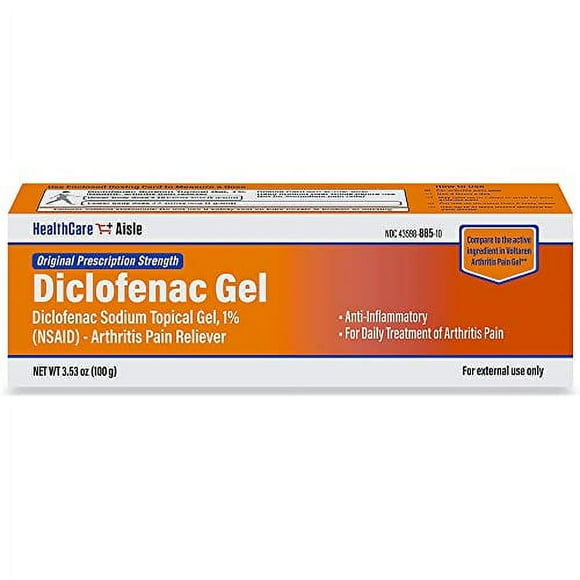
Diclofenac Topical Gel: Your Comprehensive Orthopedic Guide
As an expert in orthopedic care and medical SEO copywriting, we understand the critical need for precise, authoritative information regarding pain management solutions. Diclofenac Topical Gel represents a cornerstone in the localized treatment of various musculoskeletal conditions, offering targeted relief with a reduced systemic side effect profile compared to oral NSAIDs. This exhaustive guide aims to provide patients and healthcare professionals alike with a deep dive into its mechanisms, indications, usage, and safety considerations.
1. Comprehensive Introduction & Overview
Diclofenac Topical Gel is a nonsteroidal anti-inflammatory drug (NSAID) formulated for external application directly to the skin. It is widely prescribed and available over-the-counter in various strengths (e.g., 1%, 2%) for the localized treatment of pain and inflammation associated with conditions such as osteoarthritis, acute sprains, strains, and contusions.
Unlike oral NSAIDs that circulate throughout the body, topical diclofenac delivers the active ingredient directly to the site of pain, penetrating the skin to reach underlying tissues and joints. This targeted approach minimizes systemic exposure, thereby reducing the likelihood of common NSAID-related adverse effects such as gastrointestinal upset, cardiovascular complications, or renal issues.
Its primary role in orthopedic practice is to provide effective analgesia and anti-inflammatory action for superficial joints and soft tissue injuries, allowing patients to manage their pain more effectively and improve their quality of life. Understanding its nuanced application and safety profile is paramount for optimal therapeutic outcomes.
2. Deep-Dive into Technical Specifications & Mechanisms
Mechanism of Action
Diclofenac exerts its therapeutic effects primarily through the inhibition of cyclooxygenase (COX) enzymes, specifically COX-1 and COX-2. These enzymes are crucial for the biosynthesis of prostaglandins, which are lipid compounds that act as mediators of inflammation, pain, and fever.
- COX-1 Inhibition: Primarily involved in maintaining physiological functions such as protecting the gastric mucosa, regulating renal blood flow, and facilitating platelet aggregation. Inhibition of COX-1 can lead to some of the systemic side effects seen with NSAIDs.
- COX-2 Inhibition: Primarily induced during inflammatory processes and is responsible for the production of prostaglandins that mediate pain and inflammation at sites of injury or disease.
By inhibiting both COX-1 and COX-2, diclofenac reduces the production of pro-inflammatory prostaglandins, leading to:
* Analgesic Effect: Decreased sensitization of pain receptors.
* Anti-inflammatory Effect: Reduced vasodilation, edema, and leukocyte infiltration at the inflamed site.
* Antipyretic Effect: While less relevant for topical application, systemic absorption can contribute to fever reduction.
The topical formulation allows diclofenac to concentrate in the synovial fluid and other underlying tissues of the affected joint or area, providing localized anti-inflammatory and analgesic effects where they are most needed, with comparatively low plasma concentrations.
Pharmacokinetics
The pharmacokinetic profile of diclofenac topical gel is distinct from its oral counterpart, characterized by localized absorption and distribution, minimizing systemic burden.
- Absorption:
- Skin Penetration: Diclofenac readily penetrates the stratum corneum (outermost layer of skin) and accumulates in the epidermis and dermis.
- Factors Affecting Absorption:
- Application Area: Larger surface areas increase systemic absorption.
- Skin Integrity: Compromised skin (e.g., cuts, abrasions) can increase absorption.
- Occlusion: Covering the treated area with an occlusive dressing can significantly enhance systemic absorption, which is generally not recommended.
- Dosage & Concentration: Higher concentrations and larger doses increase the amount of drug available for absorption.
- Peak Plasma Levels: Systemic plasma concentrations of diclofenac after topical application are significantly lower (typically 1-10% of those achieved with equivalent oral doses) and are achieved more slowly.
- Distribution:
- The primary distribution is local, with high concentrations of diclofenac found in the underlying muscle, synovial fluid, and joint tissues of the treated area.
- Minimal systemic distribution to other organs occurs due to limited systemic absorption.
- Metabolism:
- Systemically absorbed diclofenac is extensively metabolized in the liver, primarily by hydroxylation and subsequent glucuronidation.
- Metabolites are mostly inactive.
- Excretion:
- Metabolites are primarily excreted in the urine (approximately 60%) and bile (approximately 35%).
- The half-life of diclofenac in plasma is typically 1-2 hours, but its half-life in synovial fluid and tissues can be longer, contributing to sustained local action.
3. Extensive Clinical Indications & Usage
Diclofenac Topical Gel is a versatile medication for various musculoskeletal conditions where localized pain and inflammation are present.
Detailed Indications
- Osteoarthritis (OA):
- Primary Use: Management of pain associated with osteoarthritis of joints amenable to topical treatment, such as the knees, hands, ankles, and elbows.
- Specific Formulations: The 1% gel (e.g., Voltaren Gel) is commonly indicated for OA pain, applied to affected joints. The 2% gel offers a more concentrated option, often requiring less frequent application.
- Benefits: Reduces joint pain and stiffness, improving physical function.
- Acute Pain due to Localized Trauma:
- Sprains, Strains, & Contusions: Effective for alleviating pain and inflammation from acute musculoskeletal injuries.
- Tendinitis: Can be used for localized pain and inflammation associated with tendinitis (e.g., tennis elbow, Achilles tendinitis).
- Bursitis: Helps manage inflammation in superficial bursae.
- Other Musculoskeletal Conditions:
- While less common as a primary treatment, it can be used as an adjunct for localized pain in conditions like rheumatoid arthritis affecting superficial joints, or certain types of localized back pain where the source is superficial (e.g., muscular strain).
Dosage Guidelines & Administration
Precise dosing and proper application technique are crucial for maximizing efficacy and minimizing potential side effects. Always consult your prescribing physician or pharmacist for personalized instructions.
-
General Application Principles:
- Apply only to clean, dry, intact skin.
- Do not apply to open wounds, infected areas, or skin affected by eczema or rash.
- Wash hands thoroughly after application, unless the hands are the area being treated.
- Avoid contact with eyes, mucous membranes (mouth, nose), and genitals.
- Do not apply external heat or occlusive dressings over the treated area, as this can increase systemic absorption.
- Wait at least 10 minutes before dressing the treated area or washing the treated area. Wait at least 1 hour before showering or bathing.
-
Typical Dosage for Diclofenac Sodium Topical Gel 1% (e.g., for Osteoarthritis):
- Lower Extremity Joints (e.g., knee, ankle, foot): Apply 4 grams of gel to the affected joint 4 times daily.
- Upper Extremity Joints (e.g., hand, wrist, elbow): Apply 2 grams of gel to the affected joint 4 times daily.
- Measuring: A dosing card (often provided) or a finger-length measurement can be used. For example, 2 grams is typically a line of gel approximately 2.25 inches long. The total daily dose should not exceed 16 grams for any single joint or 32 grams for multiple joints.
-
Typical Dosage for Diclofenac Sodium Topical Gel 2% (e.g., for Osteoarthritis):
- Apply 2.2 grams of gel to the affected joint 2 times daily.
- Measuring: A dosing card or a finger-length measurement can be used. For example, 2.2 grams is typically a line of gel approximately 2 inches long. The maximum daily dose is 8.8 grams per joint.
-
Duration of Treatment:
- The duration of treatment depends on the condition and response. For acute injuries, it might be for a few weeks. For chronic conditions like osteoarthritis, it may be used long-term under medical supervision.
- If no improvement is seen after 7 days for acute conditions, or 21 days for chronic conditions, consult a healthcare professional.
-
Special Populations:
- Elderly Patients: No specific dose adjustment is usually required, but caution is advised due to potential increased sensitivity.
- Renal/Hepatic Impairment: Due to minimal systemic absorption, dose adjustments are generally not necessary for topical diclofenac, unlike oral formulations. However, patients with severe impairment should still use with caution and under medical advice.
- Pediatric Use: Safety and efficacy in children under 18 years have not been established.
4. Risks, Side Effects, & Contraindications
While generally well-tolerated, Diclofenac Topical Gel is not without potential risks. A thorough understanding of its contraindications and side effect profile is essential for safe use.
Contraindications
- Hypersensitivity: Known hypersensitivity or allergic reactions to diclofenac, aspirin, or other NSAIDs. This includes patients who have experienced asthma, urticaria (hives), or other allergic-type reactions after taking aspirin or other NSAIDs.
- Third Trimester of Pregnancy: As with oral NSAIDs, use of topical diclofenac during the third trimester of pregnancy is contraindicated due to the risk of premature closure of the fetal ductus arteriosus.
- Application to Damaged Skin: Do not apply to open wounds, infected skin, eczematous skin, or areas affected by burns.
- Prior Severe Allergic Reactions: History of severe cutaneous adverse reactions (e.g., Stevens-Johnson syndrome, toxic epidermal necrolysis) to NSAIDs.
Potential Side Effects
Most side effects are localized and mild. Systemic side effects are rare but can occur, especially with extensive application, prolonged use, or compromised skin barrier.
-
Local Skin Reactions (Most Common):
- Dermatitis (rash, itching, redness, dryness, scaling)
- Contact dermatitis
- Pruritus (itching)
- Erythema (redness)
- Skin irritation
- Photosensitivity (increased sensitivity to sunlight), leading to sunburn or rash. Advise patients to use sun protection on treated areas.
-
Systemic Side Effects (Rare, but Possible):
- Gastrointestinal: Nausea, abdominal pain, dyspepsia, diarrhea, constipation. While significantly lower than oral NSAIDs, there's still a theoretical risk of GI bleeding or ulceration, especially in susceptible individuals or with very high systemic absorption.
- Cardiovascular: Increased risk of serious cardiovascular thrombotic events (e.g., myocardial infarction, stroke). This risk is primarily associated with oral NSAIDs but cannot be entirely excluded with topical use, particularly with prolonged high-dose application over large areas.
- Renal: Impaired renal function, fluid retention, edema. Extremely rare with topical application but possible in patients with pre-existing renal compromise or significant systemic absorption.
- Hepatic: Elevated liver enzymes.
- Hematologic: Anemia, prolonged bleeding time.
- Respiratory: Exacerbation of asthma in aspirin-sensitive individuals.
Drug Interactions
While systemic absorption is low, potential drug interactions should still be considered, especially in patients on concomitant medications with narrow therapeutic indices or those at high risk for adverse events.
| Interacting Drug Class | Potential Effect | Recommendation |
|---|---|---|