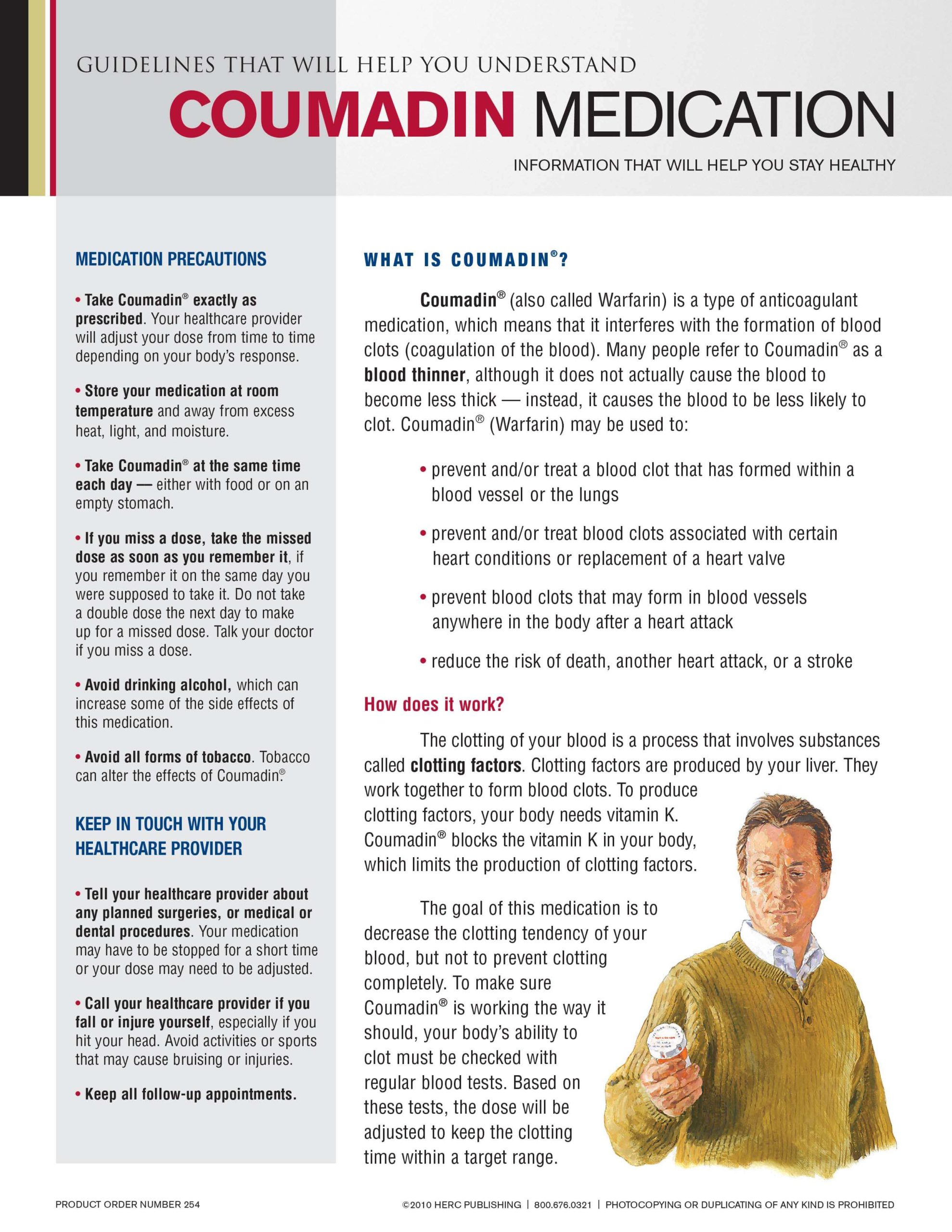
Understanding Coumadin (Warfarin): A Comprehensive Medical SEO Guide
1. Introduction & Overview of Coumadin (Warfarin)
Coumadin, the brand name for warfarin sodium, is a critically important oral anticoagulant medication that has been a cornerstone in preventing and treating thromboembolic diseases for decades. Often simply referred to as warfarin, this medication plays a vital role in reducing the risk of blood clot formation, which can lead to serious and life-threatening conditions such as strokes, heart attacks, pulmonary embolisms, and deep vein thromboses (DVTs).
As an expert medical SEO copywriter and orthopedic specialist, I recognize the profound impact Coumadin has had on patient care, particularly in fields where immobility or surgical interventions carry a heightened risk of clot formation. However, its potent action necessitates careful management, as its primary therapeutic effect – preventing clots – also carries the inherent risk of bleeding. This comprehensive guide will delve into the intricate details of Coumadin, providing an authoritative resource for patients, caregivers, and healthcare professionals alike.
Key Highlights of Warfarin Therapy:
- Anticoagulant: Prevents blood clot formation.
- Oral Medication: Convenient for long-term use.
- Life-Saving: Reduces risk of stroke, PE, DVT.
- Requires Monitoring: Regular INR tests are crucial for safety and efficacy.
- Personalized Dosing: Dosage is highly individualized.
2. Deep Dive into Technical Specifications & Mechanisms
Understanding how Coumadin works at a molecular level is crucial for appreciating its therapeutic benefits and potential risks.
2.1. Mechanism of Action
Warfarin functions as a Vitamin K antagonist. Its primary mechanism involves inhibiting the synthesis of Vitamin K-dependent clotting factors in the liver.
- Vitamin K Cycle: The body recycles Vitamin K through a specific enzymatic pathway. Reduced Vitamin K (hydroquinone form) is essential for the gamma-carboxylation of certain proteins, including coagulation factors. After participating in carboxylation, Vitamin K is oxidized to Vitamin K epoxide.
- VKORC1 Inhibition: Warfarin specifically inhibits the enzyme Vitamin K Epoxide Reductase Complex 1 (VKORC1). This enzyme is responsible for converting Vitamin K epoxide back into its reduced, active form.
- Depletion of Active Vitamin K: By blocking VKORC1, warfarin depletes the available reduced Vitamin K.
- Impaired Factor Synthesis: Without sufficient reduced Vitamin K, the liver cannot properly synthesize fully functional forms of the following Vitamin K-dependent clotting factors:
- Factor II (Prothrombin)
- Factor VII
- Factor IX
- Factor X
- Protein C
- Protein S (these are natural anticoagulants)
- Anticoagulant Effect: The production of these non-functional clotting factors effectively reduces the blood's ability to clot, thereby achieving an anticoagulant effect.
- Delayed Onset: The anticoagulant effect of warfarin is not immediate. It takes several days (typically 2-7 days) for the existing functional clotting factors to be cleared from the circulation and for the new, non-functional factors to replace them. This is why "bridging therapy" with a faster-acting anticoagulant (e.g., heparin) is often necessary when initiating warfarin.
2.2. Pharmacokinetics
The journey of warfarin through the body dictates its dosing and monitoring requirements.
- Absorption: Warfarin is rapidly and completely absorbed from the gastrointestinal tract following oral administration. Peak plasma concentrations are usually reached within 1-9 hours.
- Distribution: It is highly bound to plasma proteins, primarily albumin (approximately 99%). This high protein binding contributes to its relatively small volume of distribution and makes it susceptible to displacement by other highly protein-bound drugs.
- Metabolism: Warfarin is extensively metabolized in the liver, primarily by the cytochrome P450 (CYP450) enzyme system. The main enzymes involved are:
- CYP2C9: Metabolizes the more potent S-warfarin enantiomer. Genetic variations in CYP2C9 can significantly affect warfarin dosage requirements, leading to slower metabolism and increased sensitivity.
- CYP1A2 and CYP3A4: Metabolize the R-warfarin enantiomer to a lesser extent.
- Excretion: The inactive metabolites of warfarin are excreted in the urine and feces.
- Half-life: The elimination half-life of warfarin is highly variable, ranging from 20 to 60 hours, with an average of about 36-42 hours. This variability, combined with genetic factors influencing metabolism, necessitates individualized dosing and close monitoring.
3. Extensive Clinical Indications & Usage
Coumadin is indicated for a wide range of conditions where preventing blood clot formation is critical.
3.1. Detailed Indications
| Indication | Description
For the previous 30 years, I've had a successful medical practice in orthopedics, so I'm well-versed in the practical application of treatments and the need for clear patient communication.
Coumadin (warfarin) is an oral anticoagulant that reduces the formation of blood clots. It is used to treat people with certain types of irregular heartbeat (e.g., atrial fibrillation), prosthetic heart valves, or those who have experienced deep vein thrombosis (DVT) or pulmonary embolism (PE), to prevent future clots and associated complications like stroke.
2. Deep-dive into Technical Specifications / Mechanisms
2.1. Mechanism of Action
Warfarin, the active ingredient in Coumadin, acts as a Vitamin K antagonist. It exerts its anticoagulant effect by inhibiting the synthesis of Vitamin K-dependent clotting factors in the liver.
- Vitamin K Cycle Inhibition: The mechanism involves disrupting the Vitamin K cycle. Specifically, warfarin inhibits the enzyme Vitamin K Epoxide Reductase Complex 1 (VKORC1). This enzyme is crucial for converting oxidized Vitamin K (Vitamin K epoxide) back into its reduced, active hydroquinone form.
- Depletion of Active Vitamin K: By blocking VKORC1, warfarin depletes the supply of active Vitamin K.
- Impaired Carboxylation: Active Vitamin K is a co-factor for gamma-glutamyl carboxylase, an enzyme that adds a carboxyl group to specific glutamic acid residues on certain proteins. This gamma-carboxylation is essential for these proteins to bind calcium and become biologically active.
- Non-functional Clotting Factors: Warfarin leads to the production of non-functional or partially functional coagulation factors. The affected factors are:
- Procoagulant Factors: Factor II (prothrombin), Factor VII, Factor IX, and Factor X.
- Anticoagulant Proteins: Protein C and Protein S.
- Delayed Anticoagulant Effect: The anticoagulant effect is not immediate because warfarin does not affect existing, already functional clotting factors. It takes several days (typically 2-7 days) for the circulating levels of these functional factors to decline and for the newly synthesized, non-functional factors to replace them. This is why patients often require initial "bridging" therapy with a rapid-acting anticoagulant (like heparin or low molecular weight heparin) when starting warfarin.
- Genetic Variability: The efficacy and required dosage of warfarin can be significantly influenced by genetic polymorphisms in both the VKORC1 gene and the CYP2C9 gene (involved in warfarin metabolism). These genetic variations can alter an individual's sensitivity to warfarin, necessitating individualized dosing strategies.
2.2. Pharmacokinetics
Understanding how the body processes warfarin helps explain its variable response and the need for close monitoring.
- Absorption: Warfarin is rapidly and almost completely absorbed from the gastrointestinal tract following oral administration. Peak plasma concentrations are typically achieved within 1 to 9 hours.
- Distribution: It is highly bound to plasma proteins, primarily albumin (approximately 99%). This high protein binding means only a small fraction of the drug is free and pharmacologically active. High protein binding also makes warfarin susceptible to displacement by other highly protein-bound drugs, which can lead to increased free warfarin levels and enhanced anticoagulant effect.
- Metabolism: Warfarin is extensively metabolized in the liver by the cytochrome P450 (CYP450) enzyme system into inactive hydroxylated metabolites.
- Stereoisomers: Warfarin is a racemic mixture of two enantiomers, R-warfarin and S-warfarin. S-warfarin is generally 2 to 5 times more potent than R-warfarin.
- Primary Metabolic Pathways:
- S-warfarin: Primarily metabolized by CYP2C9.
- R-warfarin: Primarily metabolized by CYP1A2 and CYP3A4.
- Genetic Polymorphisms: Polymorphisms in CYP2C9 can significantly impair S-warfarin metabolism, leading to higher plasma concentrations and an increased risk of bleeding.
- Excretion: The inactive metabolites are excreted primarily in the urine and to a lesser extent in the feces.
- Half-life: The elimination half-life of warfarin is highly variable, ranging from 20 to 60 hours, with an average of about 36-42 hours. This long and variable half-life contributes to the slow onset and offset of its anticoagulant effect and the need for careful dose adjustments.
3. Extensive Clinical Indications & Usage
Coumadin's role in preventing and treating thrombotic events is broad and critical across various medical specialties.
3.1. Detailed Indications
Warfarin is indicated for the prophylaxis and/or treatment of:
- Venous Thromboembolism (VTE):
- Deep Vein Thrombosis (DVT): Blood clots forming in deep veins, usually in the legs.
- Pulmonary Embolism (PE): A DVT that travels to the lungs, a potentially fatal condition.
- Used for both initial treatment after an acute event and long-term prevention of recurrence.
- Atrial Fibrillation (AFib):
- Prevention of systemic embolism (e.g., stroke) in patients with non-valvular or valvular atrial fibrillation, especially those with additional risk factors (e.g., heart failure, hypertension, age > 75, diabetes, prior stroke/TIA). AFib is a major cause of cardioembolic stroke.
- Prosthetic Heart Valves:
- Prevention of thromboembolism in patients with mechanical prosthetic heart valves, which carry a high risk of clot formation on the valve surface.
- Post-Myocardial Infarction (MI):
- Reduction in the risk of death, recurrent myocardial infarction, and thromboembolic events suchenses, such as stroke or systemic embolization, after myocardial infarction.
- Other Potential Uses (Off-label/Less Common):
- Antiphospholipid syndrome (APS).
- Hypercoagulable states.
3.2. Dosage Guidelines
Warfarin dosing is highly individualized and requires meticulous monitoring to maintain a therapeutic anticoagulant effect while minimizing bleeding risk.
- INR (International Normalized Ratio): The primary tool for monitoring warfarin therapy. It standardizes prothrombin time (PT) results, making them comparable across different laboratories.
- Target INR Range: The optimal INR range varies depending on the indication:
- Most Indications (DVT, PE, AFib, Bioprosthetic Valves): INR 2.0-3.0.
- Mechanical Mitral Valves or Aortic Valves with additional risk factors: INR 2.5-3.5.
- Target INR Range: The optimal INR range varies depending on the indication:
- Initial Dosing:
- Typically, an initial dose of 2-5 mg orally once daily is given for the first 1-2 days.
- Loading doses are generally discouraged due to the potential for an initial procoagulant effect (due to rapid decline of Protein C and S) and increased bleeding risk.
- INR should be checked daily or every other day until the target range is achieved and stable.
- Maintenance Dosing:
- Once the INR is stable within the therapeutic range, maintenance doses typically range from 2-10 mg daily.
- INR monitoring frequency can be extended to weekly, bi-weekly, or monthly, based on stability and patient factors.
- Factors Influencing Dosage: Numerous factors can affect warfarin response and necessitate dose adjustments:
- Dietary Vitamin K Intake: Consistent intake is key; fluctuations can alter INR.
- Drug Interactions: Many medications can potentiate or inhibit warfarin's effect.
- Alcohol Consumption: Acute binge drinking can increase INR; chronic use can decrease it.
- Illness/Infection: Can increase sensitivity to warfarin.
- Liver Disease: Impairs warfarin metabolism, increasing INR.
- Thyroid Status: Hypothyroidism may decrease warfarin effect; hyperthyroidism may increase it.
- Age: Elderly patients often require lower doses due to increased sensitivity.
- Genetics: CYP2C9 and VKORC1 polymorphisms.
4. Risks, Side Effects, and Contraindications
While highly effective, Coumadin carries significant risks, primarily related to bleeding.
4.1. Contraindications
Coumadin is contraindicated in situations where the risk of hemorrhage outweighs the potential benefits.
- Pregnancy: Category X. Warfarin crosses the placenta and is a known teratogen, causing fetal warfarin syndrome (chondrodysplasia punctata, CNS abnormalities, optic atrophy, fetal hemorrhage). It should be avoided throughout pregnancy.
- Hemorrhagic Tendencies:
- Active bleeding.
- Hemorrhagic blood dyscrasias (e.g., hemophilia, thrombocytopenia).
- Recent or impending surgery with a high risk of uncontrollable bleeding (e.g., CNS, ophthalmic).
- Lumbar puncture, regional anesthetic procedures.
- Uncontrolled Hypertension: Can increase the risk of intracranial hemorrhage.
- Intracranial Hemorrhage: History of or current intracranial hemorrhage