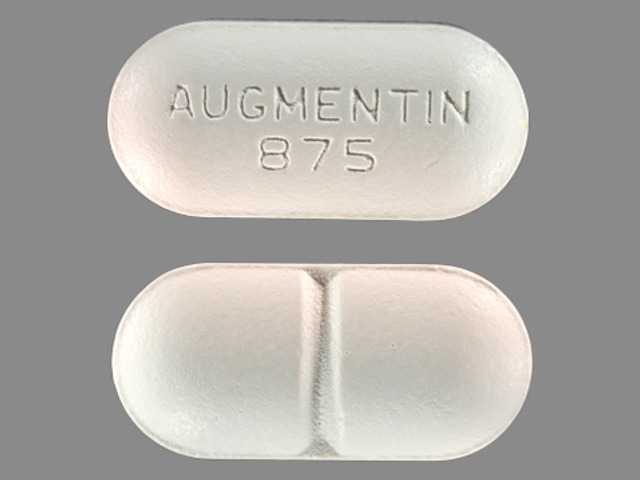
Augmentin 875 mg/125 mg Tablet: A Comprehensive Medical SEO Guide
1. Comprehensive Introduction & Overview
Augmentin 875 mg/125 mg Tablet is a potent, broad-spectrum antibiotic medication widely prescribed to combat a variety of bacterial infections. It is a unique combination of two active ingredients: Amoxicillin, a penicillin-class antibiotic, and Clavulanate Potassium, a beta-lactamase inhibitor. This formulation is specifically designed to overcome antibiotic resistance mechanisms employed by many bacteria, making it effective against a broader range of pathogens than amoxicillin alone.
The 875 mg/125 mg designation refers to the individual amounts of amoxicillin and clavulanate potassium, respectively, in each tablet. This particular strength is often favored for adult patients requiring a higher dose of amoxicillin to effectively treat moderate to severe infections, while the fixed amount of clavulanate ensures protection against common beta-lactamase producing bacteria. As an expert in orthopedic care, understanding the nuanced application of such antibiotics is crucial for managing infections ranging from skin and soft tissue to complex bone and joint pathologies.
The primary purpose of Augmentin is to treat infections caused by susceptible bacteria. It is not effective against viral infections, such as the common cold or flu. Misuse or overuse of antibiotics, including Augmentin, can lead to the development of antibiotic-resistant bacteria, a significant global health concern. Therefore, its use must always be guided by a healthcare professional following a proper diagnosis.
2. Deep-Dive into Technical Specifications & Mechanisms
Understanding the technical aspects of Augmentin's function is key to appreciating its clinical efficacy.
Mechanism of Action
Augmentin's power lies in the synergistic action of its two components:
-
Amoxicillin: This is a semi-synthetic penicillin antibiotic belonging to the beta-lactam class. Its primary mechanism of action involves inhibiting bacterial cell wall synthesis. Amoxicillin binds to penicillin-binding proteins (PBPs) located on the inner membrane of the bacterial cell wall. These PBPs are crucial enzymes involved in the cross-linking of peptidoglycan chains, which form the structural integrity of the bacterial cell wall. By inhibiting these enzymes, amoxicillin prevents the formation of a strong, stable cell wall, leading to weakened bacterial cells that eventually lyse and die. This makes amoxicillin bactericidal, meaning it kills bacteria directly.
-
Clavulanate Potassium: Many bacteria have evolved resistance to penicillin-class antibiotics by producing enzymes called beta-lactamases (or penicillinases). These enzymes break down the beta-lactam ring structure of antibiotics like amoxicillin, rendering them inactive. Clavulanate potassium is a potent, irreversible beta-lactamase inhibitor. It acts as a "suicide inhibitor," binding strongly to the active site of beta-lactamase enzymes. By doing so, clavulanate protects amoxicillin from enzymatic degradation, allowing the amoxicillin component to exert its bactericidal effect against a wider spectrum of beta-lactamase-producing bacteria that would otherwise be resistant.
The combination of amoxicillin and clavulanate potassium thus expands the antibacterial spectrum of amoxicillin to include many organisms that are resistant to amoxicillin alone.
Pharmacokinetics
Pharmacokinetics describes how the body handles a drug, encompassing absorption, distribution, metabolism, and elimination.
-
Absorption: Both amoxicillin and clavulanate potassium are rapidly and well-absorbed from the gastrointestinal tract following oral administration. Peak plasma concentrations for both components are typically achieved approximately 1 to 2.5 hours after dosing. Food has a minimal effect on the absorption of amoxicillin/clavulanate, but taking it at the start of a meal or snack can help minimize potential gastrointestinal upset. The bioavailability of both components is high.
-
Distribution: Amoxicillin and clavulanate are widely distributed into various tissues and body fluids. This includes therapeutic concentrations in the lungs, middle ear fluid, pleural and peritoneal fluids, prostate, tonsils, sputum, and urine. They penetrate poorly into the cerebrospinal fluid (CSF) unless the meninges are inflamed. Amoxicillin is approximately 18% protein-bound, while clavulanate is about 25% protein-bound.
-
Metabolism: Amoxicillin is minimally metabolized in the liver, with most of the drug excreted unchanged. Clavulanate, however, is extensively metabolized to inactive metabolites before excretion.
-
Elimination: Both amoxicillin and clavulanate are primarily eliminated via the kidneys. Amoxicillin is excreted largely unchanged in the urine through both glomerular filtration and tubular secretion. Clavulanate is also excreted renally, but a significant portion is metabolized before excretion. The elimination half-life for both components is approximately 1 to 1.5 hours in individuals with normal renal function. Due to their renal elimination, dosage adjustments are necessary in patients with impaired kidney function to prevent accumulation and potential toxicity.
3. Extensive Clinical Indications & Usage
Augmentin 875 mg/125 mg is indicated for the treatment of various bacterial infections caused by susceptible organisms. Its broad spectrum, particularly against beta-lactamase-producing strains, makes it a valuable tool in many clinical settings.
General Principle of Use
Augmentin should only be used to treat bacterial infections. It is crucial to perform appropriate cultures and susceptibility tests to identify the causative organisms and their susceptibility to Augmentin, whenever possible. In the absence of such data, empiric therapy should be based on local epidemiological patterns and susceptibility.
Specific Clinical Indications
As an orthopedic specialist, I frequently encounter scenarios where Augmentin is a suitable therapeutic choice.
-
Upper Respiratory Tract Infections (URTIs):
- Acute Bacterial Sinusitis (ABS): Often caused by Streptococcus pneumoniae, Haemophilus influenzae, and Moraxella catarrhalis, including beta-lactamase-producing strains.
- Acute Otitis Media (AOM): Common in both children and adults, frequently involving the same pathogens as sinusitis.
- Pharyngitis/Tonsillitis: When caused by beta-lactamase-producing organisms, or in recurrent cases where typical penicillin fails.
-
Lower Respiratory Tract Infections (LRTIs):
- Community-Acquired Pneumonia (CAP): Effective against common culprits like S. pneumoniae, H. influenzae, and M. catarrhalis.
- Acute Exacerbations of Chronic Bronchitis (AECB): Particularly in patients with underlying lung disease, where bacterial superinfection is common.
-
Skin and Skin Structure Infections (SSSIs):
- Cellulitis and Abscesses: Especially when polymicrobial infections or beta-lactamase-producing Staphylococcus aureus or Streptococcus pyogenes are suspected.
- Animal and Human Bite Wounds: These are often polymicrobial and frequently involve beta-lactamase-producing bacteria such as Pasteurella multocida (animal bites) and oral anaerobes.
- Diabetic Foot Infections: These are typically polymicrobial and can involve a wide range of aerobic and anaerobic bacteria, making Augmentin a suitable empiric choice.
-
Urinary Tract Infections (UTIs):
- Pyelonephritis: For complicated UTIs or those caused by susceptible organisms, including Escherichia coli, Klebsiella species, and Enterobacter species.
- Complicated UTIs: When initial empiric therapy requires broader coverage.
-
Bone and Joint Infections (Orthopedic Relevance):
- Osteomyelitis: While often requiring prolonged therapy and sometimes intravenous antibiotics, Augmentin can be used for susceptible organisms, particularly in milder cases or as step-down oral therapy. It is effective against S. aureus (MSSA), Streptococci, and some Gram-negative rods.
- Septic Arthritis: In specific scenarios, following initial IV therapy, Augmentin may be considered for oral step-down, depending on the pathogen and patient response.
- Prosthetic Joint Infections (PJI): In certain chronic, suppressed PJI cases, or as part of a multi-drug regimen, Augmentin might be considered for long-term oral suppression against susceptible organisms.
- Surgical Site Infections (SSI): For the treatment of SSIs caused by susceptible organisms, particularly those involving skin flora or polymicrobial environments.
-
Dental Infections:
- Odontogenic Infections: For dental abscesses and other oral infections caused by susceptible aerobic and anaerobic bacteria.
Dosage Guidelines
The dosage of Augmentin 875 mg/125 mg must be individualized based on the patient's age, weight, renal function, severity of the infection, and the susceptibility of the causative organism.
-
Standard Adult Dosage: For most infections, the typical adult dosage is one 875 mg/125 mg tablet taken every 12 hours (twice daily).
-
Duration of Therapy: The duration of treatment varies depending on the type and severity of the infection.
- For many common infections (e.g., sinusitis, bronchitis, skin infections), treatment typically lasts 7 to 10 days.
- For more severe or complex infections (e.g., pneumonia, some bone/joint infections), treatment may extend to 10-14 days or longer, as determined by the prescribing physician.
- It is crucial to complete the entire prescribed course of antibiotics, even if symptoms improve, to ensure complete eradication of the infection and prevent the development of resistance.
-
Dosage in Renal Impairment: Since both components are primarily renally excreted, dosage adjustments are critical in patients with impaired kidney function.
| Creatinine Clearance (CrCl) | Dosage Recommendation (Adults) |
|---|---|
| > 30 mL/min | No dosage adjustment required |
| 10 - 30 mL/min | 875 mg/125 mg every 24 hours |
| < 10 mL/min | Not recommended; consider alternative |
| Hemodialysis | Administer 875 mg/125 mg during or after dialysis. A supplemental dose may be given after dialysis. |
-
Hepatic Impairment: Augmentin should be used with caution in patients with hepatic impairment, and liver function should be monitored at regular intervals.
-
Administration: Augmentin tablets should be taken at the start of a meal or snack to enhance absorption and reduce the potential for gastrointestinal intolerance (e.g., nausea, diarrhea). The tablets should be swallowed whole and not chewed or crushed.
4. Risks, Side Effects, & Contraindications
Like all medications, Augmentin 875 mg/125 mg carries potential risks, side effects, and contraindications that patients and healthcare providers must be aware of.
Contraindications
Augmentin is contraindicated in patients with:
- History of severe hypersensitivity reaction (e.g., anaphylaxis, Stevens-Johnson Syndrome) to amoxicillin, clavulanate, any other penicillin, or other beta-lactam antibiotics (e.g., cephalosporins). Cross-reactivity can occur.
- History of Augmentin-associated cholestatic jaundice or hepatic dysfunction.
Warnings and Precautions
- Hypersensitivity Reactions: Serious and occasionally fatal hypersensitivity (anaphylactic) reactions have been reported in patients on penicillin therapy. These reactions are more likely to occur in individuals with a history of penicillin hypersensitivity and/or a history of sensitivity to multiple allergens. Augmentin should be discontinued immediately if an allergic reaction occurs, and appropriate therapy should be instituted.
- Hepatic Dysfunction: Augmentin has been associated with hepatic dysfunction, including cholestatic jaundice and hepatitis. These reactions are more common in elderly patients, males, and those on prolonged treatment. Onset of hepatic dysfunction may be delayed for several weeks after cessation of therapy.
- Clostridium difficile-associated Diarrhea (CDAD): CDAD has been reported with nearly all antibacterial agents, including Augmentin, and can range in severity from mild diarrhea to fatal colitis. It is important to consider this diagnosis in patients who present with diarrhea subsequent to the administration of antibacterial agents.
- Renal Impairment: Dosage adjustment is necessary in patients with renal impairment to prevent accumulation of the drug and potential adverse effects.
- Mononucleosis: A high percentage of patients with mononucleosis who receive amoxicillin develop a maculopapular skin rash. Therefore, Augmentin should be avoided in patients with mononucleosis.
- Superinfections: Prolonged use of Augmentin may result in the overgrowth of non-susceptible organisms, including fungi. If superinfection occurs, Augmentin should be discontinued, and appropriate therapy instituted.
- Prothrombin Time (INR) prolongation: Augmentin has been associated with prolongation of prothrombin time and increased INR in some patients, particularly those concomitantly receiving oral anticoagulants. Careful monitoring is required.
Common Side Effects
The most frequently reported side effects, typically mild and transient, include:
- Diarrhea (most common)
- Nausea
- Vomiting
- Abdominal pain/discomfort
- Rash and urticaria (hives)
- Vaginitis (yeast infection)
- Headache
- Dizziness
Serious Side Effects (Less Common)
- Severe allergic reactions (anaphylaxis, angioedema)
- Severe skin reactions (Stevens-Johnson Syndrome, Toxic Epidermal Necrolysis)
- Liver problems (cholestatic jaundice, hepatitis, liver enzyme elevations)
- Clostridium difficile colitis
- Renal impairment (interstitial nephritis)
- Hematologic abnormalities (anemia, thrombocytopenia, leukopenia)
- Seizures (rare, typically in patients with impaired renal function or high doses)
Drug Interactions
Several medications can interact with Augmentin, potentially altering its efficacy or increasing the risk of adverse effects.
| Interacting Drug/Class | Potential Interaction | Management