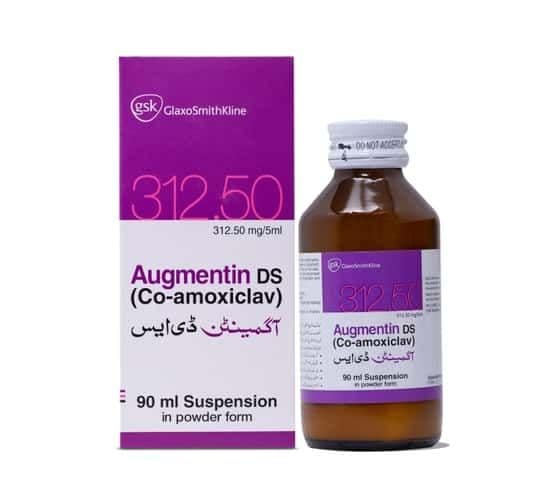
Augmentin (Amoxicillin/Clavulanate): A Comprehensive Medical SEO Guide
1. Introduction & Overview of Augmentin
Augmentin is a widely prescribed antibiotic medication known for its effectiveness against a broad spectrum of bacterial infections. It is a combination drug comprising two active pharmaceutical ingredients: amoxicillin and clavulanic acid. Amoxicillin is a penicillin-class antibiotic, while clavulanic acid is a beta-lactamase inhibitor. This unique combination allows Augmentin to overcome a common mechanism of antibiotic resistance, making it a powerful tool in modern medicine.
First introduced by Beecham (now GlaxoSmithKline), Augmentin has been a cornerstone in treating various bacterial ailments for decades. Its utility spans across numerous medical disciplines, from primary care to specialized fields like orthopedics, where bacterial infections can pose significant challenges. Understanding its intricate workings, appropriate usage, and potential considerations is crucial for both healthcare providers and patients.
This comprehensive guide aims to provide an exhaustive overview of Augmentin, delving into its mechanism of action, pharmacokinetic profile, detailed indications, dosage guidelines, potential risks, and management strategies.
2. Deep-Dive into Technical Specifications & Mechanisms
2.1. Chemical Composition and Formulation
Augmentin is available in various formulations, including:
* Tablets: Standard and extended-release.
* Oral suspension: For pediatric and patients with difficulty swallowing tablets.
* Injectable: For severe infections or when oral administration is not feasible.
The ratio of amoxicillin to clavulanic acid varies by formulation, typically 2:1, 4:1, 7:1, or 16:1, designed to optimize efficacy and minimize side effects.
2.2. Mechanism of Action
The synergistic action of amoxicillin and clavulanic acid is the key to Augmentin's broad effectiveness.
2.2.1. Amoxicillin: The Bactericidal Agent
Amoxicillin belongs to the beta-lactam class of antibiotics. Its primary mechanism of action involves:
* Inhibition of Bacterial Cell Wall Synthesis: Amoxicillin binds to penicillin-binding proteins (PBPs) located in the bacterial cell wall. PBPs are enzymes crucial for synthesizing peptidoglycan, a vital component of the bacterial cell wall.
* Disruption of Cell Wall Integrity: By inhibiting PBPs, amoxicillin prevents the cross-linking of peptidoglycan polymers, leading to a weakened and unstable bacterial cell wall.
* Osmotic Lysis: The compromised cell wall can no longer withstand the internal osmotic pressure of the bacterium, leading to cell lysis and death. This makes amoxicillin a bactericidal antibiotic.
2.2.2. Clavulanic Acid: The Beta-Lactamase Inhibitor
Many bacteria have developed resistance to penicillin-class antibiotics by producing enzymes called beta-lactamases (also known as penicillinases). These enzymes hydrolyze the beta-lactam ring of antibiotics like amoxicillin, rendering them inactive. Clavulanic acid's role is critical in circumventing this resistance mechanism:
* Irreversible Binding: Clavulanic acid is a "suicide inhibitor" of beta-lactamase enzymes. It binds irreversibly to these enzymes, forming a stable complex that prevents them from inactivating amoxicillin.
* Protection of Amoxicillin: By neutralizing beta-lactamases, clavulanic acid effectively "protects" amoxicillin, allowing it to exert its full bactericidal effect against susceptible bacteria, including those that would otherwise be resistant due to beta-lactamase production.
2.2.3. Spectrum of Activity
The combination provides a broad spectrum of activity against:
* Gram-positive bacteria: Staphylococcus aureus (methicillin-susceptible strains), Streptococcus pneumoniae, Streptococcus pyogenes, Enterococcus faecalis.
* Gram-negative bacteria: Haemophilus influenzae, Moraxella catarrhalis, Escherichia coli, Klebsiella pneumoniae, Proteus mirabilis.
* Anaerobes: Bacteroides fragilis, Prevotella species.
2.3. Pharmacokinetics
Understanding how Augmentin is absorbed, distributed, metabolized, and excreted is vital for its effective and safe use.
2.3.1. Absorption
- Oral Bioavailability: Both amoxicillin and clavulanic acid are well absorbed from the gastrointestinal tract after oral administration.
- Food Effect: Absorption is optimized when Augmentin is taken at the start of a meal. This helps to reduce potential gastrointestinal discomfort and ensures maximal drug uptake.
- Peak Plasma Concentrations: Peak levels are usually achieved within 1 to 2.5 hours after oral dosing.
2.3.2. Distribution
- Tissue Penetration: Both components distribute widely into most body tissues and fluids, including the lungs, pleural fluid, middle ear fluid, peritoneal fluid, urine, and tonsils.
- Blood-Brain Barrier: Penetration into the cerebrospinal fluid is generally poor unless meninges are inflamed.
- Protein Binding: Amoxicillin is approximately 18% protein-bound, while clavulanic acid is about 25% protein-bound.
2.3.3. Metabolism
- Amoxicillin: Undergoes limited metabolism, with a significant portion excreted unchanged.
- Clavulanic Acid: More extensively metabolized, with approximately 50% of the dose excreted unchanged.
2.3.4. Excretion
- Primary Route: Both amoxicillin and clavulanic acid are primarily eliminated via renal excretion (glomerular filtration and tubular secretion).
- Half-life: The elimination half-life for both components is approximately 1 to 1.5 hours in individuals with normal renal function.
- Renal Impairment: In patients with impaired renal function, the half-life of both components is prolonged, necessitating dosage adjustments.
3. Extensive Clinical Indications & Usage
Augmentin is indicated for the treatment of infections caused by susceptible organisms. Its broad spectrum and resistance-fighting capability make it suitable for a variety of conditions.
3.1. Respiratory Tract Infections
- Acute Bacterial Sinusitis: Often caused by S. pneumoniae, H. influenzae, M. catarrhalis.
- Acute Otitis Media: Common in children, often caused by the same pathogens as sinusitis.
- Community-Acquired Pneumonia: Especially in cases where beta-lactamase producing H. influenzae or M. catarrhalis are suspected.
- Acute Exacerbations of Chronic Bronchitis: When bacterial infection is confirmed or strongly suspected.
3.2. Urinary Tract Infections (UTIs)
- Cystitis and Pyelonephritis: Caused by susceptible strains of E. coli, Klebsiella species, Enterobacter species, and Proteus mirabilis. Augmentin is often reserved for resistant or complicated cases.
3.3. Skin and Soft Tissue Infections
- Cellulitis, Abscesses, Wound Infections: Including those caused by S. aureus (methicillin-susceptible), Streptococcus species, and Bacteroides species.
- Animal Bites and Human Bites: Due to the polymicrobial nature of these infections, often involving beta-lactamase producing organisms from oral flora.
3.4. Dental Infections
- Odontogenic Infections: Such as dental abscesses, pericoronitis, and severe periodontitis, where anaerobic bacteria and beta-lactamase producing oral flora are common.
3.5. Bone and Joint Infections (Orthopedic Relevance)
As an orthopedic specialist, I frequently encounter situations where Augmentin is a valuable treatment option:
* Prophylaxis in certain surgical procedures: Though often other agents are preferred, it can be considered in specific scenarios.
* Treatment of osteomyelitis: Especially in early stages or in conjunction with surgical debridement, particularly if the causative organism is susceptible and beta-lactamase producing.
* Septic Arthritis: Depending on the identified pathogen and susceptibility profile, Augmentin can be an option, often following initial IV therapy.
* Post-operative wound infections: Where polymicrobial infections, including skin flora and anaerobes, are suspected.
* Open Fractures: As part of a broad-spectrum antibiotic regimen to prevent infection, though typically combined with other agents for broader coverage.
3.6. Other Infections
- Intra-abdominal Infections: Often as part of a multi-drug regimen.
- Genital Infections: Such as chancroid.
3.7. Dosage Guidelines
Dosage varies significantly based on the severity of the infection, age, weight, and renal function of the patient. It's crucial to follow prescriber's instructions and package inserts.
3.7.1. General Adult Dosing
| Indication | Augmentin (Amoxicillin/Clavulanate) Strength | Dosage Frequency | Duration |
|---|---|---|---|
| Mild-Moderate Infections (e.g., Sinusitis, UTI) | 500 mg/125 mg Tablet | Every 8 hours | 7-10 days |
| Severe Infections (e.g., Pneumonia, Skin) | 875 mg/125 mg Tablet | Every 12 hours | 7-10 days, up to 14 days |
| Extended-Release (XR) | 1000 mg/62.5 mg XR Tablet | Every 12 hours (for specific indications like CAP) | 7-10 days |
3.7.2. Pediatric Dosing
- Oral Suspension: Dosing is weight-based, typically 25-45 mg/kg/day (based on amoxicillin component) divided every 8 or 12 hours.
- Severe Infections (e.g., Otitis Media, Sinusitis): Higher doses, up to 90 mg/kg/day, may be prescribed.
- Important Note: Always use the correct concentration of suspension (e.g., 125 mg/5 mL, 200 mg/5 mL, 250 mg/5 mL, 400 mg/5 mL) to ensure accurate dosing and prevent overdose of clavulanic acid.
3.7.3. Renal Impairment
- Creatinine Clearance (CrCl) > 30 mL/min: No dosage adjustment usually needed.
- CrCl 10-30 mL/min: 500 mg/125 mg every 12 hours.
- CrCl < 10 mL/min: 500 mg/125 mg every 24 hours.
- Hemodialysis: 500 mg/125 mg every 24 hours, with an additional dose during and at the end of dialysis.
3.7.4. Administration Instructions
- Take with food: To minimize gastrointestinal upset and enhance absorption.
- Complete the full course: Even if symptoms improve, to prevent resistance and recurrence.
- Shake oral suspension well before each use.
- Do not crush or chew extended-release tablets.
4. Risks, Side Effects, and Contraindications
While Augmentin is generally well-tolerated, it is associated with a range of potential side effects and specific contraindications.
4.1. Common Side Effects
These typically affect the gastrointestinal system:
* Diarrhea: The most common side effect, often due to disruption of gut flora.
* Nausea and Vomiting: Can be reduced by taking the medication with food.
* Abdominal Pain
* Skin Rash: Non-allergic rashes can occur.
* Vaginal Yeast Infection (Candidiasis): Due to alteration of normal microbial flora.
4.2. Serious Side Effects
- Allergic Reactions (Hypersensitivity):
- Mild: Urticaria (hives), pruritus (itching), maculopapular rash.
- Severe: Anaphylaxis (life-threatening, involving bronchospasm, laryngeal edema, hypotension), Stevens-Johnson syndrome, toxic epidermal necrolysis, exfoliative dermatitis.
- Hepatotoxicity (Liver Injury):
- Cholestatic Jaundice and Hepatitis: More common with the higher clavulanic acid ratios and in older patients or those on prolonged therapy. Can be delayed in onset and sometimes severe, though usually reversible.
- Clostridium difficile-Associated Diarrhea (CDAD):
- Can range from mild diarrhea to severe pseudomembranous colitis. Occurs due to disruption of normal gut flora, allowing C. difficile overgrowth.
- Hematologic Effects:
- Anemia, thrombocytopenia, leukopenia, agranulocytosis (rare).
- Renal Effects:
- Interstitial nephritis (rare).
- Central Nervous System Effects:
- Headache, dizziness, insomnia, and very rarely, convulsions (especially in patients with impaired renal function or high doses).
4.3. Contraindications
Augmentin is contraindicated in patients with:
* History of severe hypersensitivity reaction to Augmentin, amoxicillin, other penicillins, or clavulanic acid. This includes anaphylaxis or Stevens-Johnson syndrome.
* History of cholestatic jaundice or hepatic dysfunction associated with Augmentin or penicillin use.
* Infectious Mononucleosis: Patients with mononucleosis treated with amoxicillin or other aminopenicillins are at a high risk of developing a maculopapular skin rash.
4.4. Drug Interactions
Augmentin can interact with other medications, potentially altering their effects or increasing the risk of adverse reactions.
| Interacting Drug/Class | Potential Interaction
Probenecid can increase amoxicillin concentrations by reducing renal tubular secretion.
* Allopurinol: Concomitant use with amoxicillin (or Augmentin) may increase the risk of skin rash, particularly in patients with hyperuricemia.
* Oral Anticoagulants (e.g., Warfarin): Augmentin can prolong prothrombin time and INR. Close monitoring of coagulation parameters is recommended.
* Methotrexate: Augmentin may reduce the renal clearance of methotrexate, leading to increased plasma concentrations and potential toxicity.
* Mycophenolate Mofetil: Amoxicillin/clavulanate has been reported to reduce the trough concentration of the active metabolite of mycophenolate mofetil. Careful monitoring is advised.
* Oral Contraceptives: Some antibiotics, including penicillins, may reduce the efficacy of oral contraceptives by interfering with enterohepatic recirculation of estrogen. While clinical evidence is limited, some sources recommend advising additional contraceptive precautions.
4.5. Pregnancy and Lactation Warnings
4.5.1. Pregnancy
- Pregnancy Category B: Animal reproduction studies have shown no evidence of harm to the fetus. However, there are no adequate and well-controlled studies in pregnant women.
- Clinical Use: Augmentin should be used during pregnancy only if clearly needed and the potential benefits outweigh the potential risks to the fetus.
- Preterm, Premature Rupture of Membranes (PPROM): In one study, prophylactic treatment with Augmentin in women with PPROM was associated with an increased risk of necrotizing enterocolitis in neonates. Therefore, use in PPROM is generally not recommended.
4.5.2. Lactation
- Excretion in Breast Milk: Both amoxicillin and clavulanic acid are excreted into breast milk in small quantities.
- Potential for Infant Effects: Breastfed infants may experience sensitization (e.g., rash), diarrhea, candidiasis (thrush).
- Risk vs. Benefit: Caution should be exercised when Augmentin is administered to a nursing woman. The decision to continue or discontinue nursing or the drug should take into account the importance of the drug to the mother and the potential risks to the infant.
4.6. Overdose Management
4.6.1. Symptoms of Overdose
Overdose with Augmentin is uncommon but can occur, especially in patients with impaired renal function where drug accumulation is more likely. Symptoms may include:
* Gastrointestinal: Abdominal pain, vomiting, diarrhea.
* Fluid and Electrolyte Imbalance: Secondary to severe vomiting or diarrhea.
* Renal: Amoxicillin crystalluria, potentially leading to renal failure.
* Neurological: Convulsions (especially in renally impaired patients or with very high doses).
4.6.2. Management of Overdose
- Symptomatic and Supportive Care: Treatment should be symptomatic and supportive.
- Fluid and Electrolyte Management: Correct fluid and electrolyte imbalances.
- Renal Function Monitoring: Monitor renal function, especially for crystalluria. Adequate fluid intake should be maintained to reduce the possibility of amoxicillin crystalluria.
- Hemodialysis: Augmentin can be removed from circulation by hemodialysis. This can be particularly beneficial in patients with renal impairment who have significant overdose symptoms. Peritoneal dialysis is less effective.
5. Massive FAQ Section
Q1: What is Augmentin used for?
A1: Augmentin is an antibiotic used to treat a wide range of bacterial infections, including respiratory tract infections (like sinusitis, bronchitis, pneumonia), urinary tract infections, skin and soft tissue infections, dental infections, and bone and joint infections. Its unique combination of amoxicillin and clavulanic acid helps it fight bacteria that might be resistant to other penicillin-type antibiotics.
Q2: How should I take Augmentin?
A2: Augmentin should generally be taken at the start of a meal to reduce the chance of stomach upset and improve absorption. Always take the full course of medication