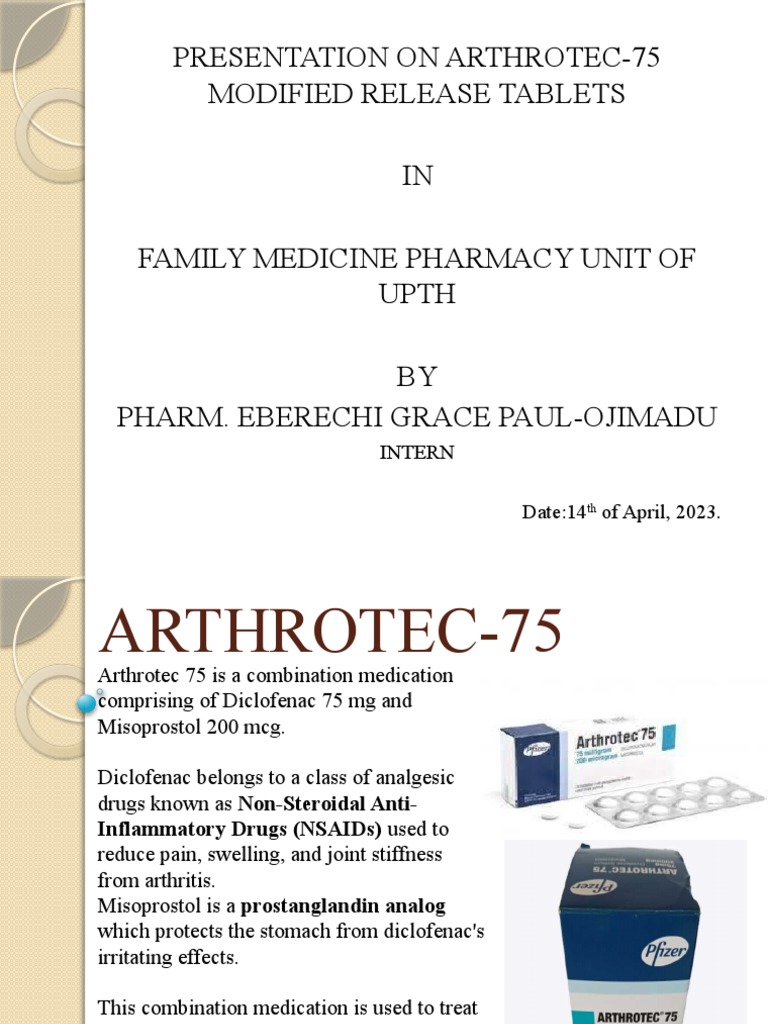
Arthrotec: A Comprehensive Medical SEO Guide for Pain and Inflammation Management
Welcome to this exhaustive guide on Arthrotec, a medication frequently prescribed in orthopedic and rheumatology practices for managing pain and inflammation associated with various musculoskeletal conditions. As expert medical SEO copywriters and orthopedic specialists, we aim to provide you with the most authoritative and detailed information about this important medication.
1. Introduction & Overview of Arthrotec
Arthrotec is a unique combination medication that marries the potent anti-inflammatory and analgesic properties of diclofenac sodium with the gastroprotective benefits of misoprostol. This formulation is specifically designed for patients who require non-steroidal anti-inflammatory drug (NSAID) therapy but are at an increased risk of developing NSAID-induced gastrointestinal (GI) complications, such as ulcers or bleeding.
What is Arthrotec?
Arthrotec is a delayed-release tablet containing two active pharmaceutical ingredients:
* Diclofenac Sodium: A well-established NSAID known for its efficacy in reducing pain, inflammation, and stiffness.
* Misoprostol: A synthetic prostaglandin E1 analogue that helps protect the stomach lining from the erosive effects of NSAIDs.
Why the Combination?
NSAIDs, while highly effective for pain and inflammation, are notorious for their potential to cause significant gastrointestinal side effects, ranging from dyspepsia to serious complications like peptic ulcers, perforations, and GI bleeding. These risks are particularly elevated in certain patient populations, including the elderly, those with a history of ulcers, or individuals on concomitant medications like corticosteroids or anticoagulants.
Arthrotec addresses this critical concern by integrating misoprostol, a cytoprotective agent, directly into the formulation. This proactive approach aims to mitigate the common and severe GI risks associated with long-term NSAID use, thereby offering a safer therapeutic option for appropriate patients.
2. Deep-Dive into Technical Specifications & Mechanisms
Understanding how Arthrotec works at a cellular and systemic level is crucial for appreciating its therapeutic benefits and potential risks.
Mechanism of Action
Diclofenac Sodium
Diclofenac is a phenylacetic acid derivative and belongs to the class of non-steroidal anti-inflammatory drugs (NSAIDs). Its primary mechanism of action involves the inhibition of cyclooxygenase (COX) enzymes.
* Cyclooxygenase (COX) Inhibition: Diclofenac non-selectively inhibits both COX-1 and COX-2 enzymes, though it exhibits a slight preference for COX-2.
* COX-1: This enzyme is constitutively expressed and plays a role in maintaining normal physiological functions, including gastric mucosal protection, renal blood flow regulation, and platelet aggregation. Inhibition of COX-1 contributes to the GI side effects and antiplatelet effects of NSAIDs.
* COX-2: This enzyme is primarily induced at sites of inflammation, pain, and fever. Its inhibition is responsible for the anti-inflammatory, analgesic, and antipyretic effects of diclofenac.
* Prostaglandin Synthesis Reduction: By inhibiting COX enzymes, diclofenac reduces the synthesis of prostaglandins, which are lipid compounds that mediate pain, inflammation, and fever. This reduction in prostaglandin levels is the cornerstone of its therapeutic efficacy.
Misoprostol
Misoprostol is a synthetic analogue of prostaglandin E1 (PGE1), a naturally occurring prostaglandin. Its gastroprotective effects are mediated by several mechanisms:
* Inhibition of Gastric Acid Secretion: Misoprostol binds to prostaglandin receptors on the parietal cells of the stomach, leading to a dose-dependent inhibition of gastric acid secretion. This reduces the acidity of the stomach environment, which is a major factor in ulcer formation.
* Enhanced Mucosal Defense: Misoprostol directly enhances the stomach's mucosal defense mechanisms. It increases the secretion of bicarbonate and mucus, which form a protective barrier against acid and digestive enzymes. It also improves mucosal blood flow, aiding in the repair and regeneration of the gastric lining.
* Direct Cytoprotection: It may exert direct cytoprotective effects on gastric epithelial cells, making them more resistant to injury.
Pharmacokinetics
The pharmacokinetic profile describes how the body absorbs, distributes, metabolizes, and excretes Arthrotec's components.
Absorption
- Diclofenac: The diclofenac component in Arthrotec is formulated as an enteric-coated tablet, which delays its release until it reaches the small intestine. This helps to minimize direct irritation to the gastric mucosa. Peak plasma concentrations are typically reached within 2-3 hours after administration.
- Misoprostol: Misoprostol is rapidly and extensively absorbed after oral administration. It undergoes rapid de-esterification to its active metabolite, misoprostol acid. Peak plasma concentrations of misoprostol acid are usually achieved within approximately 15-30 minutes. Food can delay the absorption of misoprostol acid and decrease its peak concentration.
Distribution
- Diclofenac: Diclofenac is highly bound to plasma proteins (over 99%), primarily albumin. It distributes into synovial fluid, where it can persist for longer periods, contributing to its sustained anti-inflammatory effects in joints.
- Misoprostol Acid: Misoprostol acid is less extensively protein-bound compared to diclofenac.
Metabolism
- Diclofenac: Diclofenac is extensively metabolized in the liver, primarily through hydroxylation and subsequent glucuronidation. The main enzyme involved in its metabolism is CYP2C9, although other CYP enzymes (e.g., CYP2C8, CYP3A4) also play a role.
- Misoprostol: Misoprostol is rapidly and extensively metabolized in various tissues by fatty acid oxidation systems to its active misoprostol acid metabolite. This metabolite is then further metabolized into inactive forms.
Excretion
- Diclofenac: Approximately 60% of the administered dose is excreted in the urine as metabolites, and about 30-40% is eliminated in the bile and feces. The terminal elimination half-life of diclofenac is relatively short, around 1-2 hours, but its metabolites have longer half-lives.
- Misoprostol Acid: The majority of misoprostol acid and its metabolites are excreted in the urine (approximately 80%), with a smaller amount excreted in the feces. The elimination half-life of misoprostol acid is short, typically 20-40 minutes.
3. Extensive Clinical Indications & Usage
Arthrotec is indicated for the treatment of signs and symptoms of osteoarthritis (OA) and rheumatoid arthritis (RA) in patients who are at high risk of developing NSAID-induced gastric and/or duodenal ulcers.
Detailed Indications
- Osteoarthritis (OA): A degenerative joint disease characterized by cartilage breakdown, leading to pain, stiffness, and reduced joint function. Arthrotec helps to reduce the pain and inflammation associated with OA, improving mobility.
- Rheumatoid Arthritis (RA): A chronic autoimmune inflammatory disorder primarily affecting the joints, leading to pain, swelling, stiffness, and potential joint deformity. Arthrotec can effectively manage the inflammatory symptoms of RA.
- Ankylosing Spondylitis: A chronic inflammatory disease primarily affecting the spine, causing severe pain and stiffness. While not a primary indication, NSAIDs like diclofenac are often used for symptomatic relief.
- Other Inflammatory Joint Conditions: May be considered for other conditions requiring NSAID therapy where GI protection is paramount.
Dosage Guidelines
Arthrotec is available in different strengths, typically combining varying doses of diclofenac with a standard dose of misoprostol. The dosage should be individualized based on the patient's condition, response to therapy, and risk factors.
| Component | Strengths Available (e.g., in US) | Typical Starting Dose | Maximum Daily Dose | Administration Notes |
|---|---|---|---|---|
| Diclofenac Sodium | 50 mg, 75 mg | 50 mg/200 mcg misoprostol, 2-3 times daily | 150 mg diclofenac (total daily) | Always take with food and water. Swallow tablets whole; do not chew, crush, or break. |
| Misoprostol | 200 mcg (fixed with diclofenac) | 75 mg/200 mcg misoprostol, 2 times daily (for higher diclofenac dose) | 400-600 mcg misoprostol (total daily) | The misoprostol component is designed to be taken concurrently with diclofenac to provide continuous GI protection. |
Important Considerations:
* Lowest Effective Dose: Always use the lowest effective dose for the shortest possible duration consistent with individual patient treatment goals.
* Administration: Take Arthrotec with food and water to minimize gastrointestinal upset. Tablets should be swallowed whole and not chewed, crushed, or broken, as this can affect the enteric coating of diclofenac and the release profile of misoprostol.
* Special Populations:
* Elderly: Elderly patients are at increased risk of adverse reactions, particularly GI bleeding and renal impairment. Use with caution, starting at the lower end of the dosing range, and monitor closely.
* Renal Impairment: Use with caution. Diclofenac and misoprostol metabolites are primarily renally excreted. Dose reduction or avoidance may be necessary in severe renal impairment.
* Hepatic Impairment: Use with caution. Diclofenac is extensively metabolized in the liver. Close monitoring of liver function is recommended.
4. Risks, Side Effects, and Contraindications
While Arthrotec offers significant benefits, it is crucial to be aware of its potential risks, side effects, and situations where its use is contraindicated.
Contraindications
Arthrotec is absolutely contraindicated in the following situations:
* Hypersensitivity: Known hypersensitivity to diclofenac, misoprostol, aspirin, other NSAIDs, or any component of the formulation.
* Active GI Bleeding or Peptic Ulcer: Due to the risk of exacerbating these conditions.
* Pregnancy (Category X): Misoprostol is a potent abortifacient and teratogen. Its use is absolutely contraindicated in pregnant women or women attempting to conceive. Women of childbearing potential must use effective contraception during therapy.
* Severe Renal or Hepatic Impairment: Due to the risk of drug accumulation and exacerbation of organ dysfunction.
* Heart Failure: Patients with New York Heart Association (NYHA) Class II-IV heart failure, established ischemic heart disease, peripheral arterial disease, and/or cerebrovascular disease due to increased cardiovascular risk with NSAIDs.
* History of Asthma, Urticaria, or Allergic-type Reactions: After taking aspirin or other NSAIDs, as cross-reactivity can occur.
* Coronary Artery Bypass Graft (CABG) Surgery: Contraindicated for the treatment of peri-operative pain in the setting of CABG surgery due to increased risk of cardiovascular events.
* Lactation: Diclofenac and misoprostol metabolites are excreted in breast milk.
Warnings & Precautions
| System/Condition | Warning/Precaution |
| Primary Side Effects | Diclofenac: Gastrointestinal (GI) irritation, dyspepsia, diarrhea, abdominal pain, nausea, and dyspepsia.