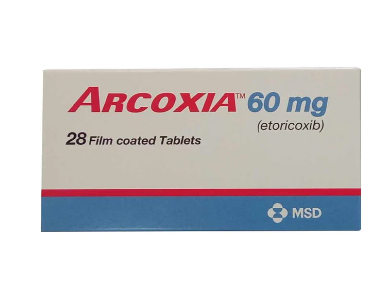
The Definitive Medical SEO Guide to Arcoxia (Etoricoxib)
Introduction & Overview
Arcoxia, with its active pharmaceutical ingredient Etoricoxib, is a highly effective medication primarily used for the management of pain and inflammation. Classified as a selective cyclooxygenase-2 (COX-2) inhibitor, it belongs to the broader class of non-steroidal anti-inflammatory drugs (NSAIDs). Unlike traditional non-selective NSAIDs that inhibit both COX-1 and COX-2 enzymes, Arcoxia specifically targets COX-2, aiming to provide potent anti-inflammatory and analgesic effects while potentially reducing the gastrointestinal side effects associated with non-selective agents.
Developed to address a range of musculoskeletal conditions, Arcoxia is a crucial tool in orthopedic and rheumatologic practice for conditions such as osteoarthritis, rheumatoid arthritis, ankylosing spondylitis, and acute gouty arthritis, as well as for various acute pain states. This comprehensive guide, authored by expert Medical SEO Copywriters and Orthopedic Specialists, delves into the intricate details of Arcoxia, from its molecular mechanism of action to practical dosage guidelines, critical safety considerations, and effective management strategies for potential adverse events. Understanding this medication thoroughly is paramount for both healthcare professionals and patients to ensure its safe and effective utilization.
Deep Dive into Technical Specifications and Mechanisms
Mechanism of Action: How Arcoxia Works
Etoricoxib, the active component of Arcoxia, exerts its therapeutic effects by selectively inhibiting the cyclooxygenase-2 (COX-2) enzyme. To appreciate its mechanism, it's essential to understand the roles of the two main cyclooxygenase isoforms:
- Cyclooxygenase-1 (COX-1): This enzyme is constitutively expressed in most tissues and plays a crucial role in maintaining physiological functions. It is responsible for producing prostaglandins that protect the gastric mucosa, regulate renal blood flow, and facilitate platelet aggregation.
- Cyclooxygenase-2 (COX-2): This isoform is primarily induced by inflammatory stimuli (e.g., cytokines, growth factors) at sites of injury or inflammation. It is responsible for the synthesis of prostaglandins that mediate pain, inflammation, and fever. COX-2 is also involved in certain physiological processes, such as renal function and ovulation, and is expressed in some tissues even under normal conditions.
Arcoxia's high selectivity for COX-2 means it preferentially blocks the production of pro-inflammatory prostaglandins without significantly inhibiting the COX-1 enzyme. This selective inhibition leads to:
* Analgesia: Reduction in pain sensation by blocking prostaglandin synthesis at nerve endings.
* Anti-inflammatory effect: Decreased inflammation by reducing the production of prostaglandins that contribute to vasodilation, edema, and leukocyte infiltration.
* Antipyretic effect: Lowering of fever by inhibiting prostaglandin synthesis in the hypothalamus.
The theoretical advantage of COX-2 selectivity is a reduced risk of gastrointestinal side effects (such as ulcers, bleeding, and perforation) compared to non-selective NSAIDs, which can disrupt the protective role of COX-1 in the stomach lining. However, it's crucial to note that this reduced risk does not equate to zero risk, and gastrointestinal complications can still occur.
Pharmacokinetics: The Journey of Etoricoxib in the Body
The pharmacokinetics of Etoricoxib describe how the body absorbs, distributes, metabolizes, and excretes the drug, influencing its onset, duration of action, and potential for interactions.
-
Absorption:
- Etoricoxib is rapidly and well-absorbed from the gastrointestinal tract following oral administration.
- Peak plasma concentrations (Cmax) are typically achieved within approximately 1 hour (Tmax) after a 120 mg dose in the fasted state.
- The mean oral bioavailability is estimated to be around 100%, indicating almost complete absorption.
- Food intake generally does not significantly alter the extent of absorption but may slightly delay the Tmax by about 2 hours, without affecting the Cmax.
-
Distribution:
- Etoricoxib is highly bound to plasma proteins, with approximately 92% binding across the therapeutic concentration range.
- The volume of distribution at steady-state is approximately 120 liters, suggesting extensive distribution into tissues.
- Etoricoxib crosses the placenta and is excreted into breast milk, warranting caution during pregnancy and lactation.
-
Metabolism:
- Etoricoxib undergoes extensive metabolism in the liver.
- The primary metabolic pathway involves cytochrome P450 (CYP) enzymes, particularly CYP3A4, which catalyzes the formation of 6'-hydroxymethyl etoricoxib, the major metabolite.
- This metabolite, along with other minor metabolites, is further oxidized and conjugated to glucuronides and sulfates, which are largely inactive.
- Less than 1% of the administered dose is recovered as the parent drug in urine.
-
Excretion:
- Etoricoxib and its metabolites are primarily excreted via the kidneys (urine) and to a lesser extent via the feces.
- Approximately 70% of the dose is excreted in the urine, and 20% in the feces, mainly as metabolites.
- The effective elimination half-life (t½) in humans is approximately 22 hours, allowing for once-daily dosing.
- Steady-state plasma concentrations are typically achieved within about eight days of once-daily administration.
Extensive Clinical Indications & Usage
Arcoxia is a versatile medication with a broad spectrum of approved indications, primarily focused on alleviating pain and inflammation associated with various acute and chronic conditions.
Approved Indications for Arcoxia
Arcoxia is indicated for symptomatic relief in the following conditions:
- Osteoarthritis (OA): For the chronic treatment of the signs and symptoms of osteoarthritis, a degenerative joint disease.
- Rheumatoid Arthritis (RA): For the chronic treatment of the signs and symptoms of rheumatoid arthritis, a chronic inflammatory autoimmune disease.
- Ankylosing Spondylitis (AS): For the treatment of the signs and symptoms of ankylosing spondylitis, a chronic inflammatory disease primarily affecting the spine.
- Acute Gouty Arthritis: For the treatment of acute pain and inflammation associated with acute attacks of gout.
- Acute Pain:
- Post-operative Dental Pain: For the short-term treatment of moderate acute pain associated with dental surgery.
- Primary Dysmenorrhea: For the treatment of pain associated with menstrual periods.
- Chronic Musculoskeletal Pain: Including chronic lower back pain, where it can provide significant relief.
Dosage Guidelines and Administration
The dosage of Arcoxia must always be individualized based on the patient's specific condition, response to treatment, and overall health status. It is crucial to use the lowest effective dose for the shortest possible duration to minimize the risk of adverse effects, particularly cardiovascular and gastrointestinal events.
- General Administration: Arcoxia tablets can be taken orally, with or without food. While food may slightly delay absorption, it does not significantly alter the extent of absorption.
- Swallowing: Tablets should be swallowed whole with a glass of water.
Dosage Table for Specific Indications:
| Indication | Recommended Daily Dose | Maximum Daily Dose | Notes |
|---|---|---|---|