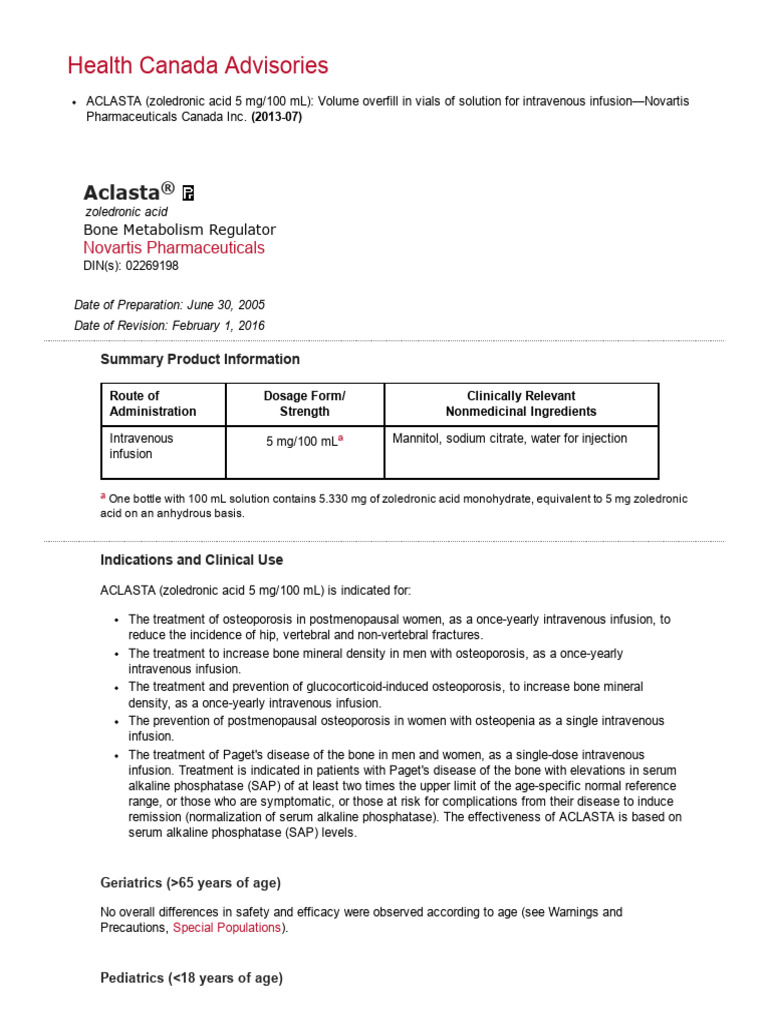
Aclasta: Your Comprehensive Guide to Zoledronic Acid for Bone Health
Welcome to this authoritative medical SEO guide on Aclasta, a crucial medication in the management of various bone-related conditions. As expert medical SEO copywriters specializing in orthopedics, we understand the importance of clear, accurate, and comprehensive information. This guide is designed to provide patients, caregivers, and healthcare professionals with an exhaustive overview of Aclasta, encompassing its mechanism of action, clinical indications, dosage, potential risks, and more.
Introduction & Overview of Aclasta
Aclasta is the brand name for zoledronic acid, a potent bisphosphonate medication administered intravenously. Developed to address a range of bone disorders characterized by excessive bone resorption, Aclasta plays a pivotal role in strengthening bones and reducing fracture risk. Its efficacy stems from its ability to inhibit osteoclast activity, the cells responsible for breaking down bone tissue.
What is Aclasta?
Aclasta (zoledronic acid) is a third-generation bisphosphonate. Unlike oral bisphosphonates, Aclasta is given as a once-yearly intravenous infusion for many of its indications, offering a significant advantage in terms of patient compliance and convenience. It is a highly effective antiresorptive agent, meaning it works by slowing down the natural process of bone breakdown.
Key Benefits of Aclasta
- High Efficacy: Proven to significantly reduce the risk of fractures in various patient populations.
- Convenient Dosing: Annual or less frequent dosing schedules improve adherence compared to daily or weekly oral medications.
- Broad Indications: Effective across several bone conditions, including different types of osteoporosis and Paget's disease.
Deep-Dive into Technical Specifications & Mechanisms
Understanding how Aclasta works at a molecular level is crucial for appreciating its therapeutic benefits. Zoledronic acid belongs to the nitrogen-containing bisphosphonate class, which exhibits a distinct mechanism of action compared to older non-nitrogenous bisphosphonates.
Mechanism of Action (MoA)
Aclasta's primary mechanism involves the inhibition of osteoclast-mediated bone resorption. Here's a step-by-step breakdown:
1. Bone Affinity: Zoledronic acid has a strong affinity for bone mineral, particularly at sites of active bone remodeling where osteoclasts are present. It is rapidly adsorbed onto hydroxyapatite crystals in the bone matrix.
2. Osteoclast Uptake: When osteoclasts resorb bone, they internalize the bisphosphonate along with the bone mineral.
3. Enzyme Inhibition: Once inside the osteoclast, zoledronic acid inhibits the enzyme farnesyl pyrophosphate synthase (FPPS), a key enzyme in the mevalonate pathway. This pathway is essential for the biosynthesis of isoprenoid lipids (farnesyl pyrophosphate and geranylgeranyl pyrophosphate).
4. Disruption of Osteoclast Function: Inhibition of FPPS prevents the prenylation of small GTPases (like Ras, Rho, Rac), which are crucial for the proper function, viability, and cytoskeletal integrity of osteoclasts.
5. Osteoclast Apoptosis: The disruption of these cellular processes leads to impaired osteoclast activity, reduced bone resorption, and ultimately, osteoclast apoptosis (programmed cell death).
6. Bone Preservation: By reducing the number and activity of osteoclasts, Aclasta effectively slows down bone turnover, preserving existing bone mass and allowing osteoblasts (bone-forming cells) to work more effectively, leading to an increase in bone mineral density (BMD) and improved bone strength.
Pharmacokinetics
The pharmacokinetic profile of zoledronic acid is characterized by its intravenous administration and strong bone affinity.
* Absorption: Following intravenous infusion, zoledronic acid exhibits 100% systemic bioavailability.
* Distribution: It is rapidly distributed, with approximately 40% of the dose binding to bone within 24 hours. The remaining portion is primarily excreted renally. Zoledronic acid has a high and prolonged affinity for bone, where it is slowly released over an extended period.
* Metabolism: Zoledronic acid is not metabolized in the human body. It is excreted unchanged.
* Elimination: The elimination of zoledronic acid occurs in two phases:
* Rapid Phase: An initial rapid decline in plasma concentration due to distribution into bone and renal excretion.
* Prolonged Phase: A very slow elimination from bone, with a terminal half-life estimated to be considerably long, potentially exceeding several years, reflecting its strong binding to bone.
* Renal Excretion: Renal clearance is the primary route of elimination for the unbound drug. Dosage adjustments are necessary for patients with impaired renal function.
Extensive Clinical Indications & Usage
Aclasta is approved for the treatment and prevention of several debilitating bone conditions. Its broad utility makes it a cornerstone in orthopedic and endocrinological practice.
Detailed Indications
Aclasta is indicated for:
-
Treatment of Postmenopausal Osteoporosis:
- To reduce the incidence of hip, vertebral, and non-vertebral fractures.
- Administered as a single 5 mg intravenous infusion once a year.
-
Prevention of New Clinical Fractures Following Low-Trauma Hip Fracture:
- In men and postmenopausal women.
- Administered as a single 5 mg intravenous infusion once a year. The first dose should be given 2 or more weeks after hip fracture repair.
-
Treatment of Osteoporosis in Men:
- To increase bone mineral density and reduce fracture risk.
- Administered as a single 5 mg intravenous infusion once a year.
-
Treatment and Prevention of Glucocorticoid-Induced Osteoporosis:
- For men and women who are at high risk of fracture and are receiving systemic glucocorticoid therapy long-term.
- Administered as a single 5 mg intravenous infusion once a year.
-
Treatment of Paget's Disease of Bone:
- For patients with elevated serum alkaline phosphatase levels who are at risk of complications, or who are symptomatic, or who have evidence of active disease.
- Administered as a single 5 mg intravenous infusion. A single treatment may lead to prolonged remission. Re-treatment can be considered after 12 months, depending on clinical and biochemical response.
Dosage Guidelines
The specific dosage and administration frequency for Aclasta depend on the condition being treated.
General Administration Guidelines:
- Route: Intravenous infusion only.
- Infusion Rate: Aclasta must be administered as a single intravenous infusion over no less than 15 minutes. Rapid infusion can increase the risk of renal impairment.
- Hydration: Patients should be adequately hydrated before administration, especially those at risk of renal impairment.
- Calcium and Vitamin D: Adequate intake of calcium and vitamin D is essential for all patients receiving Aclasta, particularly in the treatment of osteoporosis and Paget's disease. Patients should receive calcium and vitamin D supplementation if dietary intake is insufficient.
- Pre-medication: For the first infusion, patients may experience acute phase reactions (e.g., fever, myalgia, flu-like symptoms). Pre-medication with paracetamol (acetaminophen) may reduce the incidence and severity of these symptoms.
Specific Dosage Recommendations:
| Indication | Recommended Dose | Administration Frequency | Notes
| Postmenopausal Osteoporosis, Male Osteoporosis, Glucocorticoid-induced Osteoporosis, Prevention of new clinical fractures following low-trauma hip fracture | 5 mg | Once yearly | Ensure adequate calcium and vitamin D intake. Pre-medication with acetaminophen may be considered for the first dose.