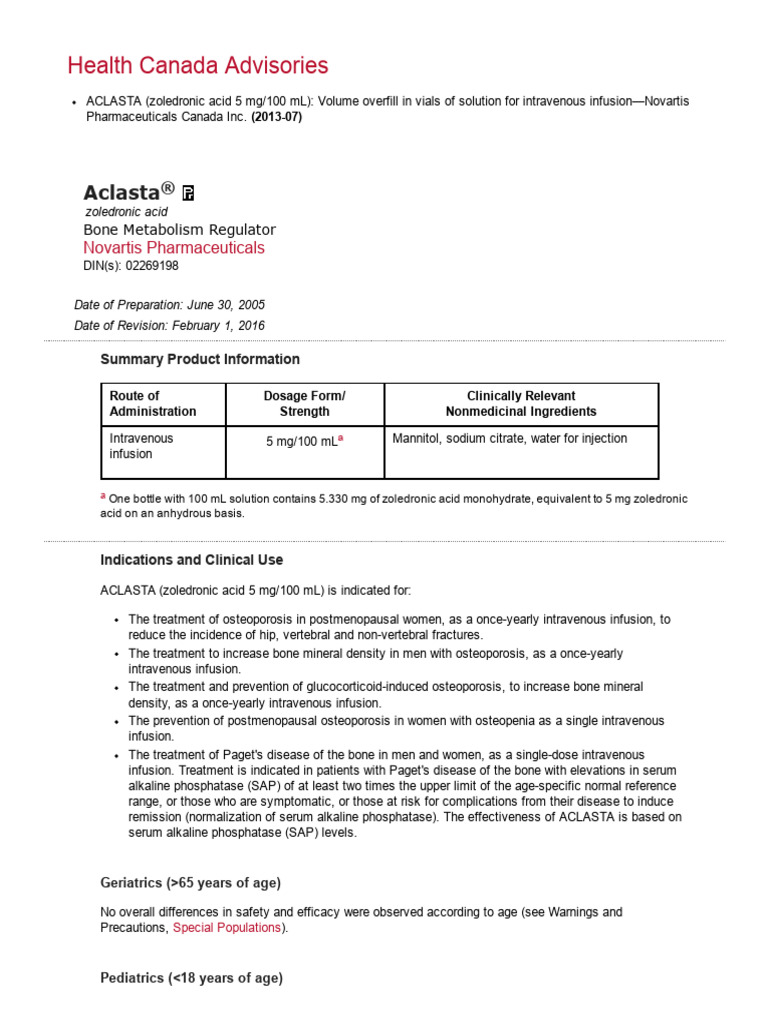
Aclasta (Zoledronic Acid): The Definitive Medical SEO Guide for Bone Health
Welcome to the comprehensive guide on Aclasta (zoledronic acid), a cornerstone medication in the management of various bone conditions. As expert medical SEO copywriters and orthopedic specialists, we understand the critical need for clear, accurate, and exhaustive information regarding treatments that impact patient quality of life. This guide aims to provide an authoritative resource for patients, caregivers, and healthcare professionals seeking to understand Aclasta's role, mechanism, usage, and safety profile.
Aclasta, marketed by Novartis, is a potent bisphosphonate administered intravenously. Its unique once-yearly dosing schedule offers significant convenience and improved adherence compared to daily or weekly oral alternatives, making it a preferred choice for many individuals requiring long-term bone density management.
1. Comprehensive Introduction & Overview
Aclasta is the brand name for zoledronic acid, a nitrogen-containing bisphosphonate. This class of drugs is renowned for its ability to inhibit bone resorption, the process by which osteoclasts break down bone tissue. By slowing down this natural process, Aclasta helps to maintain or increase bone mineral density, thereby reducing the risk of fractures.
Key Highlights of Aclasta:
- Active Ingredient: Zoledronic Acid
- Drug Class: Bisphosphonate (nitrogen-containing)
- Administration: Intravenous (IV) infusion
- Dosing Frequency: Typically once yearly for most indications
- Primary Use: Treatment and prevention of various bone diseases characterized by excessive bone loss or turnover.
This medication represents a significant advancement in orthopedic and endocrinological care, offering a powerful tool to combat conditions like osteoporosis, which affects millions worldwide, leading to debilitating fractures and reduced mobility.
2. Deep-Dive into Technical Specifications / Mechanisms
Understanding how Aclasta works at a cellular level is crucial to appreciating its efficacy.
2.1 Mechanism of Action (MoA)
Zoledronic acid exerts its therapeutic effects by specifically targeting and inhibiting osteoclasts, the cells responsible for bone resorption. The mechanism involves several intricate steps:
- High Affinity for Bone Mineral: Zoledronic acid has a strong affinity for hydroxyapatite crystals, the primary mineral component of bone. After intravenous administration, it rapidly localizes to sites of active bone remodeling, particularly areas where bone resorption is occurring.
- Internalization by Osteoclasts: When osteoclasts resorb bone, they take up the zoledronic acid that has been incorporated into the bone matrix.
- Inhibition of Farnesyl Pyrophosphate Synthase (FPPS): Once inside the osteoclast, zoledronic acid interferes with the mevalonate pathway by inhibiting the enzyme farnesyl pyrophosphate synthase (FPPS). This enzyme is critical for the synthesis of isoprenoid lipids, which are essential for the post-translational modification (prenylation) of small GTPases (e.g., Rho, Rac, Cdc42).
- Disruption of Osteoclast Function: The inhibition of FPPS leads to a deficiency of prenylated proteins, which are vital for the structural integrity, signaling, and survival of osteoclasts. This disruption results in:
- Apoptosis (programmed cell death) of osteoclasts: Reduces the overall number of active osteoclasts.
- Impaired osteoclast adhesion and ruffled border formation: Prevents osteoclasts from effectively attaching to and breaking down bone.
- Reduced bone resorptive activity: Even surviving osteoclasts have diminished function.
- Long-lasting Effect: Due to its strong binding to bone and slow release, a single dose of zoledronic acid can provide sustained inhibition of bone resorption for up to a year.
2.2 Pharmacokinetics
The pharmacokinetic profile of zoledronic acid is characterized by its rapid distribution to bone and primarily renal elimination.
| Pharmacokinetic Parameter | Description ## 3. Extensive Clinical Indications & Usage
Aclasta is indicated for a range of bone disorders characterized by increased bone turnover and fragility. Its potent anti-resorptive action makes it effective in both treatment and prevention settings.
3.1 Approved Indications
Aclasta (zoledronic acid) 5 mg intravenous infusion is approved for the following conditions:
- Treatment of Postmenopausal Osteoporosis (PMO):
- To reduce the incidence of vertebral, non-vertebral, and hip fractures.
- For women at high risk of fracture.
- Treatment of Osteoporosis in Men:
- To reduce the incidence of vertebral and non-vertebral fractures.
- For men at high risk of fracture.
- Treatment and Prevention of Glucocorticoid-Induced Osteoporosis (GIO):
- For men and women receiving systemic glucocorticoid therapy long-term (e.g., prednisone equivalent to 7.5 mg/day or more for at least 6 months) who are at high risk of fracture.
- Treatment of Paget's Disease of Bone:
- For patients with elevated serum alkaline phosphatase of bone origin, who are symptomatic, at risk of complications, or have evidence of active disease on bone scan.
- Aclasta is highly effective in normalizing bone turnover in Paget's disease.
- Prevention of New Clinical Fractures After Low-Trauma Hip Fracture:
- For men and postmenopausal women with a recent low-trauma hip fracture. This indication is critical as patients with a hip fracture are at significantly increased risk for subsequent fractures.
3.2 Dosage Guidelines
The administration of Aclasta requires careful consideration of patient factors, including renal function and calcium/vitamin D status.
General Dosing for Most Indications (Osteoporosis, GIO, Hip Fracture Prevention):
- Dose: 5 mg zoledronic acid
- Frequency: Administered as a single intravenous infusion once yearly.
- Infusion Time: Must be administered over a period of at least 15 minutes.
- Pre-infusion Hydration: Patients should be adequately hydrated prior to administration, especially those receiving diuretics or with compromised renal function.
- Calcium and Vitamin D Supplementation: Patients must receive adequate calcium and vitamin D supplementation (e.g., 1000-1200 mg elemental calcium and 800-1000 IU vitamin D daily) to minimize the risk of hypocalcemia, particularly in the days following the infusion. This should ideally be initiated before the infusion.
Dosing for Paget's Disease of Bone:
- Dose: A single 5 mg intravenous infusion.
- Re-treatment: Re-treatment may be considered after a minimum of 12 months, based on clinical assessment, biochemical markers of bone turnover, and patient symptoms.
Special Populations:
- Renal Impairment:
- Creatinine Clearance (CrCl) ≥ 35 mL/min: No dose adjustment is required.
- CrCl < 35 mL/min: Aclasta is contraindicated due to increased risk of renal toxicity.
- Monitoring: Serum creatinine should be measured before each dose of Aclasta, particularly in patients with pre-existing renal impairment or those on concomitant nephrotoxic medications.
- Hepatic Impairment: No dose adjustment is required.
- Elderly Patients: No dose adjustment is required; however, renal function should be assessed.
- Children and Adolescents: Aclasta is not recommended for use in children and adolescents below 18 years of age due to insufficient data on safety and efficacy.
Important Administration Notes:
- Aclasta should be prepared and administered by a healthcare professional.
- It should not be mixed with other medications or administered through the same intravenous line as other drugs.
- The infusion should be observed for any signs of adverse reactions.
4. Risks, Side Effects, or Contraindications
While Aclasta is highly effective, it is not suitable for everyone and carries potential risks and side effects that must be carefully considered.
4.1 Contraindications
Aclasta is absolutely contraindicated in the following situations:
- Hypocalcemia: Pre-existing hypocalcemia must be corrected before initiating Aclasta therapy.
- Severe Renal Impairment: Patients with a creatinine clearance less than 35 mL/min.
- Pregnancy and Lactation: Due to potential fetal harm and unknown excretion into breast milk.
- Hypersensitivity: Known hypersensitivity to zoledronic acid, other bisphosphonates, or any excipients in the formulation.
4.2 Potential Side Effects
Patients should be informed about potential side effects, which can range from mild and transient to rare but serious.
Common Side Effects (Occurring in ≥1% of patients):
- Acute Phase Reaction: This is the most common side effect, typically occurring within the first 3 days after infusion. Symptoms include fever, myalgia, flu-like symptoms, arthralgia, headache. These are usually mild to moderate and resolve within a few days. They are less common with subsequent infusions.
- Gastrointestinal: Nausea, vomiting, diarrhea, constipation.
- Musculoskeletal: Pain in extremities, back pain.
- Neurological: Dizziness.
- Ocular: Conjunctivitis, ocular inflammation.
- Local Reactions: Redness, swelling, or pain at the infusion site (rare).
Less Common but Serious Side Effects:
- Osteonecrosis of the Jaw (ONJ): A rare but serious condition involving bone death in the jaw. Risk factors include cancer, concomitant therapies (chemotherapy, corticosteroids, anti-angiogenic drugs), poor oral hygiene, pre-existing dental disease, invasive dental procedures, and smoking. A thorough dental examination and appropriate preventive dentistry should be performed prior to treatment in patients with risk factors.
- Atypical Femoral Fractures (AFF): Very rare, but serious fractures that occur in the subtrochanteric region and diaphyseal shaft of the femur, often with minimal or no trauma. Patients presenting with thigh or groin pain should be evaluated for a potential AFF.
- Renal Impairment: Worsening of renal function, including acute renal failure, can occur, especially in patients with pre-existing renal dysfunction, dehydration, or those receiving other nephrotoxic drugs.
- Hypocalcemia: Can be severe, especially if pre-existing hypocalcemia is not corrected or if calcium/vitamin D supplementation is inadequate.
- Ocular Inflammation: Scleritis, uveitis, iritis. Patients experiencing eye pain, redness, or blurred vision should seek medical attention.
- Allergic Reactions: Rash, pruritus, angioedema, and in rare cases, anaphylactic shock.
4.3 Drug Interactions
While zoledronic acid has limited drug-drug interaction potential, some considerations are important:
- Nephrotoxic Drugs: Concomitant use with drugs that may impair renal function (e.g., aminoglycosides, loop diuretics) may increase the risk of renal adverse effects. Caution is advised.
- Thalidomide: In patients with multiple myeloma, the risk of renal dysfunction may be increased when zoledronic acid is administered with thalidomide.
- Aminoglycosides: Bisphosphonates may lower serum calcium levels, and concomitant use with aminoglycosides, which also lower serum calcium, may lead to more pronounced hypocalcemia.
4.4 Pregnancy and Lactation Warnings
- Pregnancy Category D: Aclasta is contraindicated during pregnancy. Bisphosphonates are incorporated into the bone matrix and may be released over years, potentially affecting fetal development. There is a theoretical risk of fetal harm.
- Lactation: It is unknown whether zoledronic acid is excreted in human milk. Due to the potential for serious adverse reactions in nursing infants, Aclasta is contraindicated during breastfeeding.
4.5 Overdose Management
Experience with Aclasta overdose is limited.
- Symptoms: An overdose of zoledronic acid may lead to clinically significant hypocalcemia, hypophosphatemia, and hypomagnesemia.
- Management:
- There is no specific antidote for zoledronic acid overdose.
- Clinically significant hypocalcemia can be corrected by the administration of supplemental calcium orally or, in acute cases, intravenously.
- Supportive care should be provided as needed, including monitoring of electrolyte levels.
5. Massive FAQ Section
Here are some frequently asked questions about Aclasta, providing quick and clear answers to common concerns.
Q1: What is Aclasta and what is it used for?
A1: Aclasta is the brand name for zoledronic acid, a potent bisphosphonate medication administered intravenously. It is primarily used to treat and prevent osteoporosis in postmenopausal women and men, glucocorticoid-induced osteoporosis, Paget's disease of bone, and to prevent new fractures after a hip fracture. It works by slowing down bone breakdown.
Q2: How often do I need to receive Aclasta?
A2: For most indications (osteoporosis, GIO, hip fracture prevention), Aclasta is typically given as a single intravenous infusion once a year. For Paget's disease, re-treatment may be considered after a minimum of 12 months based on your doctor's assessment.
Q3: How is Aclasta administered?
A3: Aclasta is given as an intravenous (IV) infusion, meaning it's delivered directly into a vein, usually in your arm. The infusion typically takes at least 15 minutes. It must be administered by a healthcare professional.
Q4: What are the most common side effects of Aclasta?
A4: The most common side effect is an "acute phase reaction," which can include flu-like symptoms such as fever, muscle aches, fatigue, and headache. These usually occur within the first three days after the infusion and typically resolve within a few days. They are often less severe with subsequent infusions.
Q5: What should I do before receiving my Aclasta infusion?
A5: It's crucial to inform your doctor about all your medical conditions and medications. You should also ensure you are well-hydrated before the infusion. Your doctor will likely recommend taking calcium and vitamin D supplements daily, starting before your infusion, to help prevent low calcium levels.
Q6: Can Aclasta affect my kidneys?
A6: Yes, Aclasta can affect kidney function. It is contraindicated in patients with severe kidney impairment (creatinine clearance less than 35 mL/min). Your doctor will check your kidney function with a blood test before each infusion. Adequate hydration is important to minimize kidney risk.
Q7: What is Osteonecrosis of the Jaw (ONJ) and Atypical Femoral Fracture (AFF)?
A7: ONJ is a rare but serious condition where bone tissue in the jaw dies, potentially leading to pain and exposed bone. AFFs are very rare, unusual fractures of the thigh bone that can occur with little or no trauma. While rare, it's important to discuss any jaw pain, swelling, or persistent thigh/groin pain with your doctor. Good oral hygiene and dental check-ups are recommended, especially if you have risk factors for ONJ.
Q8: Can I take Aclasta if I am pregnant or breastfeeding?
A8: No, Aclasta is contraindicated during pregnancy and breastfeeding. It can potentially harm the developing fetus, and it's unknown if it passes into breast milk.
Q9: How long do I need to be on Aclasta treatment?
A9: The duration of Aclasta treatment depends on your specific condition, fracture risk, and how you respond to the medication. For osteoporosis, treatment is often long-term, but your doctor will periodically reassess your need for continued therapy, typically after 3-5 years of treatment.
Q10: What if I miss my annual Aclasta infusion?
A10: If you miss your scheduled annual infusion, contact your doctor's office immediately to reschedule. It's important to receive your treatment as close to the annual schedule as possible to maintain its effectiveness in protecting your bones.
Q11: Do I need to take calcium and vitamin D with Aclasta?
A11: Yes, adequate daily intake of calcium (typically 1000-1200 mg elemental calcium) and vitamin D (typically 800-1000 IU) is essential when receiving Aclasta. This helps prevent hypocalcemia (low blood calcium) and supports overall bone health, enhancing the effectiveness of the treatment.
Q12: Is Aclasta the same as Reclast?
A12: Yes, Aclasta and Reclast are both brand names for the exact same active ingredient, zoledronic acid 5 mg. The name used can vary by country or region. They are identical in formulation, dosage, and indications.
By providing this extensive and detailed guide, we aim to empower individuals with the knowledge necessary to make informed decisions about their bone health in consultation with their healthcare providers. Aclasta represents a powerful therapeutic option, and understanding its nuances is key to maximizing its benefits while mitigating potential risks.