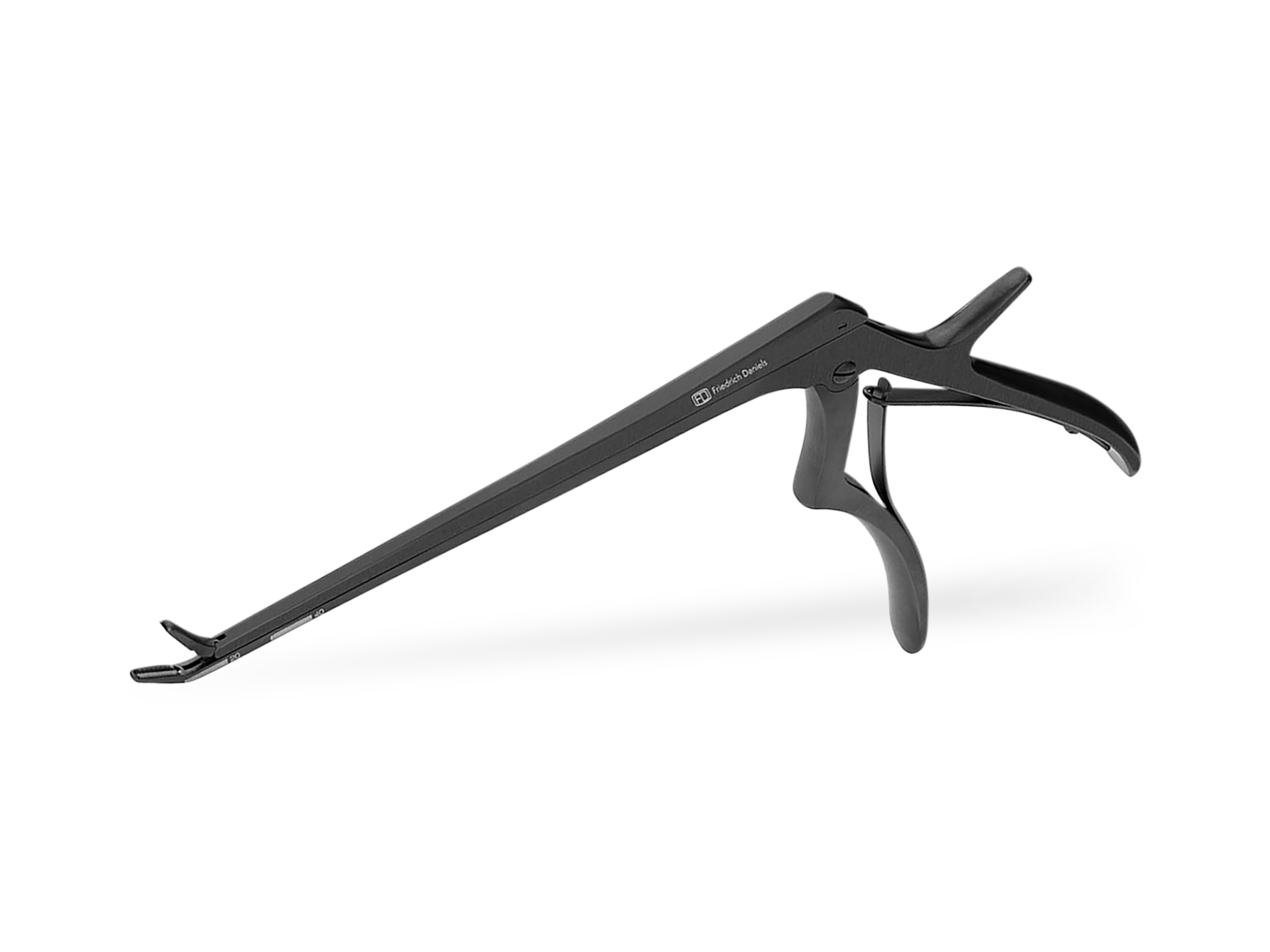
The Pituitary Rongeur (Up and Down Biting, 2mm-4mm): A Cornerstone of Precision Surgery
1. Comprehensive Introduction & Overview
In the intricate world of modern surgery, precision instruments are not just tools; they are extensions of a surgeon's skill, enabling delicate procedures that profoundly impact patient outcomes. Among these indispensable instruments is the Pituitary Rongeur, specifically the "Up and Down Biting, 2mm-4mm" variant. Despite its historical name, which harks back to its initial use in pituitary gland surgery, this sophisticated instrument has evolved to become a vital component in a wide array of neurosurgical and spinal procedures, where fine tissue removal and decompression are paramount.
The Pituitary Rongeur is a specialized surgical instrument designed for grasping and excising small pieces of soft tissue, cartilage, or bone. Its slender profile and precise biting mechanism allow surgeons to navigate confined anatomical spaces with remarkable accuracy. The "Up and Down Biting" feature signifies its unique jaw design, enabling the instrument to remove tissue from both superior and inferior aspects with a single application, optimizing efficiency and access. The "2mm-4mm" specification refers to the delicate size range of its biting jaws, emphasizing its role in micro-surgical precision, particularly around sensitive structures like nerves and blood vessels. This guide aims to demystify this critical instrument, exploring its design, applications, maintenance, and the significant impact it has on enhancing patient care and surgical success.
2. Deep-dive into Technical Specifications / Mechanisms
The efficacy of the Pituitary Rongeur lies in its meticulous design and the advanced engineering of its components.
2.1. Design and Materials
The construction of a high-quality Pituitary Rongeur adheres to stringent medical standards, ensuring durability, biocompatibility, and optimal performance.
- High-Grade Medical Stainless Steel: The primary material for the rongeur is typically surgical-grade stainless steel. This alloy is chosen for its:
- Corrosion Resistance: Essential for enduring repeated sterilization cycles.
- Strength and Durability: To withstand the mechanical stresses of tissue removal.
- Biocompatibility: To minimize adverse reactions in the surgical field.
- Ergonomic Handle Design: Surgeons often perform lengthy and intricate procedures. The handle is designed for:
- Comfort: Reducing hand fatigue.
- Optimal Grip: Ensuring secure handling and preventing slippage.
- Tactile Feedback: Allowing the surgeon to "feel" the tissue being engaged.
- Slender Shaft: The shaft is elongated and thin, facilitating access to deep and narrow surgical corridors, crucial in spinal and neurosurgical approaches. Shafts can be straight or angled, depending on the specific surgical access requirements.
- Precision Jaws (2mm-4mm):
- Size: The small jaw size (2mm to 4mm) is critical for minute, controlled tissue removal, especially near delicate neural structures. This prevents inadvertent damage to surrounding healthy tissue.
- Fenestrated vs. Non-Fenestrated: Jaws can be fenestrated (with an opening) or non-fenestrated (solid). Fenestrated jaws allow for better visualization of the tissue being removed and reduce the risk of tissue slippage.
- "Up and Down Biting" Mechanism: This is a defining feature. Unlike standard rongeurs that primarily bite in one direction, the up-and-down biting mechanism allows the cutting edges of the jaws to engage tissue from both the superior and inferior planes simultaneously. This provides:
- Enhanced Versatility: Greater adaptability in various anatomical orientations.
- Improved Efficiency: Fewer repositioning movements are needed, saving valuable surgical time.
- More Comprehensive Resection: Ability to clean out small tissue fragments more thoroughly from a confined space.
2.2. Biomechanics
The biomechanical principles behind the Pituitary Rongeur are centered on maximizing cutting efficiency while minimizing the force required and the risk of collateral damage.
- Leverage System: The instrument operates on a lever principle, converting a moderate force applied at the handle into a concentrated, high-pressure biting force at the jaws. This allows for clean excision of tough tissues with relative ease.
- Shearing Action: The sharp, precisely aligned cutting edges of the jaws create a shearing action, which is more effective and less traumatic than crushing.
- Controlled Force Application: The design ensures that the force is directed precisely to the target tissue, allowing for controlled removal without excessive stress on surrounding delicate structures like nerves, blood vessels, or the dura mater. The "up and down" biting capability further refines this control by allowing multi-directional tissue engagement.
3. Extensive Clinical Indications & Usage
The Pituitary Rongeur, particularly the "Up and Down Biting, 2mm-4mm" variant, is a workhorse in specialties requiring meticulous tissue management in confined spaces.
3.1. Spinal Surgery
This is perhaps the most common application, where it is instrumental in relieving nerve compression and stabilizing the spine.
- Lumbar and Cervical Discectomy: The primary use involves removing herniated or degenerated disc material that is pressing on spinal nerves or the spinal cord. The small jaws allow for precise removal of fragments, decompressing the neural elements.
- Laminectomy/Laminotomy: Used to remove small portions of the lamina (part of the vertebral bone) or ligaments to create more space for the spinal cord and nerves, alleviating spinal stenosis.
- Foraminotomy: Enlarging the neural foramen (the opening where nerve roots exit the spinal canal) to relieve pressure on compressed nerve roots.
- Spinal Fusion Preparation: Preparing bony surfaces and removing soft tissue or osteophytes to facilitate bone graft placement and fusion.
- Decompression of Spinal Tumors: Carefully excising portions of tumors or surrounding tissue to relieve pressure on the spinal cord or nerve roots.
3.2. Neurosurgery (Beyond Pituitary)
While named for the pituitary, its precision makes it invaluable in general neurosurgical procedures.
- Pituitary Adenoma Resection (Transsphenoidal Approach): Its original and still vital role, where it is used to remove pituitary tumors via an incision through the nasal cavity and sphenoid bone. The fine, angled jaws are perfect for this delicate, deep-seated location.
- Tumor Debulking: Excising small fragments of brain or spinal cord tumors (e.g., meningiomas, schwannomas) to reduce mass effect or prepare for further treatment.
- Decompression of Cranial Nerves: In procedures like microvascular decompression for trigeminal neuralgia, it can be used to remove small bony spurs or fibrous bands compressing cranial nerves.
3.3. Fitting/Usage Instructions (Simplified for Patients)
While detailed instruction is for surgeons, understanding the general principles can help patients appreciate the skill involved:
- Selection: The surgeon carefully selects the appropriate rongeur size (e.g., 2mm, 3mm, 4mm) and jaw configuration (straight, angled, up/down biting) based on the specific surgical site and tissue to be removed.
- Access and Visualization: After gaining surgical access, the rongeur is gently advanced to the target tissue, often under direct microscopic or endoscopic visualization to ensure precision.
- Controlled Engagement: The surgeon carefully positions the jaws around the target tissue (e.g., a piece of herniated disc or a ligament).
- Gentle Excision: The handles are slowly closed, allowing the sharp jaws to precisely bite and remove the tissue. The "up and down biting" feature allows for efficient removal without needing to constantly re-angle the instrument.
- Repeated Application: The process is repeated until adequate decompression or tissue removal is achieved, always with meticulous attention to surrounding vital structures.
3.4. Patient Outcome Improvements
The use of a precise instrument like the Pituitary Rongeur directly contributes to superior patient outcomes:
- Reduced Tissue Trauma: Its small, sharp jaws and controlled biting action minimize damage to healthy surrounding tissues, leading to less post-operative swelling and pain.
- Enhanced Surgical Precision: Allows for thorough removal of offending tissue (e.g., disc fragments, bone spurs) while preserving critical nerves and vessels, reducing the risk of neurological deficits.
- Faster Recovery: Less trauma and greater precision often translate to shorter hospital stays, quicker rehabilitation, and a faster return to daily activities.
- Improved Neurological Function: Effective decompression of nerves and the spinal cord can alleviate symptoms like pain, numbness, and weakness, restoring function.
- Minimally Invasive Approaches: The slender design facilitates its use in minimally invasive spinal surgery (MISS) techniques, which typically result in smaller incisions, less muscle disruption, and faster recovery times.
4. Risks, Side Effects, or Contraindications
While instrumental for precision, the use of any surgical tool carries inherent risks. Patients should be aware of potential complications, though rare.
4.1. General Surgical Risks (Applicable to any surgery)
- Infection: Risk of bacteria entering the surgical site.
- Bleeding: Excessive blood loss during or after surgery.
- Anesthesia Risks: Allergic reactions or complications related to anesthetic agents.
- Nerve Damage: Though efforts are made to avoid it, unintended injury to nerves can occur.
- Dural Tear: Puncture of the dura mater (the tough membrane surrounding the spinal cord), which can lead to cerebrospinal fluid (CSF) leakage.
4.2. Instrument-Specific Risks
- Damage to Adjacent Structures: Despite precision, inadvertent damage to nearby nerves, blood vessels, or the spinal cord can occur if the instrument is misused or if anatomy is highly distorted.
- Incomplete Tissue Removal: If not used thoroughly, residual disc fragments or bone spurs could lead to recurrence of symptoms.
- Instrument Breakage: Extremely rare with high-quality instruments and proper use, but a rongeur could potentially break if excessive force is applied or if it's used on tissue it's not designed for (e.g., very dense bone).
- Foreign Body Retention: A broken piece of the instrument, if not retrieved, could remain in the patient, necessitating further surgery. This is why thorough instrument counts and inspections are critical.
4.3. Contraindications
The Pituitary Rongeur is specifically designed for soft tissue, cartilage, and fine bone. It is generally contraindicated for:
- Dense Bone Resection: It is not designed for removing large amounts of dense cortical bone, which requires more robust instruments like osteotomes, bone drills, or larger bone rongeurs.
- Large Volume Tissue Removal: For extensive tissue debridement, larger instruments are more appropriate and efficient.
- Use in Uncontrolled Bleeding: While precise, its primary function is tissue removal, not hemostasis. Use in highly vascular areas without proper visualization and hemostatic control can be risky.
- Improper Size/Type Selection: Using an inappropriate size or type of rongeur for the specific anatomical location or tissue type can lead to suboptimal results or complications.
5. Expert Tips from Dr. Mohammed Hutaif
As an orthopedic specialist, I emphasize the following principles when utilizing precision instruments like the Pituitary Rongeur:
- Visualization is Paramount: "Always ensure clear, magnified visualization of your target tissue and surrounding critical structures before engaging the rongeur. Never bite blindly."
- Choose Wisely: "Selecting the correct jaw size (2mm, 3mm, or 4mm) and shaft configuration (straight, angled) is crucial. It's about matching the tool to the task and the anatomical corridor."
- Gentle, Controlled Bites: "Apply slow, deliberate pressure. The goal is to excise, not to tear or crush. This minimizes collateral damage and enhances patient safety."
- Regular Inspection and Maintenance: "High-quality instruments demand meticulous care. Regular inspection for sharpness, alignment, and integrity before and after each use is non-negotiable for optimal performance and patient safety."
- Continual Learning: "Stay updated with advanced imaging techniques and surgical approaches. Modern technology, combined with skilled instrument use, drives the best patient outcomes."
6. Massive FAQ Section
Q1: What is a Pituitary Rongeur primarily used for?
A1: The Pituitary Rongeur is a precision surgical instrument primarily used for excising small pieces of soft tissue, cartilage, or fine bone. Its main applications are in spinal surgery (e.g., removing herniated disc material, decompressing nerves) and neurosurgery (e.g., removing pituitary tumors, debulking other brain/spinal tumors).
Q2: Why is it called "Pituitary" if it's often used for the spine?
A2: It earned its name from its initial and highly effective use in pituitary gland surgery, particularly via the transsphenoidal approach. However, its design—featuring a slender shaft and small, precise biting jaws—makes it exceptionally versatile for any delicate procedure requiring fine tissue removal in confined anatomical spaces, including the spine.
Q3: What does "up and down biting" mean for this instrument?
A3: "Up and down biting" refers to the unique design of the rongeur's jaws. Unlike traditional rongeurs that primarily bite in one direction, this variant allows the cutting edges to engage and remove tissue from both the superior (above) and inferior (below) aspects simultaneously. This enhances efficiency, provides better access in tight spaces, and reduces the need for constant instrument repositioning.
Q4: How does the 2mm-4mm size benefit surgery?
A4: The small jaw size (ranging from 2mm to 4mm) is crucial for precision and safety. It allows surgeons to remove minute fragments of tissue or bone, especially when operating near delicate structures like nerves, blood vessels, or the spinal cord. This minimizes the risk of inadvertently damaging healthy surrounding tissue and contributes to better neurological outcomes.
Q5: Is the Pituitary Rongeur used in minimally invasive surgery (MIS)?
A5: Yes, absolutely. Its slender profile and precise biting capabilities make the Pituitary Rongeur an ideal instrument for minimally invasive spinal surgery (MISS) and other endoscopic or microscopic procedures. It allows surgeons to perform delicate tissue removal through smaller incisions, leading to less muscle disruption, reduced pain, and faster recovery for patients.
Q6: How does this instrument improve patient recovery?
A6: By enabling highly precise tissue removal with minimal collateral damage, the Pituitary Rongeur contributes to:
* Less post-operative pain and swelling.
* Reduced risk of complications like nerve damage.
* Faster healing and rehabilitation.
* Shorter hospital stays.
* Overall quicker return to normal activities, as the body experiences less trauma.
Q7: What materials are these instruments made from?
A7: Pituitary Rongeurs are typically crafted from high-grade medical stainless steel. This material is chosen for its exceptional strength, durability, corrosion resistance (essential for repeated sterilization), and biocompatibility, ensuring safety and longevity in the surgical environment.
Q8: How are these instruments sterilized?
A8: Pituitary Rongeurs, like all reusable surgical instruments, undergo rigorous sterilization protocols. The most common method is steam sterilization (autoclaving), which involves high-temperature steam under pressure. Before sterilization, instruments are thoroughly cleaned to remove all organic matter. Proper cleaning and sterilization are critical to prevent surgical site infections.
Q9: Can this instrument break during surgery?
A9: Instrument breakage is extremely rare with high-quality instruments used correctly. However, if excessive force is applied, or if the rongeur is used on tissue it's not designed for (e.g., very dense bone), it could potentially break. Surgeons are trained to handle instruments properly and inspect them before and after use to ensure their integrity, minimizing this risk.
Q10: What are the alternatives to a Pituitary Rongeur for similar procedures?
A10: Depending on the specific tissue and surgical context, alternatives might include:
* Kerrison Rongeurs: For broader bone removal, especially lamina.
* Curettes: For scraping away soft tissue or bone.
* Osteotomes and Mallets: For larger, more forceful bone cuts.
* High-Speed Drills: For precise bone removal in neurosurgery.
However, for fine, precise soft tissue or cartilage removal in confined spaces, the Pituitary Rongeur's unique design often makes it the preferred and most effective tool.
Q11: Is the use of a Pituitary Rongeur safe?
A11: When used by a skilled and experienced surgeon, the Pituitary Rongeur is a very safe and effective instrument. Its design is intended to enhance precision and minimize risk. Safety is further ensured by meticulous surgical planning, advanced imaging, proper instrument maintenance, and adherence to strict surgical protocols.
Q12: How often are these instruments replaced?
A12: Pituitary Rongeurs are designed for longevity, but their lifespan depends on frequency of use, quality of manufacturing, and adherence to maintenance protocols. They are not typically "replaced" on a fixed schedule. Instead, they are regularly inspected for sharpness, jaw alignment, and any signs of wear or damage. If an instrument shows any compromise to its integrity or performance, it is immediately removed from service and either repaired or replaced to ensure patient safety and surgical efficacy.
Disclaimer: This information is for educational purposes only and is not medical advice. Always consult with a qualified healthcare professional for any medical concerns or before making any decisions related to your health or treatment.