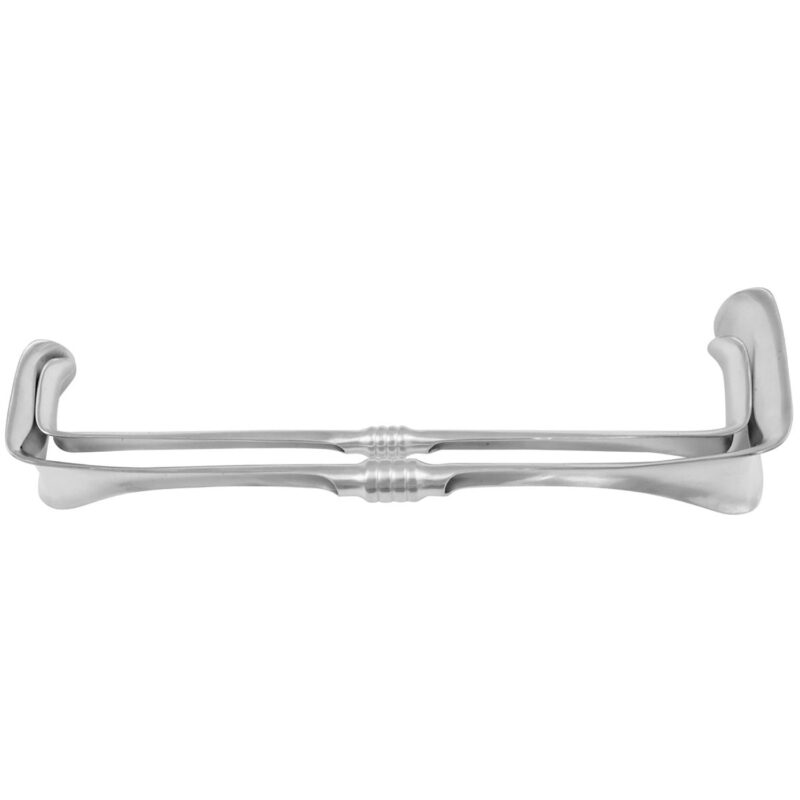
The Adson Cerebellar Retractor (Spring-Loaded): A Cornerstone of Neurosurgical Precision
Welcome to this comprehensive guide from Dr. Mohammed Hutaif's practice, dedicated to educating our patients about the advanced tools and techniques that define modern surgical excellence. Today, we delve into a remarkable instrument known as the Adson Cerebellar Retractor, specifically its spring-loaded variant. While the term "orthopedic" often brings to mind bones and joints, the principles of precision, minimal invasiveness, and optimal patient outcomes are universal across surgical disciplines. The Adson Cerebellar Retractor, though primarily a neurosurgical instrument, embodies these principles, allowing surgeons to navigate the most delicate anatomical landscapes with unparalleled safety and efficacy.
1. Comprehensive Introduction & Overview
The Adson Cerebellar Retractor is a specialized surgical instrument designed to gently and securely hold back delicate tissues, primarily within the posterior fossa of the skull, to provide surgeons with a clear and stable view of the surgical site. Its "spring-loaded" mechanism is a crucial feature, distinguishing it from traditional manual retractors. This mechanism ensures a constant, gentle, and controlled retraction force, minimizing the risk of tissue trauma while maintaining an optimal surgical field.
Invented by Dr. Alfred W. Adson, a pioneering neurosurgeon, this retractor has become indispensable in procedures involving the brain, cerebellum, and brainstem. Its precision and thoughtful design contribute significantly to the safety and success of complex operations, ultimately leading to better outcomes for patients. Understanding how such instruments work helps patients appreciate the meticulous care and advanced technology involved in their treatment.
What Makes It Unique?
- Spring-Loaded Mechanism: Provides continuous, self-retaining, and adjustable tension, eliminating the need for constant manual adjustment.
- Delicate Tissue Handling: Designed specifically for the fragile tissues of the nervous system, reducing the risk of compression injury.
- Optimal Visualization: Creates a stable and unobstructed surgical field, crucial for intricate procedures.
2. Deep-Dive into Technical Specifications & Mechanisms
The Adson Cerebellar Retractor is a testament to sophisticated medical engineering, combining robust materials with an intuitive, patient-safety-focused design.
2.1. Design & Components
The spring-loaded Adson retractor typically consists of several key parts, meticulously crafted for function and durability:
- Handle/Frame: The main body of the instrument, often featuring ergonomic grips for the surgical team. It houses the spring mechanism.
- Retractor Arms: Two or more arms extend from the frame, designed to hold the retractor blades. These arms are adjustable to control the degree of opening.
- Spring Mechanism: This is the core innovation. A precisely calibrated spring system applies a continuous, gentle outward force to the retractor arms. This self-retaining action allows the surgeon to focus on the procedure without needing an assistant to hold the retractor. The tension is typically adjustable, allowing the surgeon to fine-tune the retraction force.
- Blades: These are interchangeable, varying in shape, size, and curvature to suit different anatomical contours and tissue types. Common blade types include:
- Malleable Blades: Can be bent by the surgeon to fit unique anatomical needs.
- Fixed Blades: Pre-shaped blades for specific approaches.
- Smooth Edges: All blades feature smooth, atraumatic edges to prevent cutting or tearing of delicate tissues.
- Locking Mechanism (Optional/Integrated): While spring-loaded implies self-retention, some designs may include additional locking features to secure the chosen degree of retraction, offering an extra layer of stability.
2.2. Materials
The choice of materials for surgical instruments is paramount, ensuring sterility, biocompatibility, and longevity. The Adson Cerebellar Retractor is predominantly manufactured from:
- High-Grade Stainless Steel (e.g., 300 or 400 series surgical stainless steel): This material is chosen for its:
- Corrosion Resistance: Essential for resisting degradation from bodily fluids and repeated sterilization cycles.
- Durability: Withstands the rigors of surgical use.
- Biocompatibility: Non-reactive with human tissues, preventing adverse reactions.
- Sterilizability: Can withstand high-temperature steam sterilization (autoclaving) without degradation.
- Specialty Alloys: In some advanced designs, specific alloys might be used for springs or critical components to enhance elasticity or reduce weight, though stainless steel remains the primary material.
2.3. Biomechanics (Simplified for Patients)
The biomechanics of the spring-loaded Adson retractor are elegantly simple yet incredibly effective in delicate surgical fields:
- Controlled Force Distribution: The spring mechanism ensures that the retraction force is distributed evenly and gently across the tissue being held. This prevents localized pressure points that could lead to ischemia (reduced blood flow) or nerve damage.
- Constant Tension: Unlike manual retraction which can fluctuate, the spring maintains a consistent, preset tension. This stability is vital when operating near critical neurological structures where even slight movements can have significant consequences.
- Minimizing Tissue Trauma: The smooth, atraumatic blades, combined with the gentle, controlled force, minimize the risk of bruising, tearing, or crushing delicate brain and nerve tissues. This "gentle touch" approach is fundamental to preserving neurological function.
- Optimizing Surgical Exposure: By gently separating tissues, the retractor creates a wider and clearer field of view, allowing the surgeon to meticulously identify and address anatomical structures with enhanced precision.
3. Extensive Clinical Indications & Usage
The Adson Cerebellar Retractor is an indispensable tool in a variety of complex neurosurgical procedures, particularly those involving the posterior fossa and spinal cord. Its application underscores the surgeon's commitment to precision and patient safety.
3.1. Primary Clinical Applications
The retractor's design makes it ideal for procedures requiring careful access and sustained exposure of delicate neural structures:
- Posterior Fossa Surgery: This is its most common application. The posterior fossa houses the cerebellum, brainstem, and crucial cranial nerves. Procedures here include:
- Chiari Malformation Decompression: Relieving pressure on the cerebellum and brainstem by expanding the space at the base of the skull.
- Cerebellar Tumor Resection: Carefully removing tumors from the cerebellum while protecting surrounding healthy tissue.
- Brainstem Lesion Management: Accessing and treating lesions in the brainstem, which controls vital functions.
- Acoustic Neuroma Removal: Excising benign tumors affecting the nerve for hearing and balance.
- Vascular Decompression Procedures: For conditions like trigeminal neuralgia or hemifacial spasm, where a blood vessel compresses a nerve, the retractor helps gently move the vessel away from the nerve.
- Spinal Cord Tumor Removal (Cervical/Thoracic): In some complex spinal cases, particularly at the craniocervical junction or upper cervical spine, the Adson retractor can be used to gently retract muscle or laminae to expose the spinal cord and its surrounding structures, ensuring a clear path for tumor resection or decompression.
- Intracranial Aneurysm Clipping: In specific cases, particularly involving posterior circulation aneurysms, the retractor can aid in careful tissue separation to expose the aneurysm.
3.2. How It Improves Patient Outcomes
The judicious use of the Adson Cerebellar Retractor directly translates into tangible benefits for patients:
- Enhanced Surgical Precision: A stable, clear surgical field allows the surgeon to perform intricate maneuvers with greater accuracy, reducing the risk of errors.
- Reduced Operating Time: Efficient and sustained retraction can streamline the surgical process, potentially shortening the duration of anesthesia and surgery.
- Minimized Tissue Damage: The gentle, controlled force of the spring mechanism, coupled with atraumatic blades, significantly reduces the likelihood of inadvertent injury to delicate neural tissue. This can lead to better preservation of neurological function.
- Improved Neurological Outcomes: By protecting vital structures during surgery, patients are more likely to retain or improve their neurological function post-operatively, leading to a better quality of life.
- Faster Recovery: Less tissue trauma often means less post-operative swelling, pain, and a quicker return to normal activities.
4. Risks, Side Effects, or Contraindications
While the Adson Cerebellar Retractor is designed for safety and precision, like any surgical instrument, its use carries inherent considerations and potential risks. It's crucial to understand that these risks are significantly mitigated by the surgeon's expertise, meticulous technique, and careful patient selection.
4.1. General Surgical Risks
These are common to any invasive procedure and are not specific to the retractor itself, but are important to acknowledge:
* Infection: Risk of surgical site infection.
* Bleeding: Potential for hemorrhage during or after surgery.
* Anesthesia Risks: Adverse reactions to anesthetic agents.
4.2. Specific Risks Related to Retraction
The primary risks associated with any retractor, including the Adson, stem from the potential for excessive or prolonged pressure on delicate tissues.
* Tissue Ischemia: If the retraction force is too high or applied for an extended period, it can restrict blood flow to the retracted tissue, potentially causing localized damage or necrosis.
* Nerve Injury: Misplacement of the blades or excessive force can directly compress or stretch nerves, leading to temporary or permanent neurological deficits (e.g., weakness, numbness, paralysis).
* Edema (Swelling): Retraction can sometimes induce localized tissue swelling, which might contribute to post-operative symptoms.
* Brain Contusion/Laceration: Though rare with proper technique and atraumatic instruments like the Adson, aggressive or improper retraction could theoretically cause direct injury to brain tissue.
4.3. Contraindications
There are no absolute contraindications to the instrument itself, as its use is determined by the specific surgical context and the surgeon's judgment. However, situations where extreme caution or alternative strategies might be preferred include:
* Highly Friable or Edematous Tissue: In cases where tissues are unusually fragile or severely swollen, even gentle retraction might pose a higher risk.
* Limited Space with Critical Structures: In exceptionally confined spaces where retraction might inadvertently compromise vital, unretractable structures.
* Patient-Specific Anatomical Anomalies: Unusual anatomical variations might make standard retraction techniques more challenging or risky.
The decision to use the Adson Cerebellar Retractor, and the method of its application, always rests with the highly trained surgical team, who continuously weigh the benefits against potential risks for each individual patient.
5. Expert Tips from Dr. Mohammed Hutaif
As an orthopedic specialist who values precision and patient safety across all complex surgical scenarios, I often collaborate with neurosurgical colleagues and appreciate the meticulous approach required in delicate procedures. The principles I apply in spinal surgery, such as minimizing tissue trauma and optimizing visualization, are perfectly exemplified by the thoughtful use of instruments like the Adson Cerebellar Retractor. Here are my expert insights:
- "The Right Tool for the Right Job": Selecting the correct blade size and shape is paramount. A surgeon must meticulously match the retractor's configuration to the specific anatomy and the extent of retraction needed. This prevents undue pressure and ensures optimal exposure without over-retraction.
- "Gentle Touch, Constant Vigilance": Even with a spring-loaded mechanism, the surgeon must always maintain a "gentle touch." The spring provides consistent force, but the initial placement and ongoing monitoring of tissue viability are critical. We continuously assess the tissue under retraction for any signs of stress or ischemia.
- "Dynamic Retraction, Not Static": While the spring provides stability, retraction is not a static event. It's a dynamic process. We may adjust the degree of retraction incrementally throughout the procedure as the surgical field changes or as different layers of tissue are encountered.
- "Integrated with Advanced Imaging": Modern neurosurgery often integrates intraoperative imaging (e.g., ultrasound, fluoroscopy, neuronavigation). The retractor's placement is often guided or confirmed by these technologies to ensure optimal positioning relative to critical structures.
- "Team Synergy is Key": The safe and effective use of any complex instrument relies on the entire surgical team. From the scrub tech who prepares the instrument to the assistant who helps with placement, clear communication and coordinated effort are essential to ensure the retractor functions as intended, providing maximum benefit to the patient.
- "Patient Safety Above All": Every decision, every instrument choice, and every maneuver in the operating room is made with the patient's safety and best possible outcome as the absolute priority. The Adson retractor, when used expertly, is a powerful ally in achieving this goal, allowing us to perform complex procedures with precision and care.
6. Massive FAQ Section
Q1: What is the Adson Cerebellar Retractor (Spring-loaded)?
A1: The Adson Cerebellar Retractor (Spring-loaded) is a specialized surgical instrument used primarily in neurosurgery. It's designed to gently and continuously hold back delicate tissues, such as the brain or cerebellum, during complex operations to provide the surgeon with a clear, stable view of the surgical area. The "spring-loaded" feature ensures a constant, controlled, and gentle retraction force.
Q2: Why is the "spring-loaded" feature important?
A2: The spring-loaded mechanism is crucial because it provides continuous, self-retaining tension. This means the retractor holds tissues back steadily without needing constant manual adjustment by a surgical assistant. This consistent, gentle force minimizes the risk of tissue trauma and frees up the surgeon's hands and attention for the intricate surgical tasks.
Q3: What types of surgeries is this instrument typically used in?
A3: It's predominantly used in neurosurgical procedures, especially those involving the posterior fossa of the skull. This includes surgeries for Chiari malformations, removal of cerebellar or brainstem tumors, vascular decompression for conditions like trigeminal neuralgia, and certain complex spinal cord tumor removals, particularly in the upper cervical region.
Q4: Is the Adson Cerebellar Retractor safe for delicate brain tissue?
A4: Yes, it is specifically designed with patient safety in mind. Its smooth, atraumatic blades and the controlled, gentle force of the spring mechanism are intended to minimize trauma to delicate neural tissues. When used by experienced surgeons, it is considered a very safe tool for these sensitive procedures.
Q5: How does this instrument improve patient outcomes?
A5: By providing a stable and clear surgical field, the Adson retractor allows surgeons to operate with enhanced precision and accuracy. This can lead to reduced operating time, less tissue damage, better preservation of neurological function, and ultimately, improved recovery and long-term results for the patient.
Q6: What materials is the Adson Cerebellar Retractor made from?
A6: It is typically manufactured from high-grade medical stainless steel. This material is chosen for its exceptional durability, resistance to corrosion (which is vital for repeated sterilization), and biocompatibility, meaning it won't react adversely with human tissues.
Q7: How is the instrument maintained and sterilized?
A7: After each use, the retractor undergoes a rigorous cleaning process to remove all organic matter. It is then sterilized, most commonly through autoclaving (high-temperature steam sterilization). This process eliminates all microorganisms, ensuring the instrument is completely sterile and safe for the next surgical procedure. Strict protocols are followed to maintain its integrity and sterility.
Q8: Can the retractor cause damage during surgery?
A8: While designed for safety, any surgical instrument carries inherent risks. If not used correctly (e.g., excessive force, improper placement), there's a theoretical risk of tissue damage, such as localized ischemia (reduced blood flow) or nerve injury. However, highly trained surgeons use meticulous technique and continuous monitoring to mitigate these risks, ensuring the instrument's safe and effective application.
Q9: Is the Adson Cerebellar Retractor a common instrument in neurosurgery?
A9: Yes, it is considered a foundational and widely used instrument in neurosurgical practices globally. Its proven reliability and effectiveness in providing stable, gentle retraction for delicate brain and spinal procedures make it a staple in operating rooms performing complex neurological surgeries.
Q10: How does Dr. Mohammed Hutaif ensure the safe use of such delicate instruments?
A10: Dr. Hutaif emphasizes meticulous surgical planning, continuous training, and adherence to the highest standards of patient safety. This includes selecting the appropriate instrument for each specific case, careful and controlled application, constant monitoring of the surgical field, and fostering strong team communication. While the Adson retractor is primarily neurosurgical, these principles of precision and safety are universal to all complex surgical disciplines, including orthopedics.
Q11: What is the patient recovery like after a surgery where this instrument was used?
A11: The Adson Cerebellar Retractor itself doesn't directly dictate recovery; rather, the nature of the underlying surgery does. However, because the retractor is designed to minimize tissue trauma and enhance surgical precision, its use can indirectly contribute to a smoother, faster recovery. Less tissue damage often means less post-operative pain, swelling, and a quicker return to normal activities compared to procedures where tissue protection is compromised.
Q12: Is the Adson Cerebellar Retractor reusable?
A12: Yes, the Adson Cerebellar Retractor is a reusable surgical instrument. It is constructed from durable, medical-grade materials designed to withstand repeated cleaning, sterilization, and surgical use over many years. Regular inspections are performed to ensure its continued functionality and safety.
Disclaimer: This information is for educational purposes only and is not intended as medical advice. Always consult with a qualified healthcare professional for any health concerns or before making any decisions related to your health or treatment.