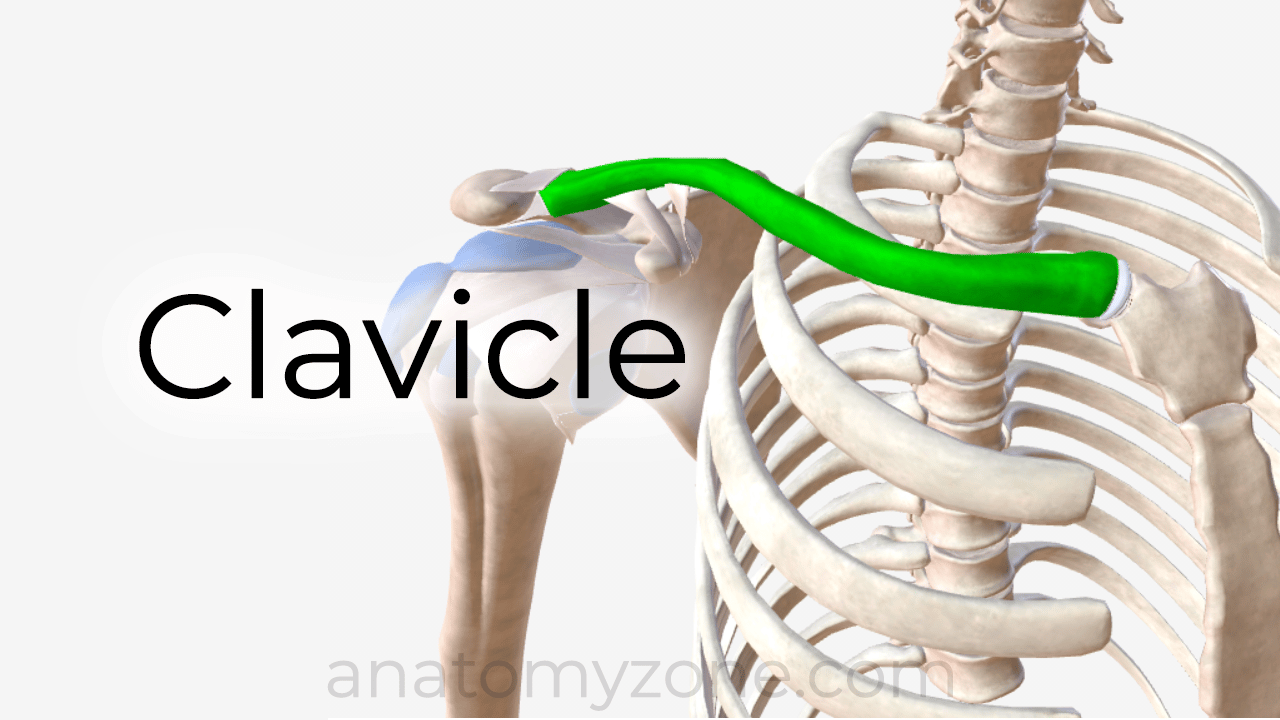
Clavicle fractures are common injuries that affect the collarbone, which connects the shoulder to the chest. They can cause pain, swelling, and difficulty moving the affected arm. In this article, we will discuss the epidemiology, anatomy, and treatment options for clavicle fractures.
Epidemiology of Clavicle Fractures
Clavicle fractures account for about 2.6% of all fractures and for 44% to 66% of fractures around the shoulder. They are more common in young males and elderly females.
Most clavicle fractures occur in the middle third of the bone, which is the weakest part. This accounts for 80% of all clavicle fractures. The lateral third (near the shoulder) and the medial third (near the chest) account for 15% and 5%, respectively.
The most common cause of clavicle fractures is falling onto the affected shoulder, which creates a bending force on the bone. This accounts for 87% of clavicle fractures. Other causes include direct impact (7%) and falling onto an outstretched hand (6%).
Clavicle fractures can also occur due to muscle contractions during seizures, pathologic bone conditions, or stress fractures. However, these are rare causes.
Anatomy of the Clavicle
The clavicle is an S-shaped bone that has a convex curve at the medial end (near the chest) and a concave curve at the lateral end (near the shoulder). It is widest at the medial end and thins laterally.

The clavicle is the first bone to form in the fetus (fifth week of gestation) and the last one to fuse in adulthood (22 to 25 years of age). It has two flat ends that are connected by a tubular middle, which has little medullary bone.
The clavicle functions as a strut that supports the shoulder from the trunk and allows it to move freely. It also protects the vital structures that lie behind it, such as the brachial plexus (a network of nerves), the subclavian and axillary vessels (blood vessels), and the superior lung.
The medial third of the clavicle is strong in axial load (force along its length) and is attached to the sternum (breastbone) by ligaments. The lateral third of the clavicle is weaker in axial load and is attached to the acromion (part of the shoulder blade) by ligaments. The junction between the two parts is where most clavicle fractures occur.
The distal clavicle contains two important ligaments that stabilize the acromioclavicular (AC) joint: the trapezoid and conoid ligaments. These are collectively called the coracoclavicular ligaments. They are stronger than the AC ligaments and prevent vertical displacement of the clavicle.
Treatment Options for Clavicle Fractures
The treatment of clavicle fractures depends on several factors, such as:
1. The location and type of fracture
2. The degree of displacement and angulation
3. The presence of associated injuries or complications
4. The patient’s age, activity level, and preferences
In general, most clavicle fractures can be treated conservatively with a sling or a figure-of-eight bandage to immobilize the arm and allow natural healing. This usually takes about 6 to 8 weeks for adults and 3 to 4 weeks for children .
Some clavicle fractures may require surgical intervention, especially if they are:
1. Open (the skin is broken)
2. Comminuted (the bone is shattered into many pieces)
3. Displaced more than 2 cm or angulated more than 20 degrees
4. Associated with neurovascular injury or pneumothorax (collapsed lung)
5. Affecting the AC joint or causing shoulder instability
6. Causing cosmetic deformity or functional impairment
Surgical treatment involves reducing (aligning) and fixing (stabilizing) the fracture with plates, screws, wires, pins, or rods. This can improve pain relief, healing time, cosmetic appearance, and shoulder function .

The choice of treatment for clavicle fractures should be individualized based on a careful evaluation of each case. The potential benefits and risks of each option should be discussed with the patient before making a decision.
## How long does it take to recover from a clavicle fracture?
the recovery time for a clavicle fracture depends on several factors, such as:
1. The location and type of fracture
2. The degree of displacement and angulation
3. The presence of associated injuries or complications
4. The patient’s age, activity level, and preferences
5. The treatment method (conservative or surgical)
In general, most clavicle fractures can heal within 6 to 12 weeks, but some may take longer. It is normal to have some aches and discomfort beyond this period. It is also common for the area to be more sensitive for several months afterwards. Some sources suggest that:
1.
Clavicle fractures in children (younger than 8 years old) may heal in 4 to 5 weeks, and clavicle fractures in adolescents may take 6 to 8 weeks
1
2
.
2.
Clavicle fractures in adults or teenagers who have stopped growing take 10 to 12 weeks to heal and may take longer
1
2
.
3.
Most clavicle fractures will heal completely by 4 months in an adult
3
.
4.
Some stiffness in the shoulder can happen after these injuries, but usually resolves by 6 months after the injury
3
.
The goal of treatment is to restore the normal anatomy and function of the clavicle and the shoulder. The treatment options include immobilization using a sling or a figure-of-eight bandage, cold therapy, medication, and surgery. The choice of treatment should be individualized based on a careful evaluation of each case.
## Conclusion
Clavicle fractures are common injuries that can affect anyone at any age. They can be caused by various mechanisms, such as falls, impacts, or seizures. They can involve different parts of the clavicle, which has a complex anatomy and function. They can be treated with either conservative or surgical methods, depending on the severity and type of fracture. The goal of treatment is to restore the normal anatomy and function of the clavicle and the shoulder.
If you have any questions or concerns about clavicle fractures, please consult your doctor or a qualified orthopedic surgeon. They can provide you with more information and guidance on how to manage your condition.
Clavicle fractures are a common injury, accounting for up to 66% of shoulder fractures and 2.6% of all fractures. Middle third fractures are the most common and are strongest in axial load. Falls onto the affected shoulder are the most common cause. A careful clinical evaluation is essential to assess neural and vascular integrity, while radiographic evaluation involves standard anteroposterior radiographs or imaging for minimally displaced fractures. Clavicle fractures can be classified according to anatomic description or using the Allman or Orthopaedic Trauma Association classification systems. Nonoperative treatment involves immobilization for 4-6 weeks with some deformity usually resulting. Operative treatment may be necessary for open fractures, associated neurovascular compromise, and skin tenting with potential for progression to open fracture. Complications of clavicle fractures include neurovascular compromise, malunion, nonunion, and posttraumatic arthritis.
Clavicle Fractures: Epidemiology, Anatomy, and Treatment Options
-
What percentage of all fractures are clavicle fractures?
- A. 2.6%
- B. 44%
- C. 66%
-
D. 80%
Answer: A. 2.6%
Clavicle fractures account for about 2.6% of all fractures. -
What is the most common cause of clavicle fractures?
- A. Direct impact
- B. Pathological bone conditions
- C. Muscle contractions during seizures
-
D. Falling onto the affected shoulder
Answer: D. Falling onto the affected shoulder
The most common cause of clavicle fractures is falling onto the affected shoulder, which creates a bending force on the bone. -
Which part of the clavicle is the weakest?
- A. Medial third
- B. Lateral third
- C. Middle third
-
D. None of the above
Answer: C. Middle third
Most clavicle fractures occur in the middle third of the bone, which is the weakest part. -
What is the normal recovery time for a clavicle fracture in an adult?
- A. 3 to 4 weeks
- B. 6 to 8 weeks
- C. 10 to 12 weeks
-
D. 4 months
Answer: D. 4 months
Most clavicle fractures will heal completely by 4 months in an adult. -
When is surgical intervention necessary for clavicle fractures?
- A. If the fracture is displaced more than 1 cm
- B. If the fracture is open
- C. If the fracture affects the AC joint or causes shoulder instability
-
D. All of the above
Answer: D. All of the above
Surgical treatment may be necessary for clavicle fractures if they are open, comminuted, displaced more than 2 cm or angulated more than 20 degrees, associated with neurovascular injury or pneumothorax, affecting the AC joint or causing shoulder instability, and/or causing cosmetic deformity or functional impairment. -
What is the function of the clavicle?
- A. To connect the shoulder to the chest
- B. To protect the vital structures that lie behind it
- C. To support the shoulder from the trunk and allow it to move freely
-
D. All of the above
Answer: D. All of the above
The clavicle functions as a strut that supports the shoulder from the trunk and allows it to move freely. It also protects the vital structures that lie behind it. -
What percentage of clavicle fractures occur in the medial third?
- A. 5%
- B. 15%
- C. 80%
-
D. None of the above
Answer: A. 5%
The medial third (near the chest) accounts for 5% of all clavicle fractures. -
What ligaments stabilize the acromioclavicular (AC) joint?
- A. The coracoclavicular ligaments
- B. The AC ligaments
- C. Both A and B
-
D. None of the above
Answer: A. The coracoclavicular ligaments
The distal clavicle contains two important ligaments that stabilize the acromioclavicular (AC) joint: the trapezoid and conoid ligaments. These are collectively called the coracoclavicular ligaments. -
What is the goal of treatment for clavicle fractures?
- A. To restore the normal anatomy and function of the clavicle and the shoulder
- B. To prevent cosmetic deformity
- C. To relieve pain
-
D. To improve healing time
Answer: A. To restore the normal anatomy and function of the clavicle and the shoulder
The goal of treatment for clavicle fractures is to restore the normal anatomy and function of the clavicle and the shoulder. -
What are some potential complications of clavicle fractures?
- A. Malunion
- B. Nonunion
- C. Neurovascular compromise
-
D. All of the above
Answer: D. All of the above
Complications of clavicle fractures include neurovascular compromise, malunion, nonunion, and posttraumatic arthritis.
Submit
Your Results:
Total Questions: 10 Correct Answers: Wrong Answers:
