Score: 0%
Orthopedics Online MCQs
What complication is more likely following excessive medial retraction of the anterior covering structures during the anterolateral (Watson-Jones) approach to the hip? ](http://www.orthobullets.com/approaches/12021/hip-anterolateral-approach-watson-jones)
During the medial parapatellar approach to the knee, most of the arterial supply to the patella is divided. What artery is at risk if a lateral retinacular release is performed? ](http://www.orthobullets.com/approaches/12028/knee-medial-parapatellar-approach)
During a left-sided transforaminal lumbar interbody fusion at the L4-5 level, the surgeon notes a significant amount of bleeding that cannot be controlled while using a pituitary rongeur. What anatomic structure has been injured? ](http://www.orthobullets.com/approaches/12060/blank)
After arthroscopic shoulder surgery a 45-year-old male develops pain, weakness and decreased sensation over the lateral arm and shoulder. If this injury was due to portal placement, which of the following portals would be the most likely site of injury? ](http://www.orthobullets.com/approaches/12064/shoulder-arthroscopic-approach)
During an anterior retroperitoneal approach to the L4-5 disk, the iliac vessels must be mobilized. The dissection is carried out along the lateral edge of the vessels so they can be retracted medially across the midline. What structure that tethers the common iliac vein must be identified and taken down for safe and adequate mobilization? ](http://www.orthobullets.com/spine/12089/anterior-lumbar-interbody-fusion)
What intermuscular plane is most commonly used in the anterior approach to the ankle? ](http://www.orthobullets.com/approaches/12040/ankle-anterior-approach)
The posterior approach to the proximal radius uses what intermuscular interval? ](http://www.orthobullets.com/approaches/12011/dorsal-approach-to-radius-thompson)
During a posterior approach to the right Achilles tendon, the surgeon encounters a nerve running with the small saphenous vein as shown in Figure 22. This nerve innervates what part of the foot? ](http://www.orthobullets.com/approaches/12145/blank)
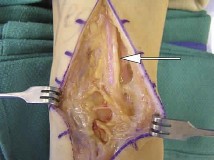
The anterior approach to the hip (iliofemoral or Smith-Peterson) puts which of the following anatomic structures at greatest risk? ](http://www.orthobullets.com/approaches/12141/blank)
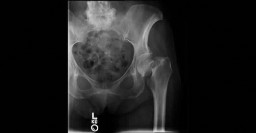
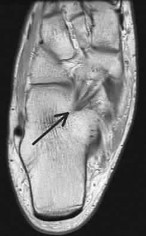
Figure 26 shows an axial T1-weighted MRI scan of the foot of a 13-year-old boy. The three-pronged structure indicated by the arrow shows which of the following? ](http://www.orthobullets.com/approaches/12060/blank)
What is the interval used during an anterior approach (Henry) for a distal radius shaft fracture? ](http://www.orthobullets.com/approaches/12010/volar-approach-to-radius-henry)
A 41-year-old man has a severe posttraumatic elbow contracture. The surgeon chooses to approach laterally. This exposure to the anterior elbow capsule exploits what anatomic interval? ](http://www.orthobullets.com/approaches/12068/lateral-approach-to-distal-humerus)
What structure is most at risk for injury from a retractor against the tracheoesophageal junction during an anterior approach to the cervical spine? ](http://www.orthobullets.com/approaches/12001/anterior-approach-to-cervical-spine)
Which of the following statements about hoarseness due to vocal cord paralysis after anterior cervical diskectomy and fusion is most accurate? ](http://www.orthobullets.com/spine/12096/anterior-cervical-discectomy-and-fusion)
With respect to the clinical photograph shown in Figure 97, what artery provides the most blood supply to the area of the planned incision? ](http://www.orthobullets.com/approaches/12049/extensile-lateral-approach-to-calcaneus)
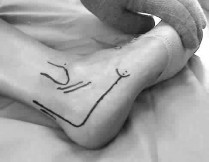
During a posterolateral exposure of the knee, the fascial intervals between the iliotibial band and the biceps femoris tendon are incised. What vascular structure is at most risk during this exposure? ](http://www.orthobullets.com/approaches/12073/knee-posterior-approach)
Which of the following best describes the relationship of the median nerve to the flexor carpi radialis tendon just proximal to the carpal canal? ](http://www.orthobullets.com/approaches/12010/volar-approach-to-radius-henry)
When harvesting an iliac crest bone graft from the posterior approach, what anatomic structure is at greatest risk for injury if a Cobb elevator is directed too caudal?
Figure 70 shows the arthroscopic view of a right knee from an inferolateral viewing portal. The probe is touching what anatomic structure? ](http://www.orthobullets.com/approaches/12060/blank)
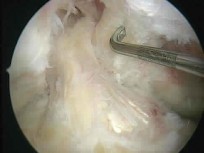
During the Kocher approach to repair a radial head fracture, care must be taken not to release what posterior structure lying under the anconeus that may be inadvertently injured during this common lateral approach to the elbow? ](http://www.orthobullets.com/approaches/12068/lateral-approach-to-distal-humerus)
Which of the following palpable bony landmarks is correctly matched with its corresponding vertebral level? ](http://www.orthobullets.com/approaches/12001/anterior-approach-to-cervical-spine)
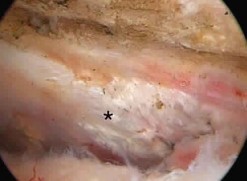
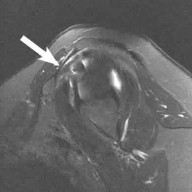
What anatomic structure is marked with an asterisk in Figure 76a in the posterior arthroscopic view of a left shoulder subacromial space and with the arrow in the sagittal oblique MRI scan in Figure 76b? ](http://www.orthobullets.com/approaches/12060/blank)
What structure is most at risk with anterior penetration of C1 lateral mass screws? ](http://www.orthobullets.com/spine/12096/anterior-cervical-discectomy-and-fusion)
The radial forearm free flap has a vascular pedicle that passes between which of the following muscles? ](http://www.orthobullets.com/approaches/12060/blank)
A urologist has requested the operative report for a 41-year-old male that underwent L5-S1 anterior lumbar interbody fusion using bone morphogenetic protein-2 augmentation. Which of the following urological complications occurs most commonly after this surgery? ](http://www.orthobullets.com/approaches/12004/retroperitoneal-anterolateral-approach-to-the-lumbar-spine)
What nerve is most likely to be injured during the anterior exposure of C2-3? ](http://www.orthobullets.com/spine/12096/anterior-cervical-discectomy-and-fusion)
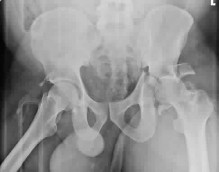
What approach should be chosen for the injury seen in Figure 67? ](http://www.orthobullets.com/approaches/12015/posterior-approach-to-the-acetabulum-kocher-langenbeck)Review Topic
When planning the incision for an anterior approach to the cervical spine, what external landmark is easily palpable that would correspond most closely to the C6 vertebral level? ](http://www.orthobullets.com/approaches/12001/anterior-approach-to-cervical-spine)
During a retroperitoneal approach to the L4-5 disk, what structure must be ligated to safely mobilize the common iliac vessels toward the midline from laterally and gain exposure? ](http://www.orthobullets.com/approaches/12004/retroperitoneal-anterolateral-approach-to-the-lumbar-spine)
A 28-year-old football player sustained a displaced posterior glenoid fossa fracture. He elects to undergo open reduction and internal fixation using a posterior approach to the shoulder. What intermuscular interval should be used to expose the posterior glenoid? ](http://www.orthobullets.com/approaches/12054/posterior-to-shoulder)
While performing a medial approach to the hip, the superficial dissection takes place between the gracilis and the adductor longus muscles. The deeper dissection takes place between what two muscles? ](http://www.orthobullets.com/approaches/12141/blank)
A 55-year-old woman undergoes an anterior cervical diskectomy and fusion at C5-C6 through a left-sided approach. One year later, she requires an anterior cervical diskectomy and fusion on another level. Which of the following is considered a contraindication to performing a right-sided approach for the revision procedure? ](http://www.orthobullets.com/spine/12096/anterior-cervical-discectomy-and-fusion)Review Topic
What muscle is most often encountered during surgical approaches to C5-6? ](http://www.orthobullets.com/approaches/12001/anterior-approach-to-cervical-spine)
The use of knee arthroscopy following total knee arthroplasty is most effective in treating which of the following conditions? ](http://www.orthobullets.com/approaches/3031/knee-arthroscopy)
A 72-year-old man has a severe limp 9 months after undergoing a total hip arthroplasty. He has no pain. He had an anterolateral approach and the incision healed well without prolonged antibiotics or drainage. His legs feel equal when he stands, but he ambulates with a severe Trendelenburg limp and is unable to actively abduct his hip against gravity. What is the most likely cause of his problem? ](http://www.orthobullets.com/approaches/12022/hip-direct-lateral-approach-hardinge-transgluteal)
The vessel that is exposed crossing the interval used for an anterior approach to the hip between the tensor fascia lata and the sartorius muscle is a branch of what artery? ](http://www.orthobullets.com/approaches/12141/blank)
When performing a gastrocnemius recession, what structure should be protected? ](http://www.orthobullets.com/pediatrics/12170/gastrocnemius-recession)

Keywords